๐Ÿ›๏ธ Licensed & Registered โ€” Trade Licence 134585 (Ajman) ๐Ÿ•’ Open Daily 8:00 AM โ€“ 6:00 PM ๐Ÿ“ž +971 50 988 6591
๐Ÿ”’ Door Latch Replacement

Dishwasher Door Latch Replacement in Dubai โ€” The Cheap Part Behind a Dead Machine

A dishwasher that will not respond at all gets blamed on its electronics almost every time. Far more often the door interlock has stopped closing, and the machine is simply refusing to run with a door it cannot electrically confirm is shut.

โšก Same-Day Visits ๐Ÿ›ก๏ธ 90-Day Warranty ๐Ÿ’ฒ Quote Before Any Work ๐Ÿ›๏ธ Licence No. 134585
โ„น๏ธ

We are an independent repair company โ€” not an authorized service center of any dishwasher brand. Brand names on this page identify only the machines we repair, and all trademarks remain the property of their owners.

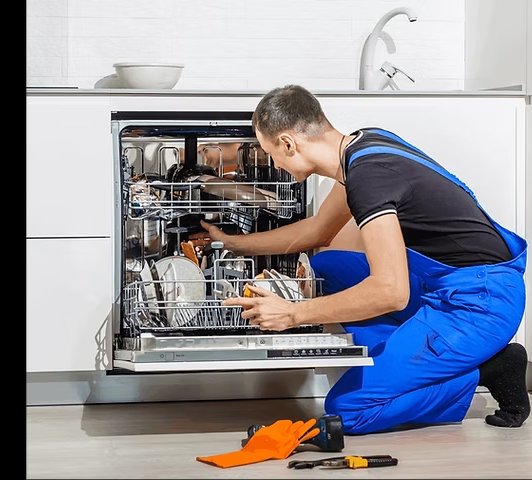
Replacement dishwasher door latch assembly with its interlock switch laid beside the failed original
A Small Part, A Loud Symptom

The Machine Is Not Dead. It Is Refusing to Run.

Dishwasher door latch replacement in Dubai almost never arrives under that name. The call describes an appliance that has stopped answering altogether โ€” dark display, no chime, no fill โ€” and by then someone has usually mentioned a new control board or suggested the machine has reached the end of its life.

What actually sits behind that silence is frequently a switch you could hide under a coin. Every domestic dishwasher carries a door interlock, and its remit is absolute: until the appliance holds electrical proof that the door is shut, nothing downstream may energise. No circulation motor, no heater, no fill valve. On a great many designs the interlock also gates supply to the control board itself, which is precisely why a machine can look unplugged when the only thing wrong is that two contacts have stopped meeting.

That behaviour is intentional. A dishwasher holds water hot enough to scald and throws it around the tub under pressure, and no designer wants that leaving through a door that drifted open. So the chain is built to fail towards a machine that will not start, never towards a machine that runs with the door ajar. The inconvenience you are experiencing is the protection working exactly as intended.

The arrangements vary far more than the symptom suggests. Some machines use a sprung tongue that rides into a hook and trips a microswitch sitting behind it. Others carry two switches inside one housing โ€” one telling the board that a door is present, a second actually carrying load current. A few hold the door shut with a small solenoid through the hot phase and release it at the end of the programme. Handle-less integrated models add a push-to-open mechanism with its own catch and its own ways of failing. Knowing which of those is in front of you decides where the meter goes, and it is why a generic answer lifted from a search result sends so many owners to the wrong part.

The commercial side matters more than the engineering. A latch assembly sits near the bottom of the parts list in any dishwasher โ€” well below a circulation pump, a heater or a board โ€” and on most models it lifts out of the inner door panel once the facia screws are removed. Because the symptom looks catastrophic and the part looks trivial, this is among the most heavily over-quoted faults in the trade. Owners get told the electronics have gone, or that a five-year-old machine is beyond economic repair, on the strength of a panel that stayed dark.

Dubai kitchens make the fault more common than it would otherwise be. The great majority of machines we attend are integrated behind a matching cabinet door, installed as part of a handover specification or a fit-out where a joiner hung the panel and nobody re-balanced the hinges afterwards. A decor door cut from thick board, or one carrying a long bar handle, loads those springs well beyond what a bare stainless door ever would. Add several years of daily use and the door begins to sit low in its aperture. The catch is then asked to meet something that no longer arrives where the factory intended, and sooner or later it stops managing it.

So the door circuit gets tested before anybody discusses electronics. If the interlock reads open while the door is held closed, that is your fault found, and the outcome is a short visit rather than a new appliance.
Symptoms

Six Ways a Latch Fault Announces Itself

One small assembly, six complaints that sound to the owner like six entirely different machines with six entirely different bills attached.

๐ŸŒ‘

Nothing At All

Panel dark, no chime, no reaction to any button. Where the interlock feeds the board, an open switch mimics a dead appliance perfectly.

๐Ÿ’ก

Lights, Then Nothing

The display wakes and accepts a programme, then the cycle never begins. The board has power but is still waiting to be told the door is shut.

๐Ÿšช

Needs a Shove

It only catches if you lean on it. Usually the door is arriving a few millimetres short rather than the catch being worn through.

โฑ๏ธ

Quits Partway

The door releases itself mid-programme and hot water stops. A tired spring, a worn catch, or contacts dropping out under vibration.

โš ๏ธ

A Door Fault Code

Most brands flag the door circuit specifically. The code is read off the machine in its own service mode, not guessed from a forum thread.

๐Ÿค

Limp Handle

The handle no longer springs back and the tongue feels lazy. The return spring inside the assembly has broken or unseated.

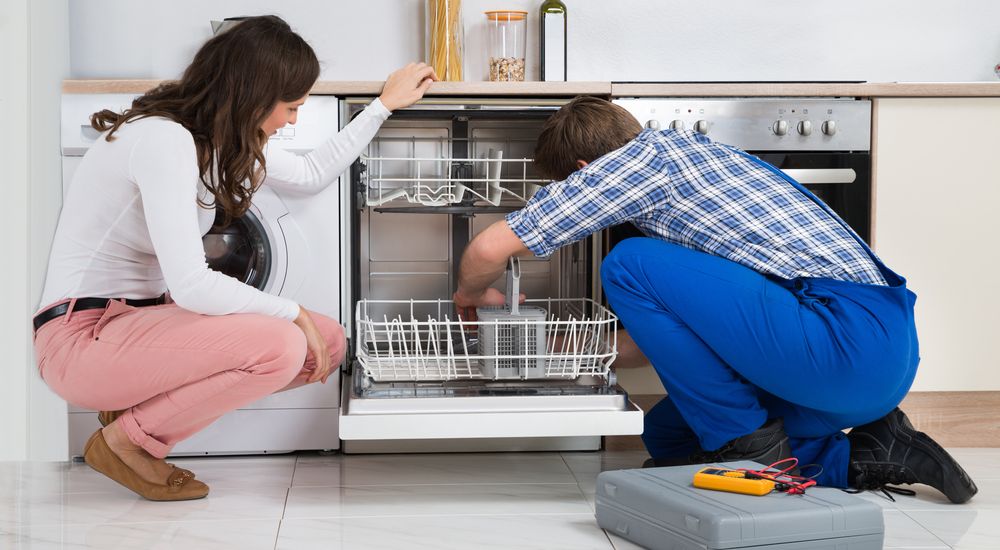
Technician showing a customer how far the dishwasher door travels before the catch engages
Blameless Latches

A Fair Share of These Faults Are Geometry, Not Electrics

The catch can only close if the door delivers it there. On a meaningful number of visits the switch is in perfect condition and the door is simply not travelling the last few millimetres.

Integrated machines are the usual offenders. A furniture panel screwed to the front adds weight that the hinge springs were calibrated to balance when the machine left the factory. Over the years spring tension relaxes, or a hinge cable frays and starts to run rough, and the door begins to hang low on its travel. The catch then arrives under the strike instead of into it. Owners compensate by pushing harder, which works right up until the morning it does not.

The strike plate wears too. That hook or tongue in the tub frame is struck thousands of times, and the crisp edge it needs slowly rounds off. A rounded strike lets the catch slip back out under the vibration of a wash, which reads to the machine as a door that opened mid-cycle.

Levelling and cabinetry matter more than people expect. A machine that has settled on its adjustable feet, a plinth refitted a fraction high after new flooring, or a heavy mat pushed under the front edge will all twist the door in its aperture. Millimetres are enough.

Sometimes nothing has failed whatsoever. A folded tine, a chopping board standing proud, a plate overhanging the basket or a rail that was never pushed home will hold the door a hair short of engagement. When that is what we find, we say so, charge for the visit and fit nothing.

Decor panels earn their own paragraph, because they are typically fitted once and never looked at again. The mounting template sets the panel at a particular height for a reason. A few millimetres low and the bottom edge grazes the plinth; a few high and the top catches the worktop lip. Either will stop the door closing square. Screws longer than the ones supplied are another quiet cause, pressing through into the inner door skin and binding the mechanism from behind. None of that is an appliance fault and none of it is visible from the front of the kitchen. It is found by taking the weight of the panel in your hands and feeling where the door actually wants to sit.

There are sensible limits to what is worth attempting yourself, and they are worth stating plainly. Repositioning a decor panel or adjusting a hinge stop is joinery, and reasonable to try. Opening up the inner door skin is another matter: on most models the facia, the control panel and the switch loom all come apart as one assembly, the loom is short, and it is easy to trap a wire on reassembly and manufacture a fault that was never there. Anything reaching mains wiring, and anything where the switch or its terminals show heat damage, belongs to somebody working on an isolated machine with a meter in hand.

On the electrical half, separating latch from board is measurement rather than opinion. With the appliance isolated at the socket, continuity is read directly across the switch terminals while the door sits closed. We then confirm the other side of the question โ€” that the board is genuinely receiving the closed-door signal and has supply on its input. Skipping that step is how people buy an expensive module and keep the original fault.

What To Expect

How a Door Latch Visit Actually Runs

Free checks first, cheap checks next, and the sequence halts the moment the fault has been proved rather than suspected.

1. Prove the supply

Socket, plug, breaker and any isolating switch hidden behind the plinth or inside the adjacent cabinet. It costs nothing to rule out and it occasionally ends the visit right there.

2. Watch the door close

How far it travels, whether the catch seats squarely, and exactly what the panel does at the moment of engagement. The symptom tells us where to point the meter.

3. Survey the mechanics

Strike plate wear, hinge spring balance, decor panel weight and screw positions, levelling of the feet, and anything in the baskets standing proud of the door line.

4. Measure the interlock

Machine isolated, connector removed, continuity taken across the switch terminals with the door held in its closed position. Open there is the answer.

5. Ask what the board sees

Any stored door fault read from the machine in its own service mode, and supply confirmed at the board input, so the electronics are cleared or implicated on evidence.

6. Price it, then do it

The fault, the fix and the figure are put to you before a part is fitted. If the answer was an alignment adjustment, that is what the invoice reflects.

Straight Answers

When the Latch Genuinely Needs Replacing

And the longer list of findings that mean the part is innocent.

A genuine latch or interlock replacement

  • Open circuit across the switch with the door fully closed and held
  • Contacts welded shut, so the machine reads a door that is standing open
  • Catch or tongue visibly cracked, or a fragment already missing
  • Return spring broken, leaving a limp handle and a lazy catch
  • Door releasing itself mid-cycle on hinges and a strike that check out sound
  • Scorching or discolouration at the switch body or its terminals

This is one of the least expensive components in the whole appliance and among the quickest to change on most models. That combination is exactly why it deserves to be tested rather than assumed, in either direction. We have opened machines written off elsewhere and found nothing worse than a snapped return spring, and we have also been called out to fit a latch on a machine whose door needed lifting three millimetres on its hinge and nothing more. Neither answer is visible from the symptom, and both are inexpensive once you know which one you are dealing with. What we will not do is fit a part on suspicion and leave you to discover afterwards whether it helped.

Look elsewhere first

  • Dark panel where the socket, plug fuse or breaker was never checked
  • A door that catches only when pressed hard โ€” usually hinge or strike wear
  • Integrated door hanging low on relaxed springs or a frayed hinge cable
  • A basket rail left out, or a tall item holding the door a fraction open
  • Machine rocking on unlevel feet, or a plinth refitted after new flooring
  • Switch healthy but its wiring loom chafed, or a connector backed part-way out

Cabinet Decision 66/2023 sets a statutory minimum warranty of fifteen days on repair work in the UAE, plus a documented estimate with your consent before work and an itemised invoice after. Ours is ninety days. If the machine is still inside its original manufacturer warranty, call the brand first.

Related Pages

More Dishwasher Repair Help

Back to the main dishwasher page, or across to the symptom that sent you here.

Showing a code rather than an obvious fault? Start here. Decode Your Error Code →

๐Ÿฝ๏ธ

Main Service Page

Our full dishwasher service across freestanding, built-in and integrated machines.

Dishwasher Repair & Service โ†’

๐Ÿšซ

Dishwasher Not Starting

The whole symptom page, working outward from supply to door circuit to board.

Not Starting โ†’

๐Ÿงต

Door Seal Replacement

The other half of the door. A latch that pulls short and a flattened seal often travel together.

Door Seal Replacement โ†’

๐Ÿ’ฆ

Leaking From the Door

Water escaping at the front is a sealing and alignment question before it is a plumbing one.

Leaking Water โ†’

๐Ÿ”ง

Siemens Dishwasher Repair

Door fault codes read off the machine in its own service mode rather than guessed at.

Siemens Repair โ†’

๐Ÿ“

Business Bay

Tower access and building permissions arranged before the visit rather than at the door.

Business Bay โ†’

FAQ

Dishwasher Door Latch Replacement โ€” Your Questions

My dishwasher is completely dead. Can a door latch really cause that?

Yes, and it is one of the more common reasons for it. The door interlock sits in the safety chain, and until it reads closed the machine is not permitted to energise anything that moves or heats water. On a large number of designs that same switch also gates supply to the control board, so when the contacts stop meeting you get a dark panel, no beep and no reaction to the start button. The appliance looks unplugged. Nothing is broken except a pair of contacts the size of a fingernail. It is also why a dark panel is no evidence that the electronics have failed.

How do you separate a failed interlock from a failed control board?

With a meter, in two directions. First we isolate the machine, unplug the connector and read continuity straight across the switch terminals while the door is held in its fully closed position. A healthy interlock reads closed there; a failed one stays open however hard the door is pressed. Then we check the second half of the question, which is whether the board is receiving that closed-door signal and has supply arriving on its input side. A board that never sees a door behaves identically to a board that has died. Running only half of that test is how a perfectly good module ends up being replaced.

The door only catches if I slam it. Is the latch worn out?

Often the latch is fine and the door is not reaching it. Hinge springs relax over years, the strike plate in the frame wears an oval where it was once square, and on an integrated machine the furniture panel adds weight the springs were set up to balance when new. The door then hangs a few millimetres low and the catch arrives under its target. Slamming compensates for a while, until it stops working entirely. We check that geometry before we condemn any part. If you find yourself lifting the door slightly as you push it, that is the same message in another form.

Why does my door pop open in the middle of a cycle?

Two families of cause. Mechanically, a worn catch or a tired return spring can hold under a gentle load and then let go once the tub heats and the door panel expands slightly. Electrically, an interlock with dirty or pitted contacts can drop out under vibration, and the machine, seeing the door as open, halts immediately and releases. Either way the cycle stops mid-wash and the kitchen gets a puff of steam. It is worth attending to promptly, because hot water leaving the tub is a scald risk. Book it before somebody standing at the counter is caught by a door letting go on its own.

Can I just tape the door shut or bridge the switch to keep using it?

No, and we will not do it either. That switch is the only thing standing between a closed cabinet and a machine spraying water above seventy degrees into a room. Defeating it removes the protection for everybody who walks past, children included, and it also removes any argument you might have had if something goes wrong. The honest position is that the part is inexpensive and the job is short. Wait for the repair rather than disable the safety device that is doing exactly what it was designed to do. The proper fix is short, and it gives back a protection nobody should sensibly live without.

What warranty comes with a door latch or interlock replacement?

Ninety days covering both the part and the labour. As background, Cabinet Decision 66/2023 sets fifteen days as the statutory minimum on repair work in the UAE, and it also obliges the repairer to give you a documented estimate, take your consent before starting and issue an itemised invoice afterwards. Ask for all three from anyone you use. One point we would rather say early than late: if the machine is still covered by its original manufacturer warranty, ring the brand before you ring us. We would rather lose a booking than have you pay twice over for the same small part.

Looks Dead? Test the Door Circuit Before the Board.

The interlock is measured with the door held shut before any electronics are discussed. Fault, fix and price are agreed with you before a screwdriver comes out.

Book a Door Latch Diagnosis

Tell Us Exactly What Happens When You Shut the Door

A panel that stays dark, lights that wake and then do nothing, a door that needs a shove to catch, or a door that springs open partway through. Each of those points somewhere different.

๐Ÿ“ž Phone

+971 50 988 6591
Daily, 8:00 AM โ€“ 6:00 PM

๐Ÿ’ฌ WhatsApp

+971 50 988 6591
Send a short video of the door closing and the panel reacting

โœ‰๏ธ Email

info@fixmyacdubai.ae

Request a Door Latch Diagnosis

Opens WhatsApp with your request pre-filled โ€” nothing is stored on this site.

Your details go directly to our team on WhatsApp. See our Privacy Policy.

Call Now+971 50 988 6591 WhatsAppInstant chat reply