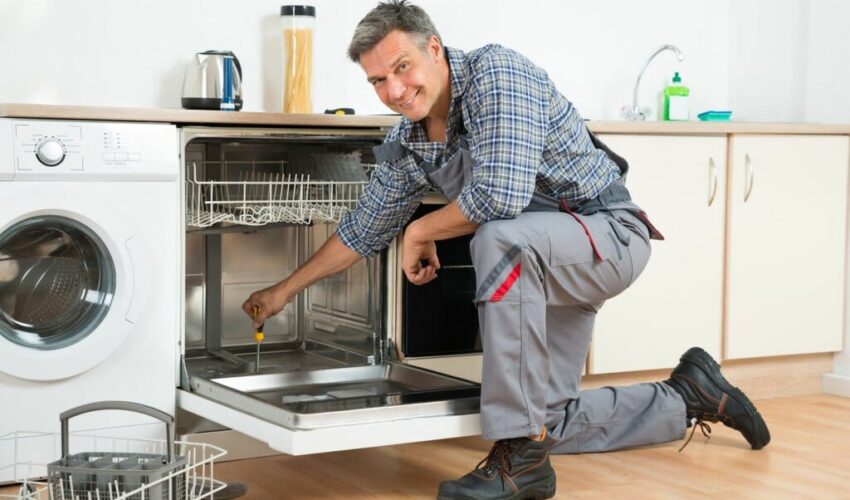
๐Ÿ›๏ธ Licensed & Registered โ€” Trade Licence 134585 (Ajman) ๐Ÿ•’ Open Daily 8:00 AM โ€“ 6:00 PM ๐Ÿ“ž +971 50 988 6591
๐Ÿšช Door Seal Replacement

Dishwasher Door Seal Replacement in Dubai โ€” Most Machines Have Two

People order one seal, fit it carefully, and still find the same puddle in the same place. Almost always the leaking seal was the other one. We identify which before anything is ordered.

โšก Same-Day Visits ๐Ÿ›ก๏ธ 90-Day Warranty ๐Ÿ’ฒ Quote Before Any Work ๐Ÿ›๏ธ Licence No. 134585
โ„น๏ธ

We are an independent repair company โ€” not an authorized service center of any dishwasher brand. Brand names on this page identify only the machines we repair, and all trademarks remain the property of their owners.

Peeling a hardened lower door gasket out of its channel to check for compression set
Two Seals, Not One

The Seal You Ordered Is Probably Not the One Leaking

Dishwasher door seal replacement in Dubai reads like a single part on a single order line. On most machines it is nothing of the kind. There are two seals doing two different jobs, they fail in different ways, and the one people order is very often not the one letting the water out.

The main one is the tub seal. It runs around the opening of the tub in a tall U, or on some designs around the perimeter of the door itself, and it closes the two sides and the top. Look carefully at where it stops. On a great many machines it does not continue across the bottom at all โ€” it turns in at each lower corner and simply ends.

The bottom edge has its own part. Depending on the brand it is called a lower door seal, a door base gasket or a plinth seal, and it is a separate strip clipped or screwed along the base of the door aperture. It usually has small wings turned up at each end, meant to tuck behind the ends of the main seal so the two together make one continuous barrier. Some machines add short side-channel seals at those junctions as well, which is a third part again.

This is where the money gets wasted. Somebody searches for a door seal, finds the main tub seal because that is the one the listings show, fits it neatly, runs a cycle, and finds the same puddle in the same place. The lower gasket that was actually leaking has not been touched. It is still flattened, still hard, and still letting water out along the same line as before.

The junction between the two deserves its own mention. Water finds the corner where one seal ends and the other begins, so a leak appearing at a single lower corner rather than across the full width is often a junction fault rather than a failed seal โ€” a wing tucked the wrong side of the main seal, or a main seal seated a few millimetres short of its stop.

So the first job on any door leak is identification, not ordering. Both seals get lifted and inspected, and the channels behind them get cleaned out. On a fair share of visits the rubber turns out to be perfectly sound and the channel is packed with grease, grit and label residue that has been holding the lip off its seat. That costs you a clean rather than a part, and we would rather tell you so.
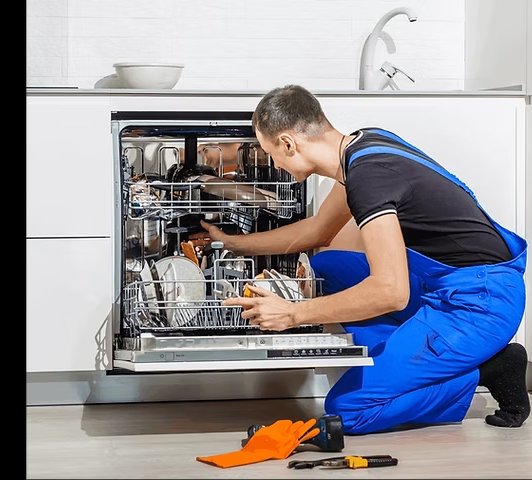
Read the Leak

Where the Water Appears Tells You Which Seal

Dry everything, lay kitchen paper on the floor and across the base of the open door, then run a cycle and look at what wets first. Six patterns cover almost everything we attend.

๐Ÿ’ง

A Line Right Under the Door

Water arriving in a broad line across the floor at the door foot. That is the lower door gasket or door base seal, and it is the part most often missed off the order.

๐Ÿ“

One Lower Corner Only

A single wet corner is usually the junction where the main tub seal ends and the lower gasket begins โ€” a wing tucked wrong, or a seal seated short of its stop.

โ†•๏ธ

Down One Side Panel

Water tracking down a side of the door front or the cabinet edge points at the upright run of the main tub seal, commonly where a tear or a nick has opened.

๐Ÿซง

Foam at the Door Edge

White suds rather than clear water creeping out of the door gap. The seal is doing its job; the detergent dose is beating it. Cut the dose before buying anything.

๐Ÿ”ฉ

Door Sits Proud of the Tub

Worn hinges, stretched hinge cables or a heavy decor door let the top of the door stand off. The seal never gets compressed evenly and leaks along its top run.

๐Ÿ›Ÿ

Water Under, Not at the Door

A puddle emerging from beneath the plinth with a dry door edge is not a door seal at all. Hose, sump, pump seal or base tray โ€” and often a water-protection fault code.

New tub seal held beside the removed original to compare how far the old lip has flattened
Reading the Old One

Compression Set, Tears, Hardening โ€” and What Lives in the Channel

Four things kill a door seal, and only two of them mean you need a part. Working out which you have takes a few minutes with the door open and the machine switched off at the socket.

Compression set is the quiet one. A healthy seal is compressed every time the door shuts and springs back every time it opens. Over years it stops springing back, and the lip stays permanently squashed into the shape of the closed door. Press the lip with a thumbnail and watch it. If it recovers promptly, it has life in it. If the dent sits there, the seal has taken a set and is only sealing where the door happens to press hardest. You can usually see it as a deep, permanent groove along the contact face rather than the light witness line a good seal shows.

Tears and nicks concentrate at the two bottom corners, because that is where baking trays, cutlery baskets and pan handles catch on the way in and out. Run a finger along the whole length and look for splits at the base of the lip, which are easy to miss because they close up when the seal is relaxed.

Hardening shows as a rubber that has gone glassy and squeaks against the door. Heat drives it, which is why it comes on faster here through a Dubai summer than the same machine would manage in a cooler climate. A hardened seal often leaks only on long hot programmes and behaves impeccably on a quick cool cycle, which is exactly the pattern that makes people doubt themselves.

Debris in the channel is the one that costs nothing. Grease film, soaked-off jar labels, grit carried in from a storage tank and dried detergent all collect behind the lip and in the channel it sits in. Packed in there, they hold the seal a millimetre off its seat along a short run, and a millimetre is plenty. Cleaning the channel with warm water and a cloth, then reseating the seal, ends a genuine share of door leaks with no part at all.

Fitting matters as much as the part. Note the orientation before the old one comes out, because most profiles have a definite inside and outside, and a seal fitted the wrong way round leaks very neatly indeed. Clean the channel out first. Then seat the new seal fully into the channel โ€” pressed home along its whole length, not just tucked in at the corners.

The one thing never to do is stretch it. A seal pulled tight to reach the final corner feels like a good fit on the day. Rubber under tension relaxes and draws back over the following weeks, and a gap opens at the point where the tension was highest, usually a bottom corner. The leak returns a month after the repair and the new part gets blamed. If the seal seems slightly too long as you work round, that is normal โ€” it is meant to go in relaxed, and it beds in. No grease, no sealant, no adhesive.

What To Expect

How a Door Seal Visit Actually Runs

Identify, clean, then order. In that order, because the middle step ends the job more often than people expect.

1. Where and when it leaks

The exact position of the water, and whether it happens on every cycle or only on the long hot ones. Those two answers narrow it before the door is opened.

2. The paper test, watched

Both seals dried, kitchen paper laid at the door foot and along the base, and a cycle run and observed. We want to see the first wetting, not the finished puddle.

3. Both seals inspected properly

Main tub seal and lower door gasket, plus the junction wings at each bottom corner and any side-channel pieces the model carries. Lip recovery, tears and hardening checked along the full run.

4. Channels cleaned before anything is condemned

Grease, grit and label residue out of the channel, seal reseated, cycle re-run. A fair number of visits stop here, and the invoice reflects that.

5. Door alignment and hinges

Latch engagement, hinge wear, cable and spring tension, and whether a decor door has pulled the machine door out of square. A seal cannot fix a door that closes crooked.

6. Correct part, then quote, then fit

The part identified from the rating plate rather than a photograph, priced and agreed with you first, fitted unstretched and proved on a full cycle before we leave.

Straight Answers

When It Is the Seal โ€” and When It Is Not

Door seals do wear out, and they are a cheap, sensible repair when they have. They also take the blame for a good deal that has nothing to do with them.

A genuine seal replacement

  • Lip permanently flattened and no longer recovering when pressed
  • A split or nick at the base of the lip, usually at a bottom corner
  • Rubber gone hard and glassy, leaking only on long hot programmes
  • Lower door gasket compressed flat while the main tub seal is still sound, or the reverse
  • A previously fitted seal stretched at installation and now short at one corner
  • Junction wings torn away where the two seals are meant to overlap

A door seal is one of the cheaper parts in a dishwasher and on most models a straightforward fit. What we will not do is fit one to a machine whose door does not close square, because the new seal fails the same way the old one did.

Blamed on the seal, but not the seal

  • Grease and grit packed into the seal channel, holding the lip off its seat
  • Worn hinges or stretched hinge cables letting the door sit proud at the top
  • A heavy decor door on an integrated machine pulling the door out of square
  • Over-dosed detergent making suds that climb over an intact seal โ€” the soft water here needs less, not more
  • A rinse-aid dispenser flap leaking down the inside of the door
  • Water arriving from under the plinth with a dry door edge, which is a hose, sump or base-tray fault

Our trade licence 134585 is issued in Ajman; Dubai is a service area we cover. Cabinet Decision 66/2023 requires a documented estimate and your consent before repair work begins, and an itemised invoice afterwards, with a fifteen-day minimum warranty on the work. Ours runs 90 days. If the machine is still inside its manufacturer warranty, call the brand first.

Related Pages

More Dishwasher Repair Help

Back to the main dishwasher page, or straight to the fault that brought you here.

Showing a code rather than an obvious fault? Start here. Decode Your Error Code →

๐Ÿฝ๏ธ

Main Service Page

Our full dishwasher service โ€” freestanding, built-in and fully integrated machines, every brand.

Dishwasher Repair & Service โ†’

๐ŸŒŠ

Dishwasher Leaking Water

The whole symptom, ranked: door, hoses, sump, pump seal and base tray, checked in order.

Leaking Water โ†’

๐Ÿ’ง

Dishwasher Not Draining

Water left in the tub can back up past a sound seal. The drain side, diagnosed properly.

Not Draining โ†’

๐Ÿงผ

Dishes Not Coming Clean

Where the over-dosing habit starts, and why cutting the dose fixes foam at the door too.

Not Cleaning โ†’

๐Ÿ”ง

Bosch Dishwashers

How these machines report water in the base tray, and what that code does and does not prove.

Bosch Repair โ†’

๐Ÿ“

Nearby Areas

Integrated machines and decor doors, which is where most door alignment leaks start.

Dubai Marina โ†’
Downtown Dubai โ†’

FAQ

Dishwasher Door Seals โ€” Your Questions

My dishwasher leaks from the bottom of the door. Which seal is it?

Most likely the lower one. Machines that carry two seals put a main gasket around the tub opening or the door perimeter, and a separate strip along the bottom edge where the door meets the tub. Water escaping in a line across the floor, right under the door, points at that lower strip. Water appearing at one corner or running down a side panel points at the main tub seal instead. Open the door, dry both, and run a short programme with a sheet of kitchen paper laid on the floor. Where it wets first is your answer.

I fitted a new seal and it still leaks. What went wrong?

Three possibilities, and they are all common. You may have replaced the seal that was not leaking, because most machines carry two and the parts listings rarely make that obvious. Or the new one was stretched into place. A seal pulled to reach the last corner shrinks back over the following weeks and opens a gap exactly where the tension was highest. Or the leak was never a seal at all: a door sitting proud on worn hinges, or foam from an over-dosed detergent, will pass a perfectly sound gasket every time.

Can I replace a dishwasher door seal myself?

On many machines the main tub seal presses into a channel and comes out by hand, so yes, with care. Switch the machine off at the socket first. Note the orientation before you pull the old one, because most profiles only work one way round and a seal fitted upside down leaks very tidily. Start at a top corner, seat it fully into the channel, and work round without pulling. Lower door gaskets are usually held by screws behind the door panel and are less forgiving. Leave anything needing the machine drawn out or unwired to us.

Does Dubai water damage door seals faster?

Not the water itself. The supply here is overwhelmingly desalinated and soft, so the mineral attack people expect is not the issue. What does age a seal here is heat. In summer, uninsulated rooftop tanks have been reported at 50 to 60 degrees and villa cold lines at 35 to 40, against an inlet temperature dishwashers are designed around at roughly 49. Rubber that runs hotter for longer hardens and takes a permanent set sooner. Detergent dose matters too: over-dosing in soft water leaves a residue in the seal channel that props the lip open.

The leak only happens on hot programmes. Is that still the seal?

Often yes, and the pattern is useful. Rubber that has hardened with age loses the springiness to push back when it is compressed, so a cool short cycle still closes tight enough while a long hot programme softens, expands and distorts the same seal past the point where it holds. A door slightly out of alignment behaves the same way. The other hot-programme leak is foam. Longer, hotter cycles agitate more, and an over-dosed detergent makes suds that climb over a sound seal rather than through it.

What warranty comes with a door seal replacement?

Ninety days on parts and labour. Cabinet Decision 66/2023, Article 26, sets a statutory minimum of fifteen days on repair work in the UAE, and also requires a documented estimate with your consent before work starts and an itemised invoice afterwards. Expect all three from any repairer here. One thing we say before a booking rather than after: if the machine is still inside its original manufacturer warranty, call the brand first. A door seal is a cheap part, and there is rarely a good reason to pay for one twice.

Water on the Floor? Let Us Find Which Seal First.

Two seals, on some machines three, and usually only one of them is leaking. Fault, fix and price agreed with you before any part is ordered.

Book a Door Seal Diagnosis

Tell Us Where the Water Appears

A line under the door, one lower corner, down a side panel, or only on the long hot programmes. Each pattern points at something different.

๐Ÿ“ž Phone

+971 50 988 6591
Daily, 8:00 AM โ€“ 6:00 PM

๐Ÿ’ฌ WhatsApp

+971 50 988 6591
Send a photo of the open door edge and the tub opening

โœ‰๏ธ Email

info@fixmyacdubai.ae

Request a Door Seal Diagnosis

Opens WhatsApp with your request pre-filled โ€” nothing is stored on this site.

Your details go directly to our team on WhatsApp. See our Privacy Policy.

Call Now+971 50 988 6591 WhatsAppInstant chat reply