๐Ÿ›๏ธ Licensed & Registered โ€” Trade Licence 134585 (Ajman) ๐Ÿ•’ Open Daily 8:00 AM โ€“ 6:00 PM ๐Ÿ“ž +971 50 988 6591
๐Ÿ” Door Not Locking

Dishwasher Door Not Locking in Dubai โ€” Three Faults Hiding Behind One Complaint

A door that will not shut, a door that shuts but is never recognised, and a door that locks and then refuses to let go are three unrelated problems. One is mechanical, one is a switch worth very little, and one is frequently not a fault at all. Here is how to tell which one you have before anybody quotes you a part.

โšก Same-Day Visits ๐Ÿ›ก๏ธ 90-Day Warranty ๐Ÿ’ฒ Quote Before Any Work ๐Ÿ›๏ธ Licence No. 134585
โ„น๏ธ

Unitech is an independent repair business. We are not an authorized service center for any dishwasher manufacturer. Brand names appear here only to describe the machines we work on, and every trademark stays with the company that owns it.

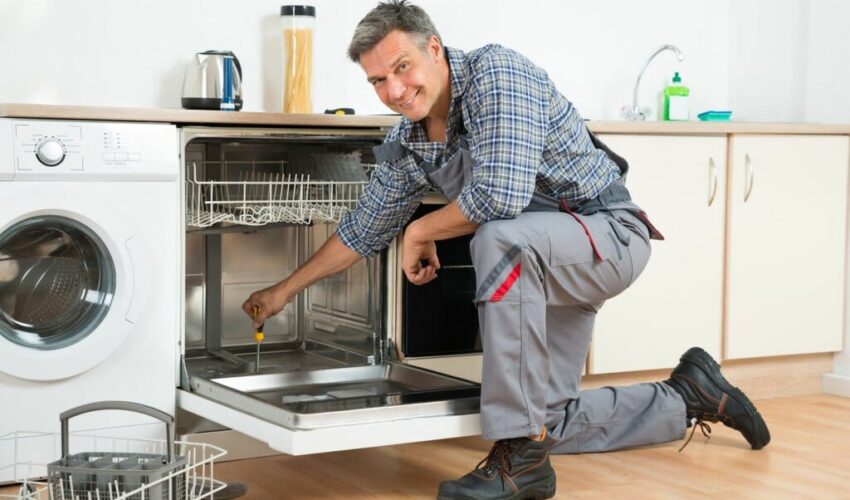
Technician watching a dishwasher door travel onto its strike plate with both racks pulled clear of the opening
Three Faults, One Phrase

Work Out Which of the Three Problems You Actually Have

A dishwasher door not locking in Dubai is one of those complaints where the words people reach for and the fault sitting in the machine point in different directions. Three unrelated failures arrive under the same heading. They live in different parts of the appliance, they cost very different amounts to put right, and one of them is not a failure at all. Separating them takes about ninety seconds standing at the machine, and it is worth doing before anyone quotes you anything.

The first is mechanical. The door will not travel far enough to engage the catch. Either something is physically in the way, or the door has shifted position relative to the body of the machine. Nothing electrical has gone wrong, and no switch needs replacing. What is needed is alignment, an obstruction removed, or a worn piece of hardware put back to size.

The second is electrical. The door closes cleanly, you hear the catch take hold, and the appliance carries on as though it were still standing wide open. Here the interlock switch, the wiring that runs to it, or the control input that reads it has stopped reporting a shut door. The symptom is dramatic and the part usually is not expensive.

The third is neither. The door locks, the programme runs, the programme finishes, and the door then refuses to release for a while. On a large number of machines that is a designed delay rather than a breakage, and the most common outcome of that particular call is that we explain the behaviour, check nothing else is wrong, and leave the appliance exactly as we found it.

The reason the machine takes an open door so seriously is worth understanding. The interlock is a safety device, not a convenience. It gates the fill, the heat and the circulation pump, because none of those should be running with the tub open to the kitchen. On many designs it sits so far upstream that an open circuit there leaves the whole appliance dark and mute, which is why the complaint so often arrives as a dead machine rather than a door problem. Somebody looks at a panel that will not light, works forward from the assumption that the electronics have failed, and never checks the switch that was quietly telling the machine to stay asleep.

That confusion is expensive in one direction only. A door catch, an interlock switch or a strike plate is among the least costly things in the appliance, and a good share of these visits finish with an adjustment and no part at all. A control module sits at the opposite end of the price list. If somebody has looked at a machine that will not respond and named the board without reading continuity across the door circuit first, the diagnosis has skipped the cheapest suspect in the cabinet. Our control board page sets out the whole elimination order for that, and the door is very near the top of it.

Dubai adds a set of causes that have nothing to do with the appliance manufacturer. Most machines here are built into a fitted run rather than standing free, and an integrated machine wears a decor panel supplied by whoever did the joinery. Panels slip. Plinths are cut to a height that suited the drawing rather than the door swing. Machines get pulled out and pushed back between tenancies, and the adjustable feet rarely get reset afterwards. Kitchen carcasses take a small amount of movement over the years. Every one of those puts a perfectly healthy door a few millimetres away from a perfectly healthy catch, and the machine reports the same thing it would report if the switch had died.

This page is about the complaint and how to place it. If the diagnosis lands on the hardware itself, the part and the replacement work are covered separately on our door latch replacement page, which goes into the assembly, the variants and what fitting one involves.
Symptoms

Six Ways This Complaint Arrives at the Phone

They sound similar and they are not. Which one you have decides whether this is an adjustment, a switch or a conversation about how the machine was designed.

๐Ÿšช

Will Not Shut At All

The door stops short and springs back. Almost always mechanical: something in the way, or the door sitting out of line with the catch.

๐Ÿ’ช

Needs a Hard Push

It closes, but only with force it never used to need. Hinges, springs, a dropped decor panel or a machine out of square. Book it before the catch snaps.

๐Ÿ”Œ

Latches, Nothing Happens

You hear the click, the panel stays dark or the start button does nothing. The interlock, its wiring, or the input reading it.

๐Ÿ’ง

Pops Open Mid-Wash

The door releases part way through and water reaches the floor. A worn catch or strike that lets go under pressure and heat.

โณ

Locked At The End

Cycle finished, door will not open. Usually a deliberate cool-down hold rather than a fault. Give it time before calling it broken.

๐Ÿ”

Catches Then Lets Go

It grabs for a second and releases. A tongue or keeper worn out of shape, or a seal standing proud and pushing the door back off.

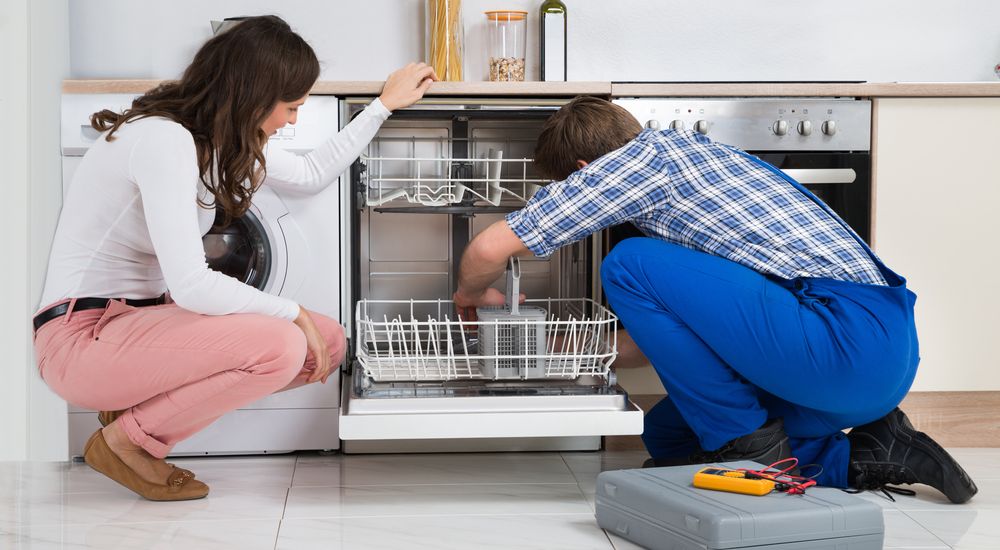
Engineer showing a resident where a slipped integrated decor panel is stopping the dishwasher door reaching its catch
Working Through It

Each of the Three, Taken Apart Properly

The order below runs from what costs nothing to what costs most, and it ends early far more often than people expect. Read the group that matches your symptom rather than all three.

Group one: the door will not physically close. Start with the obvious and do not feel silly about it, because obstruction is comfortably the most common cause and it resolves itself in seconds. A tall jug or a chopping board in the lower basket leaning back into the door line. A serving spoon poking up through the upper rack. A rack that has not been pushed fully home on its rails, so the front edge of it stands in the closing path. Cutlery basket handles fold up and stay up. Pull both racks right in, look along the opening at eye level, and close the door slowly enough to see where it stops.

The decor door on an integrated machine. This is the Dubai-specific one. The panel hangs on brackets fixed to the appliance door and the brackets can creep downward under the weight of solid timber, particularly on a door that gets slammed. A panel sitting even three or four millimetres low will foul the plinth or scrape the cabinet below as the door swings up, and the door then stops just short of the catch. You can usually see it: the gap between the panel and the units around it is uneven, wider at the top than the bottom or tighter on one side. Sometimes the fix is the brackets, sometimes it is a few millimetres off the plinth, and either way it is carpentry rather than an appliance repair.

Hinges, springs and door balance. The door is heavy and hangs on a spring or a cable and pulley at each side to stop it dropping open. When a spring stretches or a cable frays the door drops faster than it should and sits fractionally lower on its hinges. The latch tongue then meets the strike plate at the wrong height and either misses it or scrapes across it. The tell is a door that falls open with a thump when you release it instead of settling gently. That is the point to have it looked at, because a door dropping under its own weight also puts strain on the hinge pockets and the outer skin.

The strike plate and the catch face. Both are working parts and both wear. Plastic tongues round off at the corners after years of use, and metal keepers develop a groove or bend slightly out of plane. Detergent film and food residue build up in the recess and stop the tongue seating fully, which is worth a wipe with a damp cloth before anything else is suspected. It is worth saying plainly that this residue is not limescale. Dubai tap water is desalinated and soft rather than hard, and the sticky white film people find around the latch area is detergent and soil, not mineral scale from the supply.

Level, square and the plinth. A dishwasher that is not level, or is bolted into a housing that has pulled slightly out of square, twists the tub just enough that the door and the frame no longer sit parallel. Symptoms are a door that shuts on one side and stands proud on the other, or one that shut perfectly until the kitchen was worked on or the machine was pulled out for cleaning. Adjustable feet, the fixing brackets at the top or sides, and the height of the plinth in front are all worth checking. If the trouble started immediately after the machine was moved, this is where the answer lives.

Group two: the door closes and the machine ignores it. Now the interlock is genuinely in the frame. Inside the door catch sits a small switch, sometimes a simple microswitch operated by the tongue, sometimes a solenoid or thermal actuator that draws the door tight and reports back. When its contacts stop meeting, the control has no evidence the door is shut and will not fill, heat or run the pump. On the designs where the interlock also gates the supply to the module, the entire appliance appears dead. The check is continuity across the switch with the door held closed, on a machine isolated from the supply, and it takes a couple of minutes with the right meter and the right service data.

Wiring and the control input. If the switch measures correctly the fault has moved to the loom or the board. Door wiring lives in a hinge area that flexes thousands of times, so conductors break inside their insulation where they cross the pivot and terminals work loose in their housings. That produces a machine that runs one day and refuses the next, or one that starts and then halts, which owners very reasonably describe as electronics failing. It is usually not. Only when the switch is proven, the loom is proven and the command is still absent does the control input become the remaining explanation, and it is the last thing to be named rather than the first.

Group three: it locks and will not release. Before treating this as a failure, understand what the machine is doing. Many models hold the door shut for a set period after a hot programme so that steam settles and the load is not opened at temperature. Summer makes that noticeably worse here. Rooftop tanks that sit uninsulated have been reported delivering water at fifty to sixty degrees, well above the roughly forty-nine degrees most manufacturers want at the inlet, and villa cold lines commonly run at thirty-five to forty. A machine that started its cycle with water already hot ends it with a hotter tub, and the hold lasts longer as a result. A second design feature confuses people just as often: some machines deliberately push the door ajar at the end of the programme to vent steam and improve drying. That is the machine working correctly, not a catch letting go.

What you can safely do, and what to leave alone. Push both racks fully in and check nothing protrudes. Close the door slowly and watch where it stops. Compare the gap at the top with the gap at the bottom and along each side. Wipe the catch recess and the strike. Check the seal is seated in its channel all the way round and not folded or standing proud, and if it looks displaced or crushed our door seal page covers that separately. If the door is locked mid-cycle, switch off at the socket, wait a few minutes and switch back on. What we would ask you not to do is take the inner door panel apart, work on any wiring, bridge or bypass the interlock in any way, or lever a locked door with a tool. The interlock exists to keep hot water and a running pump away from an open tub, and a machine that has been persuaded to run with the door unlatched is a genuinely dangerous appliance.

What To Expect

How the Visit Runs

Six stages in a fixed order, stopping the moment the cause is proved rather than the moment a part becomes sellable.

1. Watch the door

Closed slowly by hand, several times, empty and then loaded. Where it stops, what it fouls and whether it behaves differently with the racks in or out.

2. Measure the gaps

Top against bottom, left against right, and the panel line on integrated machines. Uneven gaps say the door has moved rather than the switch has failed.

3. Check level and housing

Feet, fixing brackets, plinth clearance and whether the cabinet is holding the appliance out of square. Frequently the whole answer after a kitchen has been worked on.

4. Inspect catch and strike

Tongue, keeper, springs, hinge cables and the seal seating. Wear, residue and distortion are all visible once the door is opened up to the light.

5. Test the interlock

Continuity across the switch with the door held shut, on an isolated machine, then the door loom followed through the hinge area for broken conductors and loose terminals.

6. Report before parts

What was found, what it needs, what it costs, and plainly if the answer is that the machine is behaving as designed. Nothing is ordered before you agree.

Straight Answers

When It Is Hardware, and When Nothing Is Wrong

Two short lists that place most of these calls before a technician has driven anywhere.

Points to a real fault

  • Door stops short of the catch with both racks pushed in and nothing protruding
  • Gap wider at the top than the bottom, or tight on one side and open on the other
  • Door falls open with a thump instead of settling, suggesting a stretched spring or frayed cable
  • Catch tongue rounded off, or the strike plate grooved, bent or loose in its mounting
  • Door latches audibly and the panel still shows nothing when you press start
  • Machine runs some days and refuses others, with the door closing the same way every time

Where the interlock itself is the answer, this is one of the more satisfying repairs in the appliance, because the symptom looks catastrophic and the component does not. A machine that has sat dark and unresponsive for a fortnight comes back to life on a part that costs a fraction of what the owner had braced for. Where the fault is alignment instead, there may be no part at all: feet reset, brackets eased, a decor panel lifted back to where the joiner first hung it. What matters is that the sequence is followed, because a switch fitted to a door that was never reaching the catch fixes nothing and the machine behaves exactly as it did before.

Probably not a fault

  • Door stays locked for a few minutes after a hot programme ends, then releases normally
  • Door pops itself ajar at the end of the cycle, which some models do on purpose to help drying
  • Lock releases longer after an intensive wash than after an eco or quick programme
  • Door held shut after a power cut mid-cycle, and freed by switching off at the socket and back on
  • Latch feels stiff on a machine that has stood unused for weeks, then eases after a few closes
  • White film around the catch recess, which is detergent and food residue rather than scale from the supply

Cabinet Decision 66/2023 sets a statutory minimum repair warranty of fifteen days in the UAE, along with a documented estimate, your consent before work starts and an itemised invoice afterwards. Ours runs to ninety days. If the appliance is still covered by its original manufacturer warranty, call the brand before you call us.

Related Pages

More Dishwasher Repair Help

Back to the main dishwasher page, or across to the parts and symptoms that sit closest to a door that will not lock.

Showing a code rather than just a symptom? Start here. Decode Your Error Code →

๐Ÿฝ๏ธ

Main Service Page

Our full dishwasher service across freestanding, built-in and integrated machines.

Dishwasher Repair & Service โ†’

๐Ÿ”’

Door Latch Replacement

The catch and interlock assembly itself, the variants, and what fitting a new one involves.

Door Latch Replacement โ†’

๐Ÿงต

Door Seal Replacement

A seal standing proud can push the door back off its catch. Worth ruling out before any switch.

Door Seal Replacement โ†’

๐Ÿšซ

Dishwasher Not Starting

The same dead-machine symptom, worked outward from supply and door circuit to everything else.

Not Starting โ†’

๐Ÿ”ข

Error Codes Explained

What a stored code actually tells you about a circuit, and what it deliberately does not.

Error Codes โ†’

๐Ÿง 

Control Board Repair

The expensive misdiagnosis a door fault leads to. Read the elimination order before agreeing to one.

Control Board Repair โ†’

FAQ

Dishwasher Door Not Locking โ€” Your Questions

The door shuts properly but the machine still will not start. Is the lock the problem?

It is the first thing to test, though it is not the only candidate. On most designs the interlock sits in the safety chain ahead of the fill valve and the heater, so an open circuit at that point leaves an appliance that looks completely dead and offers no clue as to why. The test is a continuity reading across the switch with the door held shut, taken on an isolated machine. If that reads correctly the search moves outward to the socket, the isolator behind the plinth and the wiring back to the control. A latch is one of the cheaper parts in the appliance. Being sold a control module for a switch fault is not.

My door will not open at the end of the cycle. Has the lock failed?

Usually not. A great many dishwashers hold the door shut for a period after a hot programme ends, so the steam settles and nobody opens onto a scalding tub. Two minutes, five minutes or rather longer is normal depending on the model, and the wait is longer after an intensive wash than after an eco one. Some machines also push the door ajar on purpose at the end to help the load dry, which startles people the first time they see it. Leave it alone, come back shortly and try again before assuming something has broken.

The door has started needing a hard shove to close. Should I keep using it?

You can, but book it before the catch gives up. A door that used to close under its own weight and now needs force has moved relative to the body of the machine, or something is holding it off. Worn hinges, a stretched door spring or cable, a decor panel that has crept down a few millimetres on an integrated machine, or the appliance sitting out of square in its housing will all do it. Forcing the door daily works the plastic catch and the strike far harder than they were designed for, and a snapped tongue turns a small job into a much larger one.

Can I force the door open if it locks shut in the middle of a cycle?

Please do not lever it. There may still be hot water in the tub, and the mechanism is plastic exactly where the load would go. Switch the appliance off at the socket, wait several minutes, then switch it back on. On many models a power cycle resets the programme and frees the lock. If it stays shut after that, leave it where it is and call us rather than working at the gap with a screwdriver. Prising a locked door usually breaks the catch, the strike or the outer panel, and converts a modest repair into a whole door assembly.

Does the wooden panel on my integrated machine affect the lock?

It can, and it is the cause almost nobody suspects. The decor door hangs on brackets bolted to the appliance door, and those brackets can slip under the weight of a solid panel or be set slightly low during the original fit-out. The panel then catches the plinth or the neighbouring cabinet as the door swings up and stops it travelling the last few millimetres onto the catch. The machine reads an open door and sits there doing nothing. Realigning the panel and its brackets, or easing the plinth, is a joinery adjustment rather than an appliance repair.

What warranty do you give on door lock work, and what does the law require?

Ninety days on the part and the labour, whether the job turns out to be a new interlock, a strike plate, a hinge kit or an alignment with no parts at all. For reference, Cabinet Decision 66/2023 sets fifteen days as the statutory minimum for repair work in the UAE and requires a documented estimate, your consent before anything begins, and an itemised invoice at the end. Ask for all three from whoever you use. One point worth raising early: if the machine is still inside its original manufacturer warranty, contact the brand before you contact us.

Door Will Not Latch? Find Out Which of the Three It Is.

Alignment, hinges, strike and decor panel get looked at before any switch is condemned, and the switch gets measured before anything on the control side is discussed. Plenty of these visits end with an adjustment and no part at all.

Book a Door Diagnosis

Describe What the Door Does, Step by Step

Whether it reaches the catch, whether you hear a click, whether the panel lights up when you shut it, and whether the trouble is at the start of a cycle or the end. Those four answers point at three completely different repairs.

๐Ÿ“ž Phone

+971 50 988 6591
Daily, 8:00 AM โ€“ 6:00 PM

๐Ÿ’ฌ WhatsApp

+971 50 988 6591
Send a short clip of the door closing and a photo of the gap around it

โœ‰๏ธ Email

info@fixmyacdubai.ae

Request a Door Lock Diagnosis

Opens WhatsApp with your request pre-filled โ€” nothing is stored on this site.

Your details go directly to our team on WhatsApp. See our Privacy Policy.

Call Now+971 50 988 6591 WhatsAppInstant chat reply