πŸ›οΈ Licensed & Registered β€” Trade Licence 134585 (Ajman) πŸ•’ Open Daily 8:00 AM – 6:00 PM πŸ“ž +971 50 988 6591
πŸ”· AEG Dishwasher Repair

AEG Dishwasher Repair in Dubai β€” Where the Kitchen Is Half the Job

Almost every AEG dishwasher we are called to in Dubai is built into a kitchen rather than standing on its own. The fault is usually ordinary. Getting the machine out from behind a custom panel, a sealed plinth and a worktop somebody fixed it to is what makes the visit different, and that is what we plan for before we quote.

⚑ Same-Day Visits πŸ›‘οΈ 90-Day Warranty πŸ’² Quote Before Any Work πŸ›οΈ Licence No. 134585
ℹ️

We are an independent repair company β€” not an authorized service center of AEG or any other dishwasher brand. Brand names on this page identify only the machines we repair, and all trademarks remain the property of their owners.

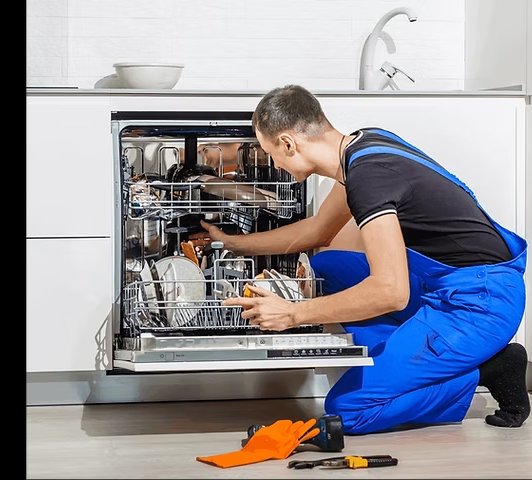
Technician unbolting a custom decor panel from the inner skin of an integrated AEG dishwasher door before sliding the machine out
Built In, Not Bought

In Dubai, an AEG Dishwasher Is Almost Always Part of the Kitchen

AEG dishwasher repair in Dubai is unusual among brand call-outs for a reason that has nothing to do with the electronics. In this market the brand arrives specified rather than shopped for. It goes into apartments and villas as part of an appliance package chosen by a developer or a fit-out contractor, installed into the cabinetry run before anybody moves in, and handed over already invisible. Freestanding examples exist here, but they are firmly the minority of what we see.

Two arrangements dominate. A built-in machine has its own finished front and slides under the worktop as a recognisable appliance. A fully integrated one does not: the front you look at is a piece of your kitchen, cut from the same board as the doors either side, screwed onto the appliance door through brackets, and often finished with the same handle profile so the machine cannot be picked out of the run at all. That second arrangement is the one that changes the work.

Nothing about the diagnosis changes. A blocked drain path is a blocked drain path whatever the front looks like. What changes is access, and access is time. Before the machine can be pulled forward far enough to reach anything at the back or underneath, the decor panel comes off its brackets, the plinth is released along its run, and any fixing holding the appliance to the worktop or to the neighbouring carcass has to be found and removed. On a stone top those fixings are reached from beneath, lying on the kitchen floor with a torch, working blind into a bracket that was fitted before the top went down.

Then there is what the kitchen has done since. Machines installed at handover and left alone for eight years accumulate history. New flooring gets laid up to the appliance rather than under it, so the feet no longer clear the tile edge and the machine simply will not come out until it is wound down. A repaint puts a skin of emulsion over the plinth screws. A refit runs a bead of silicone along the whole base run, and separating it without tearing the plinth face takes a blade and patience. Someone replaces the kitchen doors and the dishwasher panel with them, using screws a few millimetres longer than the original ones. Every one of those adds real minutes to a visit, and none of them are visible from the description of the fault.

Services complicate it further. On a great many integrated installations the inlet hose, the waste and the mains lead are routed sideways through a hole in the cabinet gable into the sink unit next door. That neighbouring cupboard has to be emptied before the machine can move, because pulling the appliance forward with the hoses still threaded through a tight aperture is how a supply connection gets strained. We would rather empty a cupboard than replace a fitting.

The panel itself causes faults, and this is the part owners almost never suspect. Those decor doors are heavy. A thick board with a stone-effect laminate, a solid timber front, or a handle-less panel with an aluminium profile bonded along the top edge can weigh well beyond what a lighter door assumes. The hinge counterbalance, whether it works on springs or a cable and drum, is set for a specific panel weight. Overload it, or let the springs weaken with age, and the door begins to hang low and drop through the last part of its travel. From there the latch meets its striker slightly off centre, the seal compresses firmly along one edge and hardly at all along the other, and you get a machine that leaks at a bottom corner and reports its door open partway through a cycle. Both symptoms read as component failure. Neither is. Fitting a new seal to a door that hangs crooked simply buys the same fault again in six months.

All of which is why we ask for photographs before quoting. Not the fault, the fitting: the closed machine in its run, the plinth beneath it, and the inside of the open door showing the panel brackets and their fixings. From three pictures we can usually tell whether the brackets are a standard pattern, whether flooring or tiling has boxed the appliance in, and whether the plinth has been siliconed. That turns the length of the visit from a guess into a number, and it means the estimate you agree beforehand is the invoice you receive afterwards.

One thing to state plainly at the outset. We are an independent repair company and we are not an authorised or approved service agent for AEG. Our trade licence, number 134585, is issued in Ajman, and Dubai is a service area we cover rather than the emirate that licensed us. If your machine is still inside its original manufacturer warranty, call the brand first and let them use it.
What We Get Called To

Six AEG Complaints, Roughly in the Order They Reach Us

Ranked by how often the phone rings, not by how serious they are. The cheapest cause of each is listed first for a reason.

πŸšͺ

Door Reports Itself Open

The cycle halts partway and the machine insists the door is not shut. Panel weight and door hang before latch parts.

🌊

Water Left in the Base

A shallow pool over the filter at the end of a programme. Filter, sump and waste routing come before the pump.

❄️

Dishes Come Out Cold

No heat, or heat that fades late in the cycle. Element, sensor and inlet temperature are all measurable in minutes.

πŸ’§

Damp or Swollen Plinth

On an integrated machine a leak hides for weeks. The board below the door usually shows it before the floor does.

⏸️

Stops at the Same Point

A programme that always halts in the same phase is telling you which circuit to look at. Repeatable is good news.

πŸ₯›

Film on Glassware

Sometimes a rinse aid or dosing setting. Sometimes permanent etching, which no repair and no product will reverse.

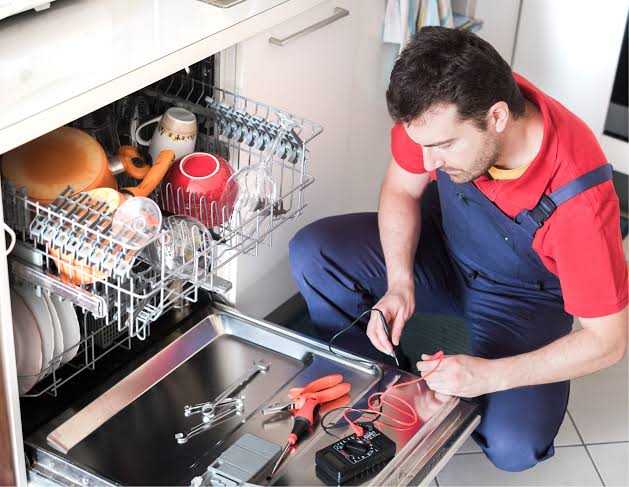
Meter probes reading across the heater terminals of an AEG dishwasher drawn forward from its cabinet housing
How Each One Is Worked

The Method Behind Those Six Faults

Every one of these has a cheap cause and an expensive cause, and the cheap one is far more common. The order below is the order we test in, and a good number of visits finish before the meter comes out.

A door that reports itself open. On an integrated machine this is a geometry problem until proved otherwise. We close the door and look at the gap along the top edge against the worktop and down both sides against the neighbouring doors. A gap that tapers means the appliance is not sitting square, either because a levelling foot has dropped, because the worktop brackets were never tightened, or because the decor panel has pulled the whole door out of line. Then we take the panel off and try the door bare. If the latch engages cleanly and consistently without the panel on it, the fault was never in the latch. Where the panel is genuinely too heavy for the counterbalance, the answer is hinge adjustment or a spring set matched to the weight, not a lock. Only when the bare door still fails do we measure the interlock for continuity on an isolated machine. Read more on doors that will not lock.

Standing water in the base. Start at the filter, because a clogged coarse filter and a sump full of seeds, foil corners and label paper account for more of these calls than anything mechanical. Lift the filter assembly, clear the sump, check the non-return flap for a fragment holding it open. Next the waste route, which on built-in installations is where the real problems live. The hose has to rise to a high loop before it drops to the trap, and a hose that has slumped flat behind the machine or been pushed down during a refit siphons the tub empty or refuses to clear it. On new installations the blanking plug in the sink trap spigot is sometimes still in place. Only after all of that does the drain pump get tested, first by hand for a jammed impeller and then for winding resistance. The full sequence is on our dishwasher not draining page.

Cold dishes. Most modern machines heat through a flow-through element built into the circulation path rather than a visible element in the tub floor, which means a heating fault and a wash pump fault can present identically. So we separate them: confirm the pump is circulating, then measure the heater for resistance and for insulation to earth, then check the temperature sensor against the value the service data expects at a known temperature. A sensor reading warm when the water is cold produces a machine that switches the heat off early and is entirely convinced it is right. Worth knowing locally: in high summer the incoming water is frequently hotter than the machine expects, not colder. Uninsulated rooftop tanks have been reported at fifty to sixty degrees and villa cold lines at thirty-five to forty, against a recommended inlet around forty-nine. A machine fed water that is already too hot can cook starch onto plates and skip the heating phase entirely, and that is a plumbing observation rather than an appliance fault.

A damp plinth. Integrated machines hide leaks. The tub is enclosed on three sides by cabinetry, so a slow drip runs down the base tray and out at the front, and the first evidence is a plinth board swelling along its bottom edge or a dark line on the floor tile grout. We trace it from the bottom up: base tray first, since many machines carry a float switch in the tray that will stop the machine outright once water collects there, then the door seal and the hang of the door, then the hose connections, the sump gasket and the pump housing. Water travels along the tray before it appears, so where it drips is almost never where it started. Our page on dishwasher leaks covers the trace in full.

A cycle that always halts in the same phase. Repeatability is the most useful thing a fault can offer, because it points at one part of the programme. Halting during fill sends us to the inlet valve, the supply tap and the pressure or level sensing. Halting when the heat should come on sends us to the element and its sensor. Halting at the drain sends us back to the filter and the pump. What we do not do is treat the code as the answer, which is covered further down this page.

Film on glassware. This deserves a correction, because a claim gets repeated locally that Dubai water is hard and that limescale is behind every clouded glass. It is not accurate. Dubai supply is overwhelmingly desalinated and modestly re-mineralised, and it reaches the tap soft rather than hard. So film on glass is usually rinse aid dosing, an overloaded rack blocking spray, or detergent quantity. Genuine etching is a different matter: soft water combined with over-dosed detergent micro-pits the glass surface permanently, and it will not come off because there is nothing sitting on top of it. Set the machine up from the manual and confirm with a test strip rather than from a number somebody quotes you, and if your building stores water in a tank, remember Dubai Municipality requires residential tanks to be cleaned at least twice a year. Sediment from a neglected tank varies enormously between buildings, which is what people are actually noticing when they say the water differs by area.

Two things we ask owners not to attempt. Do not work on the appliance wiring or its supply, and do not break into a pressurised water connection to check it. Clearing the filter and looking at the plinth are useful and safe. Everything past that involves an isolated machine and test equipment.

What To Expect

How an AEG Visit Runs From First Message to Finish

Six stages. Two of them happen before anybody arrives, which is exactly the point.

1. Photographs first

The machine in its run, the plinth, and the inside of the open door. We are looking at brackets, flooring and sealant, not at the fault, so we can price the access honestly.

2. The history in your words

When it began, which phase it fails in, whether it changes with programme or load, and whether the kitchen has been altered since the machine went in.

3. Read before removing

Stored codes pulled from the machine in its own service mode, filter and sump inspected, door hang and gaps checked. Several jobs end at this stage.

4. Panel, plinth and fixings

Decor panel off and set aside face up, plinth released, worktop or carcass fixings found and removed, neighbouring cupboard cleared where services run through it.

5. Measure, do not assume

Heater, sensor, pumps and valve tested for resistance and insulation, hoses and connections examined, the base tray checked for standing water.

6. Refit and prove

Machine levelled square in the aperture, panel rehung and its gaps checked against the neighbouring doors, then a full cycle run before we leave.

No Code Table Here

Why We Publish No List of AEG Error Codes

It would draw traffic and it would cost readers money. Those two facts are related.

What a code honestly tells you

  • That the machine detected a condition it was programmed to watch for, in one particular phase of the cycle
  • Which circuit or function to investigate, which is genuinely useful and narrows the search
  • Nothing whatever about which component failed, or whether a component failed at all
  • Nothing about the wiring, the connectors or the plumbing that the circuit depends on
  • Not necessarily the same thing on your model as on a machine two ranges or five years apart
  • Not necessarily the current condition, since a stored code may have been logged once and never repeated

AEG has run several control platforms across its dishwasher ranges over the years, and the code sets are not interchangeable between them. The tables you find published online are typically scraped from one manual, mixed with entries from other brands sharing a supplier, and offered as though they apply to everything. Follow one of those and the likely outcome is a part bought, fitted and blamed while the actual fault, very often a blocked path or a tired connector, sits untouched. We would rather rank first for telling you that than rank first for a table that misleads. If you want the broader explanation, our dishwasher error codes page sets out how they are meant to be used.

What we ask you to send instead

  • A clear photograph of the display exactly as it shows the code, rather than the code typed from memory
  • A photograph of the rating plate on the inner door edge, which carries the model and product number
  • The phase the machine reaches before it stops, and whether it always stops in the same place
  • Whether the code clears and returns, and how many cycles it survives before coming back
  • Whether anything changed shortly before it started, including work done in the kitchen
  • The three installation photographs, so the time on site is priced before anybody sets off

With that in hand we read the machine out in its own service mode using the data for that model, and we test the circuit the code points at rather than the part somebody guessed. If the code turns out to describe a condition rather than a failure, and a fair number do, we will tell you that the machine is behaving correctly and explain what triggered it. Saying plainly that nothing is broken is part of the service, not a wasted visit.

Cabinet Decision 66/2023 sets a statutory minimum warranty of fifteen days on repair work in the UAE, together with a documented estimate, your consent before work begins and an itemised invoice afterwards. Ours runs to ninety days. If the appliance is still covered by its original manufacturer warranty, call the brand first.

Related Pages

More Dishwasher Repair Help

Back to the main dishwasher page, or straight to the faults that bring integrated machines out of their cabinets most often.

Not sure the code you are seeing is on our list? Compare it across every brand we decode. All Brand Error Codes →

🍽️

Main Service Page

Our full dishwasher service across freestanding, built-in and fully integrated machines.

Dishwasher Repair & Service β†’

πŸšͺ

Door Will Not Lock

The fault a heavy decor panel imitates best, worked from door hang before latch parts.

Door Not Locking β†’

🧡

Door Seal Replacement

Worth doing when the seal is genuinely tired, and worth avoiding when the door simply hangs low.

Door Seal Replacement β†’

πŸ’§

Dishwasher Leaking Water

Why a leak on an integrated machine shows at the plinth long before it shows on the floor.

Leaking Water β†’

🌊

Dishwasher Not Draining

Filter, sump and the high loop in the waste hose, which built-in installations get wrong often.

Not Draining β†’

⚠️

Dishwasher Error Codes

What a stored code can and cannot prove, and how to send one to us usefully.

Error Codes β†’

FAQ

AEG Dishwasher Repair β€” Your Questions

Why do you ask for a photograph of the installation before you quote?

Because the machine is usually the straightforward part and the kitchen is not. A fully integrated appliance sits behind a custom panel, under a fixed worktop, inside a run of cabinetry that may well have been altered since the day it went in. Photographs of the closed door, the plinth below it and the inside of the open door tell us whether the brackets are standard, whether new flooring has been laid up against the machine, and how long removal will realistically take. That way the figure we quote is the figure you pay.

What is the difference between built-in and fully integrated, and does it change the repair?

Built-in means the appliance has its own finished front and simply slots under the worktop. Fully integrated means the front you see is a kitchen panel screwed to the appliance door, so the dishwasher disappears into the run when closed. It changes the job in two ways. The panel and its brackets have to come off before the machine can move, which is time nobody sees on the invoice unless it is explained. And the weight of that panel hangs on the door hinges, which creates faults of its own.

Water escapes at the bottom corner and the door will not always lock. Is that the seal?

Possibly, though the seal is rarely the first thing worth checking on an integrated machine. A custom panel is heavy and the hinge counterbalance is set for a particular weight. When that balance is wrong, or the mounting brackets have crept in their slots, the door hangs slightly low. The latch then meets its striker off centre while the seal compresses hard along one edge and barely at all along the other. Water finds the low corner and the lock turns unreliable. Correcting the hang costs nothing in parts.

Why will you not simply tell me what my AEG error code means?

Because a code names a condition the machine has detected, not the part that caused it. AEG has used several control platforms over the years, and the meaning of a given code is not constant across model years or ranges, so the tables circulating online are frequently wrong for the machine in front of you. Acting on one leads to a part swapped for nothing. We read the code off your appliance using the data for that model, then measure the circuit it points at. Send a photo of the display and of the rating plate.

Is there a risk of damaging the kitchen panel when it comes off?

There should not be, and protecting it is part of the work. That panel is usually a piece of your kitchen that cannot be reordered on its own, so it comes off deliberately, goes face up onto something soft, and every screw returns to the hole it came from. The risk worth naming is a different one. Where a panel was bonded with adhesive as well as screwed, or where a later refit ran a silicone bead down the edge, separation is slow and we would rather warn you than surprise you.

What warranty do you give, and what if the machine is still covered by AEG?

Ninety days on parts and labour. For context, Cabinet Decision 66/2023 sets fifteen days as the statutory minimum for repair work in the UAE and requires a documented estimate, your consent before work begins and an itemised invoice afterwards. Expect all three from anybody you use. One point we raise early rather than late: if the appliance is still inside its original manufacturer warranty, contact the brand before you contact us. We are independent, and there is no sense paying for a repair somebody else already owes you.

Send Us a Photo of the Installation and We Will Quote the Time Honestly

A picture of the closed machine in its run, the plinth below it and the inside of the open door tells us how the appliance is held in place. That decides the length of the visit far more than the fault itself does.

Book an AEG Visit

Tell Us What the Machine Does and How It Is Fitted

Standing water in the base, a door that reports itself open halfway through, a damp plinth, or a cycle that halts at the same point every time. Add whether the front is a kitchen panel or the machine has its own finished door, and we can plan the visit properly.

πŸ“ž Phone

+971 50 988 6591
Daily, 8:00 AM – 6:00 PM

πŸ’¬ WhatsApp

+971 50 988 6591
Send a photo of the display, the rating plate and the machine in its kitchen run

βœ‰οΈ Email

info@fixmyacdubai.ae

Request an AEG Dishwasher Repair

Opens WhatsApp with your request pre-filled β€” nothing is stored on this site.

Your details go directly to our team on WhatsApp. See our Privacy Policy.

Call Now+971 50 988 6591 WhatsAppInstant chat reply