đŸ›ī¸ Licensed & Registered — Trade Licence 134585 (Ajman) 🕒 Open Daily 8:00 AM – 6:00 PM 📞 +971 50 988 6591
🧰 Beko Dishwasher Repair

Beko Dishwasher Repair in Dubai — Naming the Part Before Promising a Date

Some Beko components move through the local spares trade constantly and some have to be ordered in. Which one your machine needs is what decides whether this is a single visit or a short wait, so we identify the part first and tell you the answer before you commit to anything.

⚡ Same-Day Visits đŸ›Ąī¸ 90-Day Warranty 💲 Quote Before Any Work đŸ›ī¸ Licence No. 134585
â„šī¸

We are an independent repair company — not an authorized service center of any dishwasher brand. Brand names on this page identify only the machines we repair, and all trademarks remain the property of their owners.

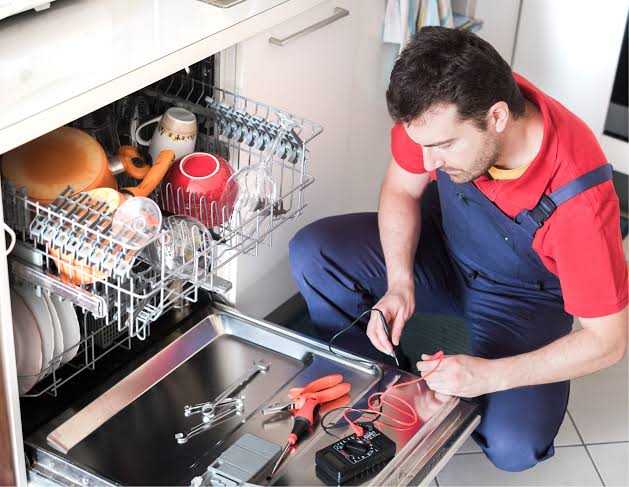
Meter probes held on a Beko dishwasher drain pump connector to read the winding before the part is condemned
Parts and Lead Time

The Question That Decides Your Repair Is Which Part, Not Which Brand

Beko dishwasher repair in Dubai tends to be discussed in terms of the fault. Owners ring about water in the base, or gritty plates, or a cycle that ends cold. The thing that actually governs how their week goes is narrower than that, and almost nobody raises it: whether the component behind the symptom is one the local spares trade keeps on a shelf, or one that has to be ordered from outside the country.

Beko sells in volume through UAE retail, and that has a consequence customers are rarely told about. Where a brand is widely bought, the parts that fail most predictably across the largest number of machines become worth stocking, so drain pumps, inlet valves, door seals, filter assemblies, spray arms, hoses and heating components tend to be reachable within the country. Availability follows demand, not loyalty. It is a commercial fact about how spares move, and it works in your favour on the majority of faults.

The other side of that same fact is less comfortable. Components that are specific to one production run — facia and control panel assemblies, boards tied to a particular software revision, inner door skins, tub fittings, colour-matched trims — are held far more thinly, because no distributor can carry every variant of every model. When your machine needs one of those, the repair is no longer a question of engineering. It is a question of shipping.

Which is exactly why we refuse to attach a date to a repair before we know the part. A technician who promises you a same-day fix on the phone is promising something he cannot see yet. If the fault turns out to be a pump, he was right by luck. If it turns out to be a control panel, he now has to walk that promise back, and you are the one rearranging your kitchen around it. We would rather be quiet on the phone and specific after the diagnosis.

This is where the rating plate earns its keep. On most Beko dishwashers it sits on the edge of the door where the seal meets it, or just inside the tub rim, and it carries the full model designation plus a product or serial reference. Those numbers, not the badge on the front, are what a spares supplier searches. Machines that are visually identical on a showroom floor can take different pumps or different heaters depending on when they were built. Send us a photograph of that plate when you book and we can be checking availability before anyone is dispatched, which regularly shortens the whole job by a day.

When the answer is that a part must be ordered, we tell you the wait as we understand it at the time, and we tell you before you agree to anything. We check with the supplier rather than repeating a number from memory. If the estimate slips, you hear about it from us instead of noticing that nobody has called. Quoting an honest wait costs us bookings occasionally, and we accept that, because the alternative is a customer who learns on day nine that the part was never coming.

It also changes the advice we give. There is a difference between a machine that will run badly for four days until a spray arm arrives and a machine that must not be used at all because it is leaking onto a fitted floor. When something has to be ordered, we say which of those you are looking at, and if the machine is safe to use in a limited way in the meantime, we explain how. That conversation is worth far more than a reassuring guess.

We carry a working stock of the items that fail most often, which is what allows a proportion of visits to finish on the same call. What we do not do is carry a van full of speculative components and fit whichever one seems plausible. Fitting on suspicion is fast and it looks decisive, and it is also how an owner ends up paying for two parts to fix one fault. The part comes out of the van after the measurement has pointed at it, not before.

None of this is brand advocacy. We are independent, we repair whatever we are called to, and the honest summary of Beko in this market is that the common failures are usually quick to source and the unusual ones are not. Knowing which side of that line you are on is the single most useful thing we can tell you on the day.

What We Actually Attend

Six Beko Faults, Roughly in Order of How Often We See Them

Listed the way the call comes in, with the part behind each one and whether it typically travels well.

🌊

Water Left in the Base

The most frequent call by a distance. Filter, sump and hose first; the drain pump only after a reading. Pumps are among the easier parts to source.

đŸŊī¸

Dishes Coming Out Gritty

Blocked spray arm jets, a clogged filter or weak circulation. Arms and filters are stocked widely, circulation motors less so.

â„ī¸

Cycle Finishes Cold

No hot rinse and nothing dry. Heater, thermistor or the board driving them. Which of the three it is decides the wait entirely.

🚱

Not Filling Properly

A cycle that stalls early or runs on a shallow load. Inlet valve, filter screen at the tap end, or the pressure sensing that meters the fill.

💧

Water on the Floor

Door seal, hose connection or a hairline failure at the sump. Seals are commonly held; a cracked tub component rarely is.

🔌

Panel Unresponsive

Dead or half-lit facia. Supply and door circuit are checked before electronics, because a panel assembly is the part most likely to wait.

Engineer working at floor level inside an open Beko dishwasher with the lower basket lifted clear of the sump
Method

How Each of Those Is Tested, Starting From the Cheapest Answer

Every fault above has a lazy diagnosis attached to it, and in each case the lazy diagnosis happens to be the most expensive part in the chain. Working upward from the cheap end is not generosity. It is simply the order in which these things actually fail.

Standing water. The filter stack and sump come out first and get inspected properly, not glanced at. Then the drain hose: kinks behind the machine, a run that has been pushed too deep into the waste spigot, a high loop that has collapsed, or a shared trap that has silted up. Only when the mechanical path is clear does the pump get a reading across its winding, and we check whether the board is sending it a drive signal at all. A pump that measures healthy and receives nothing is a control problem wearing a pump costume.

Gritty dishes. The spray arms come off and each jet gets looked through, because partially blocked arms produce a machine that sounds completely normal and washes at half strength. We spin them by hand for free travel, check the feed at the tub for restriction, and watch the wash phase for the pressure the arms are actually developing. If circulation is genuinely weak with a clear path, that points at the motor, and that is a conversation about parts before it is a conversation about labour.

Cold cycles. Three suspects, and they are separated by measurement rather than assumption. The heating element is read for resistance and for continuity to earth. The temperature sensor is read cold and then again as the tub warms, so we can see whether it is reporting a curve or lying flat. Then we check that the board is switching the heater at all. Guessing between these three is how people end up buying an element that was never faulty.

Poor fill. The screen inside the inlet hose connection is the first thing off, because it catches sediment from building tanks and nobody ever cleans it. The tap gets checked for a partly closed isolator. The valve is then tested electrically and, if it passes, we look at what meters the fill — a machine that fills briefly and stops is often being told by its level sensing that it is already full.

Leaks. We find the water rather than replacing the nearest seal to it. Water travels along a base tray before it appears, so the front edge is a terrible guide to the source. The door seal is inspected along its whole length for flattening and splits, the inlet and drain connections are checked under running conditions, and the sump area is examined for the hairline cracks that only weep under pressure. Dubai water is soft, so scale is rarely the culprit here.

Dead or partial panel. Supply first, at the socket and any isolating switch hidden behind the plinth. Then the door circuit, because on many machines the interlock gates power onward and an open switch imitates dead electronics exactly. Electronics come last, and they come last partly because a facia assembly is the component most likely to need ordering, so nobody benefits from reaching that conclusion early and wrongly.

A word on what is sensible to try yourself. Pulling the filter stack, clearing the spray arms and straightening a drain hose are all reasonable, and they resolve a fair number of the calls we take. Anything that means opening the machine to reach mains wiring, and anything involving pressurised plumbing connections, is not — a dishwasher combines water and mains voltage in a confined space, and the margin for error is small.

The readings taken during a diagnosis get written down and shown to you, and that matters more on a brand page than it might seem. If we are telling you that a component has to be ordered and that your kitchen is short a dishwasher until it lands, you are entitled to see the evidence that led there rather than take it on trust. A resistance figure that sits far outside the expected range, a sensor that refuses to move as the water heats, a pump that is being asked to run and is not answering — those are things you can look at yourself on the meter display. It also keeps us honest. It is considerably harder to talk somebody into an unnecessary part when the number that justifies it has to be shown on the day.

What To Expect

How a Beko Visit Is Sequenced

Model details before we travel, measurement before we name a part, and a price agreed before anything is fitted.

1. Model details up front

The rating plate photograph, taken from the door edge or tub rim. It lets us check what is reachable locally before an engineer leaves.

2. Reproduce the complaint

We run the machine and watch the fault happen rather than working from a description. Timing within the cycle narrows the cause considerably.

3. Clear the free checks

Filter stack, sump, spray arm jets, drain hose route, inlet screen and supply. Several of our visits end here, and the invoice reflects that.

4. Measure, do not assume

Pump windings, heater resistance, sensor behaviour as the tub warms, valve coil, and whether the board is driving any of them.

5. Name the part and the wait

Exact component, availability checked with the supplier, and an honest timescale. You hear both numbers before you decide anything.

6. Fit, test and document

The repair is run through a full cycle before we leave, and the invoice itemises what was fitted and what the ninety days covers.

No Code Table Here

Why We Publish No Beko Fault Code List

Every competing page carries one. We have left ours out deliberately, and the reason is worth stating rather than hiding.

What we could not verify

  • No UAE-market service documentation we could confirm as authentic
  • Code meanings that shift between production runs of the same model
  • Lists copied between websites with no traceable original source
  • European-market tables applied to machines specified for this region
  • Codes that name a circuit, not a part, and get read as a diagnosis
  • Owners buying components on the strength of a table that was wrong

We are independent, which means we hold no manufacturer service literature and we are not going to pretend otherwise by reprinting a table we found elsewhere. A published code list looks authoritative and costs nothing to post, and that combination is precisely why so many of them are unreliable. What a code genuinely does is tell the technician which circuit the machine became unhappy about — useful as a starting direction, worthless as a conclusion. We read whatever the machine is showing on the day, treat it as one input among several, and then prove the fault with a meter. If we ever obtain documentation for this market that we can stand behind, we will publish it and say where it came from.

Which side of the parts line you are on

  • Usually reachable locally: drain pumps, inlet valves, filter assemblies
  • Usually reachable locally: door seals, spray arms, hoses, heating components
  • Often an order: facia and control panel assemblies for a specific variant
  • Often an order: inner door skins, tub fittings and colour-matched trims
  • Harder as machines age: anything unique to a discontinued model run
  • Checked with the supplier on the day, never quoted from memory

Cabinet Decision 66/2023 sets a statutory minimum warranty of fifteen days on repair work in the UAE, plus a documented estimate with your consent before work and an itemised invoice after. Ours is ninety days on parts and labour. If the machine is still inside its original manufacturer warranty, call the brand first.

Related Pages

More Dishwasher Repair Help

The parent service page, plus the symptom pages that cover the faults listed above in full detail.

Not sure the code you are seeing is on our list? Compare it across every brand we decode. All Brand Error Codes →

đŸŊī¸

Main Service Page

Our full dishwasher service across freestanding, built-in and integrated machines.

Dishwasher Repair & Service →

🌊

Not Draining

The full walk through filter, sump, hose and trap before anyone reaches for a pump.

Not Draining →

âš™ī¸

Drain Pump Replacement

How a pump is proved faulty by measurement, and what the replacement job involves.

Drain Pump Replacement →

đŸ§Ŋ

Dishes Not Coming Clean

Spray arms, circulation and loading habits, in the order they actually cause trouble.

Not Cleaning Dishes →

🚰

Inlet Valve Replacement

Fill faults traced from the tap screen inward before the valve is condemned.

Inlet Valve Replacement →

📍

Jumeirah Village Circle

Villa and apartment visits across JVC, with parking and access sorted beforehand.

JVC Dishwasher Repair →

FAQ

Beko Dishwasher Repair — Your Questions

Will my Beko be fixed in one visit or will it wait for a part?

That depends entirely on which component has failed, which is why we will not answer it before we have measured anything. Certain items fail across huge numbers of machines and the local spares trade holds them accordingly, so a good proportion of our Beko visits finish the same day. Other components are model-specific, sit lower down the demand curve, and have to be brought in. We would rather tell you which category you are in on the day of diagnosis than let you discover it a week later.

Why do you keep asking for a photograph of the rating plate?

Because the name on the front of a dishwasher identifies almost nothing. What a supplier needs is the full model designation and the product or serial reference printed on the plate stuck to the door edge or the inner rim of the tub. Two machines that look identical in a showroom can carry different pumps, different heaters and different wiring depending on the production run. With that plate in front of us we can check what is actually held before we travel. Without it we are describing your machine from memory.

My Beko leaves water sitting in the bottom. Is that the drain pump?

It might be, but the pump is the expensive end of that list and we work from the cheap end first. Standing water is more often a blocked filter and sump, a drain hose kinked behind the machine or pushed too far into the waste, or debris wrapped around the pump impeller where the filter should have caught it. Only once those are ruled out do we take a reading across the pump winding and check whether the board is actually sending it power. Replacing a healthy pump fixes nothing.

The machine is about seven years old. Can you still get parts for it?

Usually yes for the common wear items, and less reliably for anything model-specific. Spares supply tends to follow how many of a given model went out and how long ago production stopped, so filters, hoses, seals and drain pumps stay easy for years while control panels, inner door assemblies and colour-matched trims thin out much sooner. If we find that the part your machine needs has become difficult to source, we will say so plainly rather than accept the job and leave you waiting on an order that may never arrive.

Can I buy the part online myself and have you fit it?

We can fit a part you have supplied, but there are two honest caveats. The first is that a large share of the wrong parts we see were ordered from a photograph rather than a model number, so please confirm the reference with us before you buy. The second is that our ninety-day warranty can only cover our own labour in that situation, because we have no way to stand behind a component we did not source. When we supply the part, the ninety days covers both sides of the job.

The dishwasher is still inside its Beko warranty. Should I call you?

Call the brand first, and we will tell you the same thing if you ring us. There is no sense in paying for a repair that somebody else is already obliged to carry out. If the warranty has run out, Cabinet Decision 66/2023 sets fifteen days as the statutory minimum on repair work in the UAE and requires a documented estimate, your consent before work begins and an itemised invoice afterwards. Our own cover runs to ninety days on parts and labour, and you should expect those three documents from any repairer you use.

Send Us the Model Number Before We Send an Engineer.

One photograph of the rating plate inside the door turns a guess into a part number. We can check availability while we are still on the phone with you.

Book a Beko Diagnosis

Tell Us the Model and What the Machine Is Doing

Standing water in the base, dishes coming out gritty, a cycle that finishes cold, a puddle under the front edge. Each of those narrows the parts list a long way before anyone opens the machine.

📞 Phone

+971 50 988 6591
Daily, 8:00 AM – 6:00 PM

đŸ’Ŧ WhatsApp

+971 50 988 6591
Photograph the rating plate on the door edge and send it through

âœ‰ī¸ Email

info@fixmyacdubai.ae

Request a Beko Dishwasher Visit

Opens WhatsApp with your request pre-filled — nothing is stored on this site.

Your details go directly to our team on WhatsApp. See our Privacy Policy.

Call Now+971 50 988 6591 WhatsAppInstant chat reply