๐Ÿ›๏ธ Licensed & Registered โ€” Trade Licence 134585 (Ajman) ๐Ÿ•’ Open Daily 8:00 AM โ€“ 6:00 PM ๐Ÿ“ž +971 50 988 6591
๐Ÿ‘ƒ Dishwasher Odour Diagnosis

Dishwasher Bad Smell in Dubai โ€” Decode the Odour Before You Pay for a Repair

Machines do not make one generic bad smell. They make several distinct ones, and each points somewhere different. Most of them end in a clean rather than a part, and we would rather say that here than at your kitchen door.

โšก Same-Day Visits ๐Ÿ›ก๏ธ 90-Day Warranty ๐Ÿ’ฒ Quote Before Any Work ๐Ÿ›๏ธ Licence No. 134585
โ„น๏ธ

We are an independent repair company โ€” not an authorized service center of any dishwasher brand. Brand names on this page identify only the machines we repair, and all trademarks remain the property of their owners.

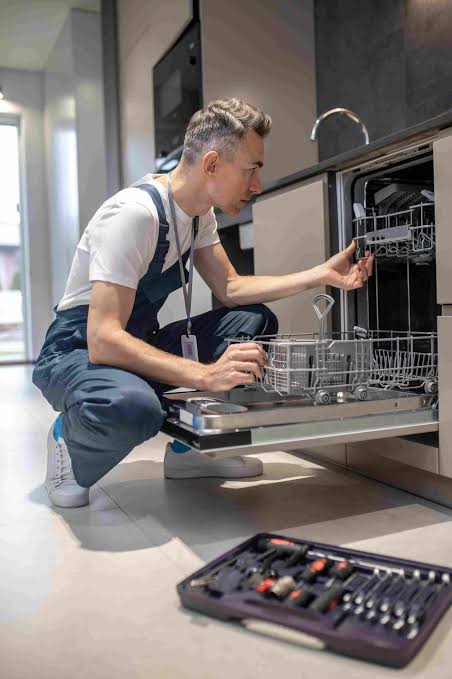
Technician sliding the lower basket clear to reach the filter cup and sump in the base of a dishwasher tub
Odour Is Information

Your Nose Has Already Done Most of the Diagnosis

A dishwasher bad smell in Dubai is one of the few complaints where the owner has gathered the most useful evidence before dialling anybody. Dishwashers do not produce one generic bad smell. They produce four or five clearly different ones, and each comes from a separate place, costs a different amount to deal with, and carries a different level of urgency.

The money-saving part goes first: a smelly dishwasher is usually not a broken dishwasher. The great majority of odour calls end with a thorough clean of the filter assembly, the sump underneath it, the seal channel and the drain path โ€” no part fitted, nothing replaced. Plenty of them do not need us at all. We would rather set that out on a page you can read for free than deliver it in your kitchen after a call-out fee.

Odour builds because a dishwasher is a warm, dark, permanently damp box containing several surfaces the spray arms cannot reach. Beneath the removable filter cup sits a sump, and by design the sump holds a shallow pool of water between programmes so the pump never starts dry. The drain hose is corrugated, and every ridge in it is a small shelf for grease and starch. The door seal lives in a narrow channel that never sees direct spray. The tub floor around the heating element catches whatever slides off a plate. None of that gets cleaned by running the machine, because a dishwasher cannot wash the parts that do the washing.

Cool programmes speed the whole process up. Eco cycles earn their efficiency figures by running longer and cooler, and while enzyme detergents handle protein at those temperatures, fat does not properly melt. It leaves the plates, travels as far as the filter, cools there and stays. Layer that with the bacteria arriving on every dirty plate, leave it a few weeks at kitchen temperature, and what you have is biofilm โ€” a slippery, tenacious layer that smells stale and musty and that rinsing will not shift.

Dubai supplies a specific accelerant, and it has nothing to do with the water. It is how the machines get used. In a household that eats out most evenings the dishwasher may run twice a week, and between those runs the sump water sits at whatever temperature the kitchen is holding. Kitchens here run warm, especially in a compact galley layout where the machine backs onto an external wall or sits beside the oven. Bacterial growth broadly tracks temperature, so a lightly used machine in a hot kitchen turns unpleasant faster than a hard-worked machine in a cool one. Holiday lets and apartments shut up through the summer are the extreme case of this, and they are why so many odour calls land in September.

One thing worth eliminating before you look at the appliance at all: if every cold tap in the property carries the same note, the source is upstream of your kitchen rather than inside it, and residential tanks in Dubai have to be cleaned at least twice a year under Municipality rules.

Everything below is organised by what you can actually smell. Stale, sulphurous, burnt, mildewed and sour each lead somewhere different, and telling them apart over the phone is often enough for us to say whether you need an engineer, a plumber, or half an hour and a bottle brush.

The Decoder

Six Smells and Where Each One Comes From

Match the note in your kitchen to the tile. One of these means stop using the machine today; most of the rest mean a cleaning cloth.

๐Ÿฆ 

Stale and Musty

The commonest by far. Biofilm in the filter, the sump and the ridges of the drain hose. A cleaning job, not a repair.

๐Ÿฅš

Rotten Egg or Sewer

Drain gas entering the kitchen through a dry trap or a badly made waste connection. A plumbing fault, not a machine fault.

๐Ÿ”ฅ

Burning or Hot Plastic

Stop the cycle and unplug it. Either something has melted onto the element or wiring is overheating. Do not run it again to test.

๐ŸŒง๏ธ

Damp Mildew

The door seal channel and a tub kept shut between washes. It clears with a wipe along the seal and a door left ajar.

๐Ÿ‹

Sour and Food-Like

Waste water sitting where it should not โ€” a sagging drain hose or a sump the pump is no longer emptying fully.

๐Ÿ†•

Faint New-Plastic

On a machine only weeks old this is off-gassing from fresh mouldings and insulation. It fades. Nothing is wrong.

Technician tracing a corrugated dishwasher drain hose behind the cabinet to find a sagging low point holding waste water
The Exceptions

Two of These Smells Are Not the Dishwasher At All

Sulphur and sewer notes belong to the plumbing. Every waste outlet in a kitchen sits behind a water seal โ€” a bend holding a small plug of water that stops gas from the stack coming back up the pipe. When that seal dries out or gets siphoned away, the pipe is open to the drainage system and the room fills with the smell of it. The dishwasher is frequently blamed because its door is the largest opening nearby, but the odour is arriving through the waste connection, not being manufactured in the tub.

Test it in a minute, with the door shut. Leave the machine closed and unused for an hour, then put your nose near the sink drain, then near the floor gully if the kitchen or the adjoining utility area has one. If the smell is strongest at a drain rather than at the appliance, the appliance is innocent. Run water into every unused outlet in the property for thirty seconds each; a trap that has evaporated empty over a long absence refills instantly and the smell goes with it. That single step resolves a fair number of the sewer-smell calls we take after summer.

Installation faults produce the same result. A drain hose that runs flat along the floor instead of rising into a high loop lets waste water sit in the horizontal run, and it also allows sink water to flow back towards the machine. A hose pushed onto a waste spigot whose blanking plug was never knocked out gives a slow, partial drain and a permanently wet sump. A connection made without a proper seal at the trap simply vents the stack straight into the cabinet. None of those are appliance faults, and none of them will be fixed by cleaning anything โ€” but all of them are found by looking behind the machine, which is why the visit includes that.

The burning smell is the one that ends the debate. If you notice hot plastic, scorching, or that sharp electrical note that sits at the back of the throat, stop the programme and switch off at the socket. Two things cause it. A plastic item โ€” a lid, a small container, a piece of a basket tine โ€” has dropped through the lower basket onto the heating element in the tub base and welded itself there. Or something electrical is running hot: a connector, a section of loom, a pump winding, a heater terminal. The melted item you will usually see once the tub cools. The electrical version leaves nothing visible, and that is exactly why nobody should run another cycle to check whether the smell goes away.

There are sensible boundaries on what to do yourself here. Removing the filter, washing it in the sink, wiping the sump rim and cleaning the door seal channel are all reasonable and take about twenty minutes. Pulling the machine out to look at the drain hose is fine if it slides freely. What is not reasonable is opening the machine to wiring, or breaking into a waste connection that is under pressure from the sink above it. Both of those belong to somebody with the machine isolated and the right tools, and neither is worth an accident over a smell.

One further test separates a dirty machine from a dirty drain. Take a plastic container out at the end of a cycle, let it cool, and smell it. Plastics absorb odour readily where glass and porcelain do not, so if the clean items carry the note as well, whatever is producing it was circulating inside the tub during the wash โ€” filter, sump, spray arms or tub walls. If the dishes come out perfectly fresh and the smell only meets you when the door opens, the source is sitting still rather than being pumped around, which points at the drain path or at the room. Two minutes with a lunchbox saves a good deal of guessing, and it is a check you can run before anyone visits.

The sour, food-like note sits between the two camps. It means waste water is standing somewhere it should have left. A drain pump that has weakened, a filter so blocked the pump cannot draw through it, or a hose sagging into a low point behind the plinth will each leave a reservoir that ferments quietly between washes. Open the door the morning after a cycle and look at the sump: a shallow film of water is normal, standing water covering the filter base is not. That distinction is the one that decides whether this page ends in a cleaning cloth or a part.

What To Expect

How an Odour Visit Actually Runs

The free checks come first and the sequence stops as soon as the source is proved rather than suspected.

1. Smell it before touching it

Door opened cold, then the room, then the sink drain. Which of those is strongest decides whether this is an appliance job or a plumbing one, and it costs nothing to establish.

2. Lift the filter and read the sump

Coarse filter, fine mesh and the sump below. Standing water, a greasy film, or debris packed under the cup each tell a different part of the story.

3. Work the door and the seal

The channel the seal sits in, the tub lip it presses against, and the lower edge where water collects and never dries. Mildew lives in exactly those places.

4. Follow the drain path

Sump to pump to hose to waste connection, checking the loop height, any sag in the run, and whether the hose has gone soft or split behind the cabinet.

5. Rule the plumbing in or out

Traps, the floor gully and the waste spigot. If the stack is venting into your kitchen we will tell you plainly, and we will not charge you to clean an appliance that was never the problem.

6. Say which it is, then price it

Clean, adjustment or part โ€” named, explained and quoted before anything is done. If the honest answer is that you can do this yourself, that is what you will hear.

Straight Answers

Maintenance or Repair โ€” Which One Is This?

The shorter list is the one that costs money. The longer list is the one most owners are actually looking at.

A genuine fault worth fixing

  • Standing water still covering the sump the morning after a completed cycle
  • Drain hose split, gone soft, or sagging into a low point that never clears
  • Door seal perished, torn or so distorted that its channel stays permanently wet
  • Drain pump audibly labouring, or the impeller jammed by a fragment of glass or bone
  • Burnt or scorched smell of any kind, with or without a visible melted item
  • Waste connection made without a seal, venting drain gas into the cabinet

Even on this list, the parts involved sit at the inexpensive end of a dishwasher. A drain hose, a door seal and a drain pump are all routine items on most models, and none of them is a reason to start pricing a new machine. What matters is that the finding is demonstrated to you before it is charged for. If we tell you the pump is not clearing the sump, we will show you the sump. If we tell you the hose has sagged, the hose comes out where you can see it. Nobody should be asked to take a smell diagnosis on trust, because a smell is the one symptom where guesswork is easiest to hide behind and hardest for an owner to check afterwards.

Maintenance, and we will say so

  • Filter cup and mesh loaded with soft debris that lifts out and rinses off
  • Greasy film on the tub walls after months of short, cool programmes only
  • Mildew along the door seal on a machine kept shut between washes
  • Spray arm jets partly blocked, leaving soils on the dishes that then rot in the tub
  • A dry trap in the kitchen or utility area after a long absence over the summer
  • Faint new-plastic smell on a machine only a few weeks old, fading week by week

Cabinet Decision 66/2023 sets a statutory minimum warranty of fifteen days on repair work in the UAE, plus a documented estimate with your consent before work starts and an itemised invoice after. Ours is ninety days on parts and labour. If the machine is still inside its original manufacturer warranty, call the brand first.

Related Pages

More Dishwasher Repair Help

Back to the main dishwasher page, or across to whichever part of the machine your nose pointed at.

Showing a code rather than just a symptom? Start here. Decode Your Error Code →

๐Ÿฝ๏ธ

Main Service Page

Our full dishwasher service across freestanding, built-in and integrated machines.

Dishwasher Repair & Service โ†’

๐Ÿงฝ

Filter Cleaning

The service side of this page โ€” what a full filter, sump and drain path clean actually involves.

Filter Cleaning โ†’

๐ŸŒŠ

Not Draining

Standing water in the sump is the fastest route to a sour machine. Start here if it never empties.

Not Draining โ†’

โš™๏ธ

Drain Pump Replacement

When the pump is the reason waste water stays behind, this is the part and the job.

Drain Pump Replacement โ†’

๐Ÿงต

Door Seal Replacement

Mildew that keeps returning along the door usually means the seal and its channel need attention.

Door Seal Replacement โ†’

๐Ÿ“

Dubai Marina

Tower access and building permissions arranged ahead of the visit rather than on the doorstep.

Dubai Marina โ†’

FAQ

Smelly Dishwasher โ€” Your Questions

Why does my dishwasher smell when I run it almost every day?

Daily use helps, but it does not reach everywhere. Residue collects in the places the spray arms never touch: under the filter cup, in the sump beneath it, along the flexible corrugations of the drain hose and inside the narrow channel the door seal sits in. Those surfaces stay damp and warm between programmes, which is exactly what a bacterial film needs to establish itself. Short eco cycles make it worse, because they finish below the temperature that fully melts fat. The smell is being generated inside the machine and then redistributed by it.

What does a rotten-egg or sewage smell mean? Is that the machine?

That one usually points away from the appliance. A sulphur or sewer note means drain gases are reaching your kitchen, and the dishwasher is often only the nearest opening they can travel through. A floor gully that has dried out over a long absence, a sink trap that has siphoned itself empty, or a waste connection venting back from the stack will each do it. Test it with the dishwasher door shut: smell the sink drain and the floor drain. If they carry the same note, you want a plumber rather than an appliance engineer.

My dishwasher smells of burning plastic. Can I let the cycle finish?

No. End the programme and switch the machine off at the socket. A hot-plastic or scorched-electrical note has two likely sources: something plastic has fallen onto the heating element in the base of the tub, or a connector, loom or motor winding is running hot. The first usually leaves a melted mark you can see once the tub cools. The second you cannot see, and it is precisely why we ask people not to keep running the cycle to find out whether it clears. Leave it isolated and have it checked before further use.

Do vinegar and bicarbonate of soda actually fix a smelly dishwasher?

They freshen the tub for a day or two and do nothing at all to the film growing under the filter or inside the drain hose, because neither of them scrubs anything. Proprietary machine cleaners are better, and a hot empty run with one will strip light grease off the tub walls. Neither approach replaces lifting the filter out and washing it by hand under a tap. Vinegar is also mildly aggressive towards rubber over time, so we would not make it a weekly ritual on a machine with an ageing door seal.

How often should I run an empty hot cycle?

Monthly suits most households, and weekly is sensible if you mainly run short eco programmes. Empty machine, hottest cycle the model offers, no dishes, either a proprietary cleaner or nothing. The point is the temperature: a full-length hot wash melts the fat that cool programmes leave behind on the tub walls and along the drain path. Take the filter out and rinse it first, otherwise you are only circulating the same debris at a higher temperature. Afterwards, leave the door resting ajar so the tub can dry properly.

Is a smell ever a real fault that needs a part fitted?

Sometimes, though it is the minority. A drain pump that no longer clears the sump leaves standing water fermenting between washes, a split or sagging drain hose traps waste in its low point, and a perished door seal holds damp in a channel no cloth reaches. Those are parts, and they carry our ninety-day warranty on parts and labour. For context, Cabinet Decision 66/2023 sets fifteen days as the statutory minimum on repair work in the UAE, along with a documented estimate, your consent and an itemised invoice. If the machine is still under its manufacturer warranty, call the brand first and we will say so.

Describe the Smell and Half the Diagnosis Is Done

Stale, sulphurous, burnt or mildewed each lead somewhere different. Tell us which one and we will tell you whether this needs an engineer, a plumber, or nothing but half an hour of your own time.

Book an Odour Diagnosis

Tell Us What It Smells Like and When

Whether it hits you on opening the door or lingers in the room, whether the clean dishes carry it too, and whether the kitchen sink drain smells the same way. Those three answers narrow it down fast.

๐Ÿ“ž Phone

+971 50 988 6591
Daily, 8:00 AM โ€“ 6:00 PM

๐Ÿ’ฌ WhatsApp

+971 50 988 6591
Message us the smell, when it started and whether the sink drain smells too

โœ‰๏ธ Email

info@fixmyacdubai.ae

Request an Odour Diagnosis

Opens WhatsApp with your request pre-filled โ€” nothing is stored on this site.

Your details go directly to our team on WhatsApp. See our Privacy Policy.

Call Now+971 50 988 6591 WhatsAppInstant chat reply