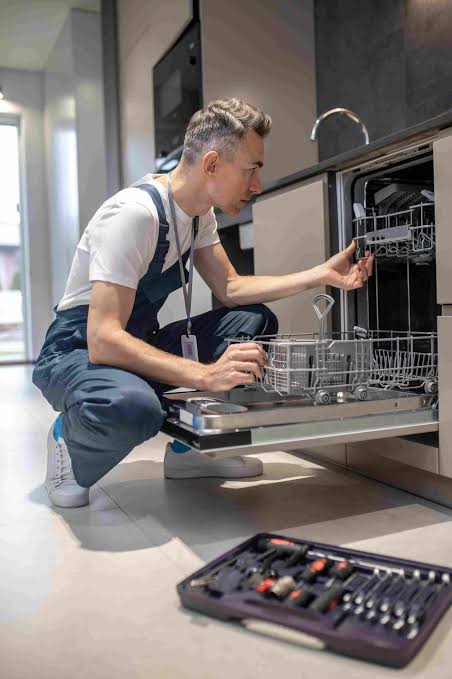
Start by ruling out the noises that belong there. A drain pump clearing the sump, a detergent flap letting go and a diverter switching arms all sound alarming through a cabinet door, and none of them is a fault. Once those are set aside, the remaining sounds narrow the problem down quickly.
We are an independent repair company â not an authorized service center of any dishwasher brand. Brand names on this page identify only the machines we repair, and all trademarks remain the property of their owners.

A dishwasher making noise in Dubai generates a steady flow of calls, and a large share of them turn out to describe a machine doing exactly what its designer intended. So the honest place to begin is not with a fault list but with the catalogue of sounds that are supposed to be there. Rule those out and the remaining noises point somewhere useful.
The drain pump whirr, at the start and at the end. Nearly every programme opens by emptying whatever sat in the sump since last time, and closes the same way. What you hear is a small high-speed motor spinning up, holding a thin whine for anywhere between twenty seconds and a minute, then falling away as the last of the water leaves. Towards the end of that run the note usually roughens as the pump starts pulling air through with the water. Owners frequently record that final gargle and send it to us convinced something is tearing itself apart. It is the sump running dry, and it is the sound of the cycle finishing properly.
The detergent flap snapping open. Somewhere in the middle of the programme a sprung plastic door releases and hits its stop with a single sharp crack. In a quiet kitchen it carries like something breaking. Nothing has broken. On many machines the flap also swings into the door face on its way, adding a second lighter tap. If you want to satisfy yourself, note the time it happens on two consecutive washes. A mechanical release lands at the same point in the programme every time; a genuine fault does not keep that kind of appointment.
Water hitting something hard and flat. A spray arm delivers a jet with real force behind it. When that jet meets a roasting tray leaning against the side, a large flat pan lid, a heavy chopping board or an upturned mixing bowl, the item acts as a drum and the whole cabinet resonates. Move it and the noise moves with it. This is the single most common cause of the complaint that a machine has suddenly gone loud, and it is entirely a question of what went in the basket.
The diverter clunk. A good many current machines feed the upper and lower arms alternately rather than together, which lets them wash properly on less water and less energy. A small motorised valve in the sump switches between them, and every switch produces a dull mechanical clunk followed by a change in the tone of the spray. On some models this repeats every couple of minutes across the whole wash phase. Rhythmic, regular, always the same weight of sound: that is a diverter doing its job.
Context makes all of these seem worse than they are. Kitchens here are typically finished in stone, tile and glass with very little soft material to absorb anything, and open-plan layouts put the machine in the same volume of air as the sofa. An integrated appliance behind a heavy furniture panel is generally quieter, but the panel and the cabinet can also pick up and re-broadcast a vibration the bare machine would have kept to itself. It is also worth checking the noise rating printed on the energy label of the machine you replaced against the one you have now, because a genuinely quieter appliance draws attention to the few sounds it does still make.
There is one test that settles most of this in an hour. Empty the machine completely, run the shortest or rinse programme, and stand and listen. If the sound has gone, it was the load. If it is still there with nothing inside, it is the appliance, and the sections below sort out which part is producing it.
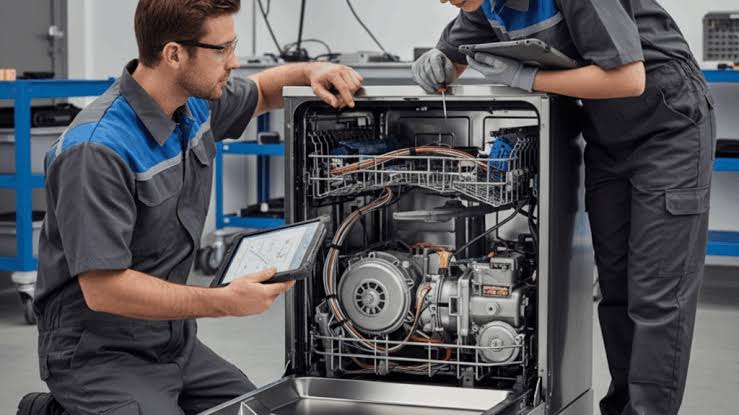
Once the normal noises are set aside, the character of what is left does most of the diagnostic work.
Something hard caught in a pump impeller â glass, a stone, a pip â or a bearing that has started to break up.
Crockery touching crockery, or a spray arm that has worked loose on its spindle. Nine times out of ten this is loading.
A motor with power reaching it that cannot turn. Jammed by debris or seized on its bearing, and drawing current the whole time.
A rising metallic squeal through the wash phase. A wash pump bearing running dry or on its way out.
A single heavy knock as filling stops. Water hammer in the supply pipework, which is plumbing rather than appliance.
A dragging scratch once or twice per revolution. A spray arm striking a handle or a platter standing proud of the basket.

Grinding. The classic version arrives during the pump-out phases only, which means at the very start of a programme and again at the very end. That timing tells you the drain pump is running, and something hard is being thrown around inside it. A sliver from a broken glass is the usual find, followed by date and cherry stones, olive pits, fruit seeds and shattered eggshell. Small hard objects clear the filter mesh far more easily than people expect. If the grinding runs through the middle of the cycle instead, while water is being circulated, the wash pump is the source, and there the two candidates are debris or a bearing that has begun to fail. A bearing generally announces itself by getting worse week on week and by changing pitch as the wash heats; debris tends to appear overnight and stay the same.
Rattling. This is the most benign of the fault sounds and the one most often solved without any parts. Two pieces of crockery touching will buzz against each other every time the spray sweeps past. So will a light plastic container that has flipped over, a lid resting on the tines, or teaspoons nested together in the cutlery basket. The mechanical version is a spray arm that has come loose on its spindle, or an upper arm whose retaining nut has backed off, so the arm wobbles rather than spinning true. Both are checked in seconds with the machine switched off and the door open.
Humming with nothing happening. A motor is energised and cannot rotate. In a drain pump that produces a flat electrical hum for the length of the pump-out attempt, no water leaving, and often a drain warning or a tub still holding water at the end. In a wash pump it produces the same hum with no spray noise and a load that comes out untouched. The cause is either a physical jam or a seized bearing, and the two are told apart by whether the impeller can be turned at all. Do not leave a machine humming in the hope it frees itself. A stalled motor keeps drawing current, heats up, and can take its winding or its capacitor with it.
Screeching. A metallic squeal that begins faint and grows over the course of a wash is a wash pump bearing losing its lubrication. It usually rises in pitch as the water temperature climbs, and it often disappears for the first few minutes of a cycle before coming back. Left alone, that bearing takes the rotor out of true, and what began as a noise ends as a seized pump. Caught early it is a single component swap rather than a machine written off.
Banging or knocking. When the noise is a solitary heavy thud in the wall or under the floor at the exact moment filling stops, the appliance is not at fault. The inlet valve closes almost instantly, the moving column of water behind it has to stop dead, and the shock rebounds along the pipe run. Long unclipped pipework, high supply pressure and a tap that bangs when you shut it quickly all point the same way. The remedy is an arrestor or proper pipe support, fitted by a plumber. Nobody should be taking apart a pressurised supply line to chase it.
A harsh scrape. A dragging, scratching contact that repeats once or twice per revolution of an arm is almost always a physical collision. A tall knife handle poking down through the upper basket, a serving platter leaning over the edge, a wooden spoon sticking up. The arm slows, the wash pattern collapses, and dishes come out patchy in the same area every time.
The checks you can safely make yourself. Switch the machine off at the socket first and let any hot water settle. Turn both spray arms slowly by hand through a full circle and watch for anything they touch. Check the upper arm is firm on its mount. Lift out the filter assembly, rinse it under the tap and inspect it under a torch, picking out any glass with tongs or kitchen paper rather than fingers. Sponge the sump dry and look for fragments sitting in it. On several models a small impeller cover unclips by hand at that point, and if it does not release under light finger pressure, stop there. Then run the machine empty on a rinse programme and listen again.
Where to hand it over. Anything requiring the machine to be tipped, the base tray removed or the pump unbolted goes beyond a homeowner check, and so does any sound accompanied by a burning smell, a tripping breaker or water on the floor. Those need an isolated appliance, a meter and someone who has taken that pump apart before.
Listening comes before dismantling, and the free checks come before the paid ones.
Ten seconds of phone audio is worth a paragraph of description. Where it sits in the cycle narrows the candidates before the machine is touched.
What is in the baskets, what leans, what overhangs and what nests together. A surprising number of visits are resolved and closed at this point.
Both arms turned by hand through full rotation, clearances checked at the highest items, retaining nut and spindle checked for play.
Filter lifted, rinsed and inspected, sump emptied and swept for glass and stones, impeller checked for free rotation where the design allows.
A rinse programme with nothing inside separates the load from the machine, and lets the sound be traced by hand to the panel it is coming through.
The cause, the remedy and the cost are put to you first. If the answer was a stone in the pump and an adjustment, the invoice says so.
The second list is longer than the first, and that is the point.
Bearings and impellers do wear, and when the evidence points that way the part is named, priced and changed. What we will not do is sell a pump on the strength of a noise nobody has traced. Sound travels through a steel tub and a cabinet in ways that mislead, and a rattle transmitted from a loose plinth can be blamed on a motor two feet away with complete confidence and no accuracy at all. Locating the source by hand with the machine running empty takes minutes and settles the argument before any money is discussed.
Under Cabinet Decision 66/2023 Article 26, repair work in the UAE carries a minimum warranty of fifteen days, together with a written estimate, your consent before the work and an itemised invoice afterwards. We work to ninety days. Where the appliance remains under its original manufacturer warranty, speak to the brand before booking us.
Back to the main dishwasher page, or on to whichever component your sound was pointing at.
Showing a code rather than just a symptom? Start here. Decode Your Error Code →
The full dishwasher service across freestanding, built-in and integrated machines.
Where grinding at the start and end of a cycle usually ends up once the sump is clear.
The wash pump behind a screech that climbs with temperature, or a hum that never turns.
Loose arms rattle and cracked arms scrape. Both change how the water is delivered.
Tower access and building approvals sorted before the visit rather than in the lobby.
No, and a fair number of the machines we are called to are behaving normally. A drain pump running at the beginning and end of a programme produces a high whirr. The detergent flap releases with a sharp plastic crack partway through. Water landing on a wide flat pan or an upturned bowl drums loudly. A diverter valve clunks each time it swaps which spray arm is fed. All four are the appliance working. What matters is whether the sound is new, whether it is growing, and whether the wash quality has changed alongside it.
Usually something hard has reached the drain pump and is being dragged around by the impeller. A splinter of broken glass, a date or cherry stone, a fruit pip or a shard of eggshell are the regular culprits. That noise appears during the pump-out phases, so at the very start of a programme and again at the end. If instead the grinding runs right through the wash phase while water is circulating, the wash pump is the more likely source, and a bearing that has begun to break up sounds much the same as debris.
A hum with no result means a motor is receiving power and cannot turn. Either the impeller is jammed by debris, or the bearing has seized. The machine will often carry on humming for the length of its allotted pump-out and then stop with a drain warning or simply move on leaving water in the tub. Switch it off at the socket rather than leaving it to hum, because a stalled motor keeps drawing current and heating up. The fix depends entirely on whether the obstruction can be cleared or the pump has failed outright.
Almost certainly not. That is water hammer. The fill valve shuts in a fraction of a second, the moving column of water in the supply pipe has nowhere to go, and the shock travels back along the run as a bang or a rapid knocking. You often hear the same thing when a mixer tap is closed quickly. It belongs to the plumbing rather than the appliance, and the remedy is a shock arrestor or a properly clipped pipe run. That is work for a plumber, not something to attempt on a live pressurised line.
A rattle is worth investigating but rarely urgent, because it is usually two items touching or a spray arm that has worked loose. Grinding is different and we would stop using the machine. Whatever is being churned in the pump is wearing the impeller and the housing every time it runs, and a cheap clearance can turn into a pump replacement if it is left. A rising metallic squeal deserves the same treatment. Run the machine empty once to confirm the sound is not simply the load, then leave it until it is looked at.
Ninety days on parts and labour. For context, Cabinet Decision 66/2023 Article 26 puts the legal floor for repair work in the UAE at fifteen days, and alongside that it requires a documented estimate, your agreement before work begins and an itemised invoice at the end. Ask any repairer for all three. One thing we prefer to say up front: if the appliance is still inside its original manufacturer warranty, contact the brand before you contact us. We would rather turn down the booking than see you pay for something already covered.
When it happens in the cycle, how long it lasts and whether it rises with the machine all narrow the field before anyone opens a panel. Fault, fix and price agreed with you first.
A grind for twenty seconds at the very end, a hum that goes nowhere, a metallic squeal that climbs as the water heats, a knock in the pipes when filling stops. Each of those lands in a different place.
+971 50 988 6591
Daily, 8:00 AM â 6:00 PM
+971 50 988 6591
Record ten seconds of the sound on your phone and send it over