๐Ÿ›๏ธ Licensed & Registered โ€” Trade Licence 134585 (Ajman) ๐Ÿ•’ Open Daily 8:00 AM โ€“ 6:00 PM ๐Ÿ“ž +971 50 988 6591
๐Ÿฅ‚ Cloudy Glassware

Cloudy Glasses From Your Dishwasher in Dubai โ€” Film or Etching?

Every competitor blames limescale. On a desalinated supply that is almost always wrong. There is a one-minute test that tells you whether the haze wipes off, or whether the glass itself has been dissolved away.

โšก Same-Day Visits ๐Ÿ›ก๏ธ 90-Day Warranty ๐Ÿ’ฒ Quote Before Any Work ๐Ÿ›๏ธ Licence No. 134585
โ„น๏ธ

We are an independent repair company โ€” not an authorized service center of any dishwasher brand. Brand names and detergent references on this page are used only to describe the machines and the products we work around, and all trademarks remain the property of their owners.

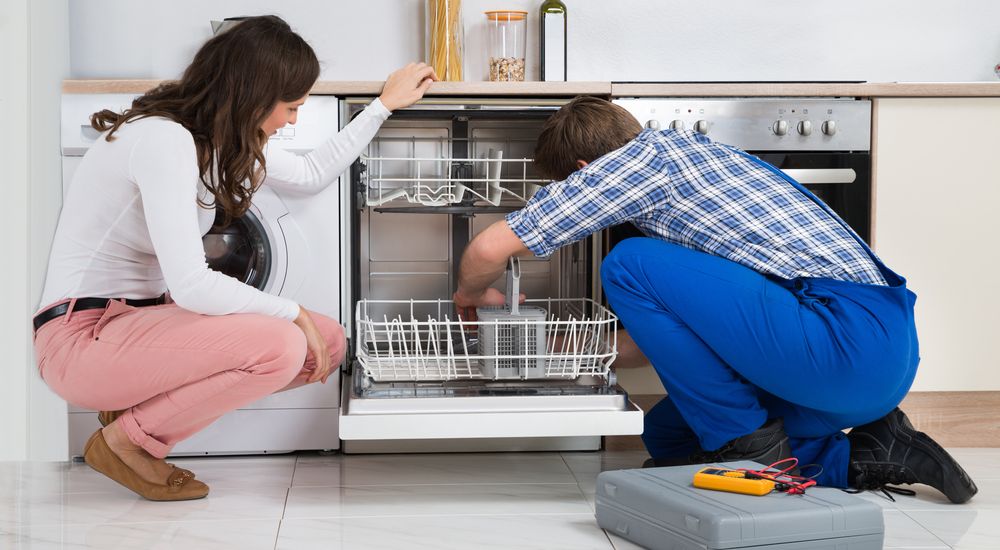
Technician showing a Dubai resident how to tell etched glass from a wipe-off film
Film or Etching

Two Different Problems That Look the Same in the Cupboard

Cloudy glasses from your dishwasher in Dubai are one of the few complaints where the standard local answer is not merely unhelpful โ€” it actively makes the damage worse.

Search the phrase and almost every result says the same four things: hard water, limescale, turn the softener up, add more salt. Follow that here and you will accelerate the exact problem you were trying to solve.

Because there are two entirely separate things that make glass go cloudy. They look alike from across a kitchen, and their fixes are opposites.

Film is a deposit. Something has settled onto the surface โ€” mineral, redeposited food soil, or detergent that never fully dissolved and rinsed clear. It sits on top of intact glass. It tends to be patchy, often heavier at the base or on one side of a rack, and it responds to treatment. A cloth dampened with white vinegar lifts it or visibly thins it.

Etching is loss. The wash chemistry has dissolved a microscopically thin layer off the glass and left the surface micro-pitted. Light that used to pass straight through now scatters, so the piece reads milky and sometimes shows a faint rainbow tint at an angle. It is even rather than patchy, it covers the whole item, and nothing removes it โ€” because nothing is sitting there to be removed.

So the first move is not to buy a product. It is to run the vinegar test on one glass and find out which of the two you are dealing with. If the haze lifts, the rest of this page is a fix. If it does not, that cupboard is finished, and the only thing left worth doing is protecting the glasses you have not ruined yet.

Worth being blunt about the scale of it. A set that has been through two hundred cycles on a maximum softener setting with a full tablet every time is not recoverable by us or by anybody else. That is a chemistry outcome rather than a repair, and no part exists to undo it. We would far rather tell you that on the phone than charge for a visit to say it in your kitchen.

Ranked by What We Actually Find

Six Causes of Cloudy Glass, Cheapest First

The first five are correctable and cost nothing but a change of habit. The sixth is the one nobody wants to hear.

๐Ÿง‚

1. Softener Set Too High

Set for hard water the machine never meets. It strips the modest mineral that was there and leaves the detergent nothing to work on but your glass.

๐Ÿฅ„

2. Detergent Over-Dosed

A full tablet on a light load, every load. The single biggest lever, and the one the packaging quietly encourages you to pull.

๐Ÿ’ง

3. Rinse Aid Empty or Off

Not a cause of etching, but it produces drying spots and streaks that read as early clouding. Completely reversible, so rule it out first.

๐ŸŒก๏ธ

4. Long, Hot Programmes

Intensive cycles plus a warm summer inlet keep alkaline solution hot against glass for longer. Same dose, far more attack.

๐Ÿš

5. Redeposited Soil Film

A loaded filter, blocked spray jets or tank sediment leave a gritty haze on everything. It wipes off, and it is a machine problem we can fix.

๐Ÿฅ‚

6. Glass Already Etched

The surface has been dissolved. No product, programme or part reverses it. All that remains is protecting what is still clear.

Fitted Dubai kitchen with glassware stored in the cupboard directly above the dishwasher run
The Dubai Combination

Soft Water, a Heavy Dose and a Long Hot Cycle

The reason this city produces etched glass rather than limescale is that nearly everything the local advice tells you about the water is wrong.

The supply here is soft. Roughly ninety-nine percent of it is desalinated seawater. Desalination strips the dissolved mineral content close to nothing, and the water is re-mineralised afterwards to a modest, controlled level before it enters the network. Soft is the starting condition. The hard-water claim saturates appliance content in Dubai, we could not source it to anything credible, and it is repeated most loudly by people with a softener or a treatment plan to sell.

We publish no hardness number, because none was verifiable to a standard we were willing to put our name against. Nor does hardness vary by district โ€” one integrated production and distribution network feeds the emirate, so the Marina is not on different water from Jumeirah or the villa communities. What genuinely does differ between addresses is the storage tank, how much sediment sits in it and how long water stands there. Real variable, entirely separate question.

Now the mechanism, because it explains the whole page. Dishwasher detergent is strongly alkaline by design, since that is what shifts fat and protein. Water carrying dissolved mineral partially buffers that alkalinity โ€” the mineral gives the chemistry something else to act on. Remove the mineral and there is nothing between the detergent and the glass. Add heat, add time, and the alkaline solution begins to dissolve silica at the surface. That is etching. It accumulates across hundreds of cycles rather than arriving in one wash, which is why nobody notices until a whole set has gone.

The softener setting is the largest single lever. Turned up on the strength of the hard-water story, it strips what modest mineral content was present and hands the detergent perfectly soft water to work with. On this supply the correct position sits at or near the low end of the range, and salt consumption is correspondingly minimal โ€” a machine emptying its salt reservoir every few weeks here is a machine set for water it will never meet. Set it from your manual with a test strip on your own tap. Not from a number on a competitor page, and not from ours, because we do not publish one.

Dose is the second. A half tablet, or the lower mark on the powder compartment, covers most of what a domestic machine is asked to wash. If glassware is hazing, the dose is simply too high for the water it is meeting.

Temperature and duration are the third and fourth, and this is where the summer joins in. A dishwasher is designed around an inlet of roughly forty-nine degrees at the top end. Uninsulated rooftop tanks have been reported at fifty to sixty degrees through the season, and villa cold lines commonly at thirty-five to forty. Water arriving that warm truncates the heating phase and leaves the wash hotter for longer than the programme intended. Hot alkaline solution attacks glass faster than warm alkaline solution, so a dose that was survivable in February is not in August. Long intensive programmes simply extend the exposure.

Two things that get confused with etching and should be ruled out first. Rinse aid does not prevent etching, but its absence leaves drying spots and streaks that look like early clouding and wipe away completely. And tank sediment leaves a genuine gritty film while silting the inlet screen at the same time โ€” Dubai Municipality requires residential water tanks to be cleaned at least twice a year, and villas own that tank while towers run it on a facilities schedule.

Stop It Getting Worse

The Correction, In Order

Nothing here needs a technician or a purchase. Work through it before you book anything, and give it a fortnight before judging.

1. Run the vinegar test

One glass, dried, rubbed with a cloth dampened in white vinegar. Lifts or thins means film and a fixable problem. No change at all means etching, and step six is where you go.

2. Halve the detergent dose

The largest and cheapest change available to you. Half a tablet, or the lower fill mark on powder, on everything except genuinely heavy loads. Watch whether plates still come out clean.

3. Set the softener properly

Open the manual at the hardness section, test your own tap with an inexpensive strip, and set the level from those two things. On this supply that lands at or near the bottom of the range.

4. Check the rinse aid

Reservoir filled and the dispenser flap moving freely. Spotting and streaking are not etching, they respond immediately, and it is worth eliminating them before drawing conclusions.

5. Drop to a shorter, cooler programme

Eco or a standard 50-degree cycle rather than intensive, especially through the summer months when the water arriving is already warm. Less heat and less time means less attack.

6. Separate what is already lost

Etched pieces will not recover. Move anything you value to hand washing now, and keep the affected set for everyday use rather than replacing the machine that did not cause it.

Straight Answers

What We Can Fix โ€” and What Nobody Can

There are real machine faults behind cloudy glass, and they are worth a visit. Etching is not one of them, and we will not pretend otherwise.

Machine faults we do check for

  • Rinse-aid dispenser empty, switched off, or with a flap jammed so nothing releases at the rinse
  • Softener unit no longer regenerating, which leaves the hardness setting meaningless wherever it is set
  • Salt reservoir cap not sealing, letting brine into the tub and putting undiluted salt onto glass
  • Thermostat or NTC sensor allowing the wash to run hotter and longer than the programme calls for
  • Blocked spray jets leaving detergent undissolved on one side of the rack, which shows as one-sided film
  • Filter and sump loaded enough to redeposit soil across everything in the upper basket

What we will not tell you

  • That your etched glasses can be brought back. They cannot, by us or by anyone selling a bottle
  • That Dubai has hard water. The supply is overwhelmingly desalinated and soft, and the claim did not survive checking
  • A hardness figure. None was verifiable, so we publish none โ€” use your manual and a test strip on your own tap
  • That your area is worse than the next one. One network feeds the city; tanks and stagnation vary, hardness does not
  • That maximum softener settings, constant salt and monthly descaling are sensible defaults here. They are the cause, not the cure

If the machine is still inside its manufacturer warranty, call the brand first โ€” we will say the same on the phone. Our trade licence 134585 is issued in Ajman and Dubai is a service area we cover. Cabinet Decision 66/2023 requires a documented estimate and your consent before work, an itemised invoice afterwards, and a minimum fifteen-day warranty on the repair. Ours runs 90 days.

Related Pages

More Dishwasher Repair Help

Back to the main service page, or straight to the symptom sitting alongside the cloudy glassware.

Showing a code rather than just a symptom? Start here. Decode Your Error Code →

๐Ÿฝ๏ธ

Main Service Page

Our full dishwasher service โ€” freestanding, built-in and fully integrated machines across every brand.

Dishwasher Repair & Service โ†’

๐Ÿงผ

Not Cleaning Dishes

Spray arms, dosing and the summer inlet temperature problem, worked through in order of likelihood.

Not Cleaning Dishes โ†’

๐Ÿ’จ

Not Drying Properly

Rinse aid, condensing cycles and plastics โ€” the spotting that gets mistaken for the start of clouding.

Not Drying โ†’

๐Ÿ’ง

Not Draining

Filter and sump first, then the hose and the waste connection. The pump is condemned last, not first.

Not Draining โ†’

๐Ÿ”ข

Bosch Dishwashers

The eight published codes read properly, including E12 and what a descale recommendation really means here.

Bosch Repair โ†’

๐Ÿ“

Nearby Areas

Same supply, same soft water, same dosing mistake โ€” across the communities we cover most.

Dubai Marina โ†’
Downtown Dubai โ†’

FAQ

Cloudy Glassware โ€” Your Questions

How do I tell whether my glasses are filmed or actually etched?

There is a test you can run at the sink in under a minute. Take one cloudy glass, dry it, and rub the haze with a cloth dampened in ordinary white vinegar. If the cloudiness lifts or visibly thins, it is a deposit sitting on the surface โ€” mineral film or redeposited detergent โ€” and it is entirely correctable. If it does not move at all, hold the glass at an angle against a window. Etched glass reads slightly milky, sometimes with a faint rainbow sheen, and it is even across the whole piece rather than patchy. That is the glass itself.

Can etched glasses be restored?

No, and anyone selling a product that promises otherwise is selling polish for a hole. Etching is the removal of material: alkaline wash chemistry has dissolved a microscopically thin layer from the glass surface and left it micro-pitted, which is why it scatters light instead of passing it. There is nothing sitting on top to wipe away, because what made the glass clear is gone. Professional glass polishing can improve one valuable piece, but it is not economic for a set of tumblers. The useful action is changing the wash so the glasses you still have stay clear.

Should I set the softener to maximum because Dubai has hard water?

Please do not, because the premise is wrong. Dubai supply is overwhelmingly desalinated seawater, re-mineralised afterwards to a modest level, which makes it soft rather than hard. The hard-water claim saturates local appliance content, it is unsourced, and it usually appears next to something for sale. On soft water a softener set high strips the little mineral that was there and hands the detergent an unbuffered wash, which is precisely the combination that etches glass. Set the level from your machine manual alongside a test strip on your own tap, not from a figure found online.

How much detergent should I actually be using?

Less than the packaging implies, and considerably less than most households here use. Dose instructions are written to cover a wide range of water conditions and soil levels, and the top of that range does not describe a soft supply washing an ordinary family load. A half tablet, or the lower mark on the powder compartment, handles most domestic loads. If your glassware is hazing, the dose is too high for the water it is meeting, and the machine is reporting that. Cut it, run a fortnight of normal loads, and judge by whether plates still come out clean.

Is cloudy glassware a fault in the machine itself?

Usually not, and we would rather say so before a visit than after one. Etching is a chemistry problem between the water, the dose and the programme, and no part fitted to the machine reverses it. There are real exceptions we do check: a rinse-aid dispenser that has emptied or jammed shut, a softener unit that is no longer regenerating so the hardness setting means nothing, a salt cap not sealing and putting brine straight into the tub, and a thermostat letting the wash run hotter and longer than the programme intends. Those are faults with fixes.

Which glasses go first, and can I keep using the ones already affected?

Thin, lightweight and decorated glass goes first. Machine-blown tumblers, coloured or gilded pieces and older crystal are the least resistant, while heavy modern glass survives far longer on exactly the same wash. An etched piece is safe to keep using, it simply will not come back. Move anything you care about to hand washing, drop the dose for what stays in the machine, and treat the affected set as the cost of finding out. Where a genuine machine fault is involved you get the price before work, and our repair warranty runs 90 days against a 15-day statutory minimum.

Glasses Going Milky? Run One Test First.

A wipe of white vinegar on a single glass tells you whether this is correctable or permanent. If it is a deposit, the machine and the dosing can be put right. If it is etching, we will say so on the phone and save you a visit.

Book a Glassware Diagnosis

Tell Us What the Vinegar Test Showed

Whether the haze lifted or stayed put, whether plates and cutlery are affected as well as glasses, and roughly when it started. Each of those answers points somewhere different.

๐Ÿ“ž Phone

+971 50 988 6591
Daily, 8:00 AM โ€“ 6:00 PM

๐Ÿ’ฌ WhatsApp

+971 50 988 6591
Send a photo of a cloudy glass held up against a window

โœ‰๏ธ Email

info@fixmyacdubai.ae

Request a Cloudy Glassware Diagnosis

Opens WhatsApp with your request pre-filled โ€” nothing is stored on this site.

Your details go directly to our team on WhatsApp. See our Privacy Policy.

Call Now+971 50 988 6591 WhatsAppInstant chat reply