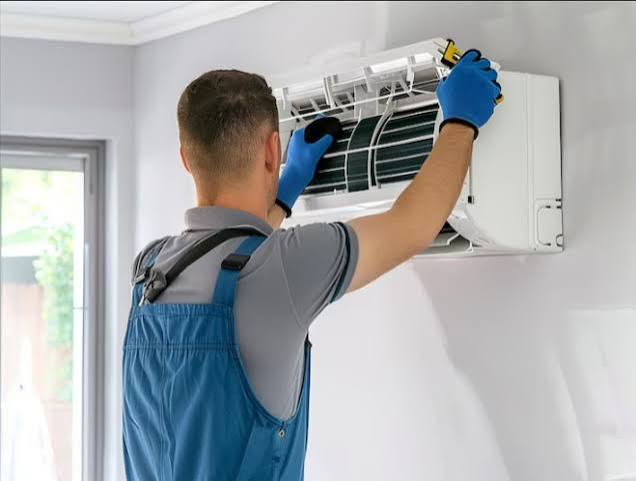
Panasonic units hold their fault history in memory and hand it over through a diagnostic mode on the remote. Knowing how to retrieve it turns a vague complaint into a specific starting point.
We are an independent repair company â we are not affiliated with, endorsed by, or an authorized service provider of Panasonic. The brand name is used here only to identify the machines we repair, and all trademarks remain the property of their owners.

Panasonic AC repair in Dubai has one practical advantage that matters most in exactly the situation where diagnosis is usually hardest: the intermittent fault.
Consider the common scenario. A unit cuts out on a hot afternoon. By the time a technician attends the following morning it is running perfectly, everything measures normally, and there is nothing to find. The customer is told to call again when it happens â which is unsatisfying and expensive.
Panasonic units store fault information in memory, and it can be retrieved through a diagnostic mode entered from the remote control. So the machine can report what it experienced yesterday even though it is behaving now. That converts an untestable complaint into a specific subsystem to investigate.
The second thing worth knowing is the CS and CU pairing. Panasonic splits are supplied as a matched indoor and outdoor pair, CS being the indoor unit and CU the outdoor. Both numbers matter â the outdoor unit carries most of what fails expensively, and mismatched pairings do occur where somebody replaced only one half.
So the most useful thing you can send us is a photo of both rating plates, not just the indoor one that is easy to reach.
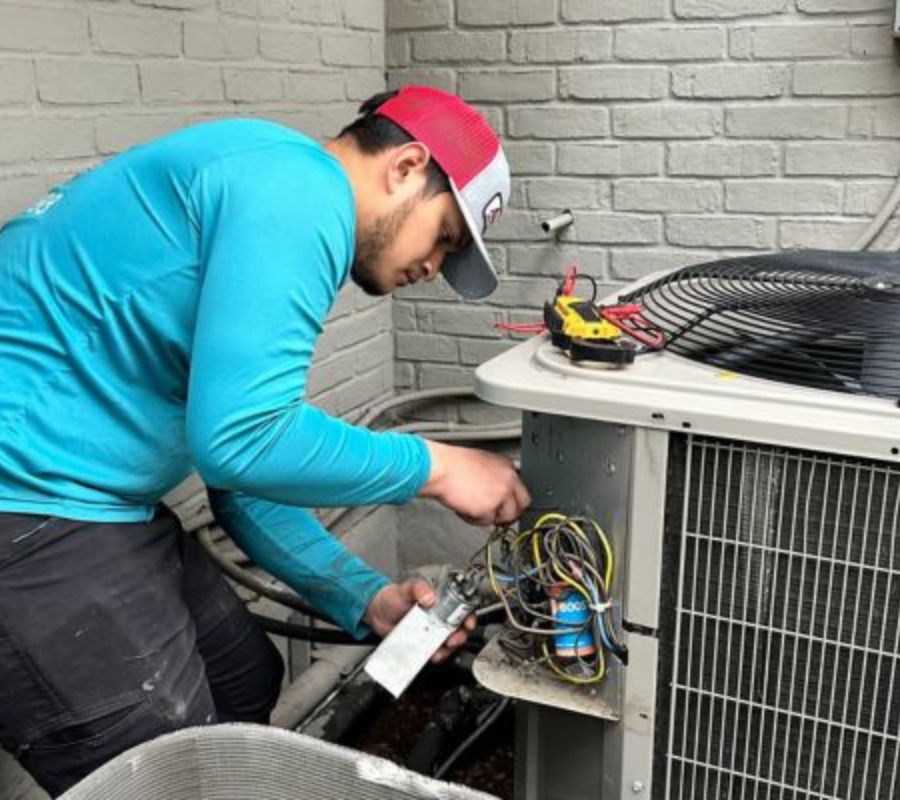
We publish what we can stand behind for your unit, and are explicit about where we stop.
Panasonic units support a diagnostic mode reached from the remote control, and that retrieval method is the genuinely useful, transferable knowledge on this brand. Faults are grouped into families â broadly separating sensor and control-side conditions from operational and protection conditions â and the family tells a technician which part of the system to investigate.
We also verify the code against the reference that applies to your specific CS and CU pairing, then confirm with measurements before anything is replaced.
A full code-to-fault table. Panasonic sells across many markets and model generations, and lists circulating online frequently blend them. A code that means one thing on one generation can mean something else on another.
Specific UAE model series names. We could not verify the current local lineup naming to the standard we hold ourselves to, so we describe what we service generically rather than asserting series names that might be wrong for this market.
Both omissions are deliberate. Publishing unverified specifics would risk sending you to buy the wrong part with confidence, which is precisely the failure this policy exists to prevent.
With or without a retrieved code, this is the order the diagnosis follows.
The case where stored fault history earns its keep. We retrieve what the unit recorded rather than waiting for it to misbehave again.
Condenser condition and airflow first, then charge read as superheat and subcooling together rather than by gauge pressure.
Capacitor value, contactor and control signal in order. The compressor is the last suspect on any brand.
Obstruction first, then motor and capacitor, then board output. Cheap checks before expensive parts.
Blocked condensate drain, a full pan or a dried trap. Nothing here involves refrigerant.
Batteries and line of sight, then the receiver, then the indoor board â and the remote is also the diagnostic tool here.

Intermittent faults cost more than outright failures, and not because the parts are dearer. They cost more because they generate repeat visits, replaced components that were not at fault, and a customer who ends up replacing a serviceable machine out of frustration.
The mechanism is simple. A fault that appears only under specific conditions â peak afternoon ambient, a particular load, a connection that fails when hot and recovers when cool â cannot be reproduced on demand. A technician attending outside those conditions measures a healthy system. So the diagnosis becomes guesswork, and guesswork on air conditioning means replacing plausible components in sequence.
Stored fault history breaks that cycle. Instead of asking what is wrong now, we can ask what the unit recorded when it actually failed. That narrows the investigation to a subsystem before a single measurement is taken.
It does not replace measurement â a stored code still names a subsystem rather than a broken part, and the confirming checks still happen. But it turns an untestable complaint into a testable one, which on an intermittent fault is the difference between a diagnosis and an expensive sequence of guesses.
The CS indoor and CU outdoor model numbers. Both, because the pairing matters and the outdoor plate is the one most people never photograph.
If the unit remains within manufacturer warranty we will point you there rather than taking payment.
Through the diagnostic mode, especially where the fault is intermittent and nothing is currently wrong to measure.
Checked for your specific model pairing rather than a generic table, then confirmed by measurement.
Fault, fix and cost agreed before anything is dismantled, with OEM-standard compatible parts matched to your unit.
Parts and labour carry a 90-day warranty. If the same fault returns inside that window, so do we.
âšī¸ Independent third-party repair notice: we are not an authorized service center, dealer or affiliate of Panasonic. We have no endorsement from them and no authorization to carry out warranty work on their behalf. If your unit is still within its manufacturer warranty period, contact the retailer or the brand's own support channel first.
Back to the main service page, compare with another brand, or read about the symptom.
Not sure the code you are seeing is on our list? Compare it across every brand. All Brand Error Codes →
Our full AC service â split, window, ducted and chilled-water systems across all four emirates.
Another well-structured Japanese scheme, and the model-prefix trap worth knowing about.
Cutting out and restarting is the classic intermittent complaint. What actually causes it.
Where a control fault turns out to be board-side, and why boards get condemned too readily.
The ranked cause list behind weak cooling, whatever the badge says.
They identify the two halves of a split system. CS is the indoor unit and CU is the outdoor unit, and they are supplied as a matched pair. Knowing both matters for repair because the outdoor unit carries most of the components that fail expensively, and because a mismatched pairing â which does occur where someone has replaced only one half â causes its own problems. When you book, the most useful thing you can send is a photo of both rating plates rather than only the indoor one, which is the plate most people can reach easily.
Usually yes, and it is one of the genuinely useful features of this brand. Panasonic units store fault information in memory, and it can be retrieved through a diagnostic mode entered from the remote control. That matters because intermittent faults are the hardest kind to diagnose â a unit that cut out at three in the afternoon and works perfectly when the technician arrives at ten the next morning gives you nothing to test. Reading the stored history turns that into a specific starting point.
They are the two families Panasonic uses to group faults, which tells you which part of the system to investigate. Broadly, the two families separate sensor and control-side conditions from operational and protection conditions. What we do not do is publish a full mapping of every individual code, because the specific meanings can vary between model generations and lines. So we retrieve the code on your unit, check it against the correct reference for that model pairing, and then confirm the conclusion with measurements before anything is replaced.
No. We explain the retrieval method and the family structure, and we verify individual codes against the right reference for your specific model rather than reproducing a generic table. That is deliberate. Panasonic sells across many markets and model generations, and code lists circulating online frequently blend them. Publishing one as fact risks pointing you at a component that is not your problem â and on air conditioning that means paying for a part you did not need.
The range found in UAE homes and small commercial premises: CS and CU paired wall-mounted splits in inverter and fixed-speed forms, plus ducted and cassette units. We deliberately avoid naming specific UAE model series on this page, because we could not verify the current local lineup naming to the standard we hold ourselves to. What matters practically is the model numbers on your two rating plates, and those tell us everything we need.
If the unit is still within its manufacturer warranty, contact the retailer you bought it from or the brand support channel for your region first. An independent repair can affect that cover, and there is no sense paying for work you are entitled to have done free. Our service is intended for units out of warranty, or where the owner has chosen an independent repairer. We will say so plainly if we think the warranty is the better route for you.
Panasonic units store what went wrong. Retrieving that properly means we diagnose from the machine record rather than from guesswork.
Panasonic units pair a CS indoor with a CU outdoor. Both numbers, plus any code you have seen, gives us the full picture.
+971 50 988 6591
Daily, 8:00 AM â 6:00 PM
+971 50 988 6591
Send photos of both rating plates, indoor and outdoor