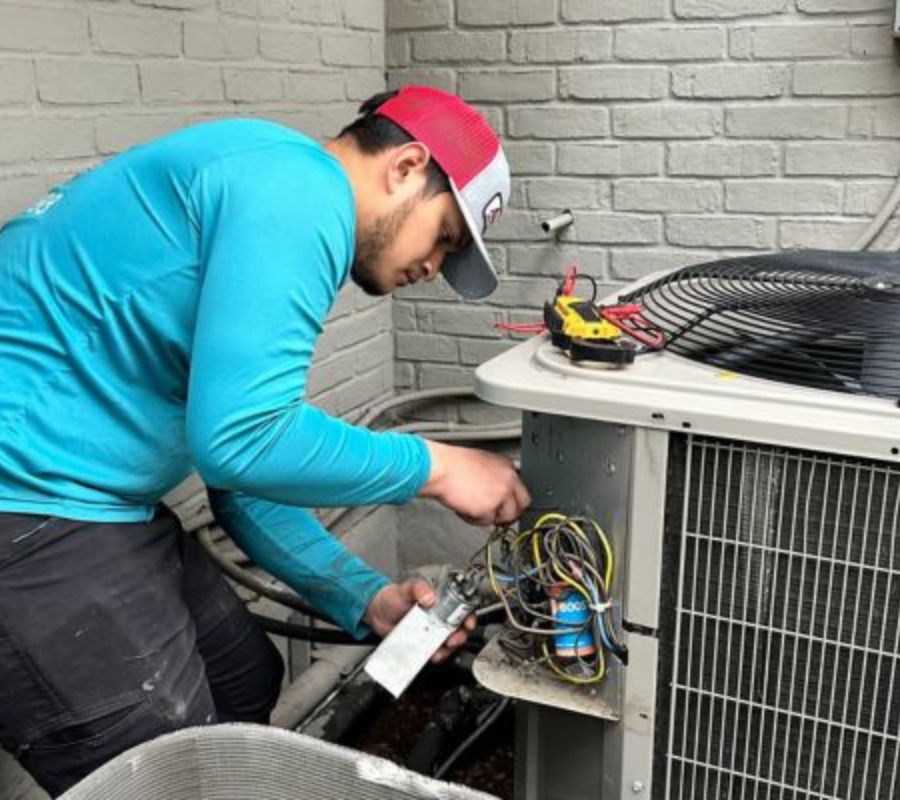
The control board is one of the most expensive parts on an air conditioner and one of the most frequently blamed. A large share of the boards we are called to replace turn out to be working.
We are an independent repair company â not an authorized service center of any air conditioning brand. Brand names on this page are used only to identify the systems we repair, and all trademarks remain the property of their owners.

AC PCB board repair in Dubai is worth its own page for one reason: "you need a new board" is among the most expensive sentences in air conditioning, and a substantial share of the time it is wrong.
The reason is understandable if not excusable. A control board sits at the centre of everything â it reads sensors, drives motors, runs the compressor, and reports faults. So when a system behaves erratically or a fault code appears with no obvious mechanical cause, the board is the convenient conclusion. It is also the part that requires the least diagnostic effort to blame.
But boards mostly fail for reasons that originate elsewhere. A mains surge or an unstable supply damages the power side. Water from a blocked condensate drain reaches a board sitting below the pan. A shorted fan motor destroys the driver stage that powers it. In each case the board is a casualty rather than the cause.
Which produces the outcome we are called to correct: a board is replaced, the upstream cause is still present, and the new board fails the same way. The customer has now paid for two.
So this page is about the checks that come first, and they cost a small fraction of a board.
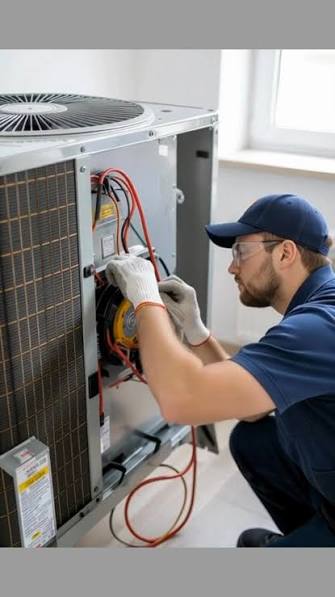
Each of these can produce symptoms indistinguishable from board failure, and each is far cheaper.
Voltage under load and earthing condition. A board reacting to poor supply is not a faulty board, and replacing it changes nothing.
A blown fuse on the board looks exactly like total board death. Inexpensive, quick to check, and routinely overlooked.
A thermistor reading out of range makes the system behave illogically and throw codes. Measured against expected values.
A shorted fan or blower motor can destroy a driver stage. Fit a board without replacing that motor and it fails again.
Corrosion or water marks on a board point straight at an overflowing drain pan. The drain is part of the repair.
Bulging electrolytic capacitors, scorching, damaged varistors, track damage. Often the fault is visible to anyone who opens the cover.

When the board genuinely has failed, the next question is whether repairing it is realistic. There is a clear line here, and we would rather draw it plainly than be vague.
Component-level repair is viable where the damage is localised and identifiable. A blown fuse. A failed relay. A bulging electrolytic capacitor. A damaged varistor on the input side. These are discrete components on an otherwise sound board, and replacing them restores it properly and cheaply.
Component-level repair is not viable where a power module has failed and taken its gate driver with it, particularly where there is visible burning or damage to the board tracks. At that point too much of the circuit is compromised for a repair to be durable, and a repaired board that fails again in a month serves nobody. Replacement is the honest answer.
There is a further practical point on inverter systems. On some models the outdoor board is not separately available as a part â the whole electrical control box is the replacement item, which changes the cost considerably. We establish that before quoting rather than discovering it afterwards.
And on an older unit, a full inverter board can approach a meaningful fraction of what a new machine costs. Where that is the case, you will get the comparison with the reasoning rather than a quotation with no context.
Each is a sequence rather than a single event, and each is preventable once understood.
Condensate line blocks, pan overflows, water reaches a board or terminal block below it. Corrosion and short circuits follow. Fixing the board without clearing the drain guarantees a repeat.
A fan or blower motor develops a short. The driver stage powering it is destroyed. Replace the board alone and the same motor destroys the new one.
Surges and unstable voltage stress the input side over months. Damage accumulates until something fails. A new board inherits the same supply.
In every chain the board is the casualty. Diagnose only the casualty and you pay twice â once now and once when the cause finishes the replacement.
Where we find a failed board, we identify and address the chain that produced it as part of the same job rather than treating it as separate work.
Whether there was a power event, a water leak, or a noisy fan before the fault appeared. Any of those points straight at a chain.
Two commitments and two refusals, stated before you book rather than after.
Every repair carries a 90-day warranty on parts and labour.
Back to the main service page, or to the causes behind board failure.
Showing a code rather than an obvious fault? Start here. Decode Your Error Code →
Our full AC service â split, window, ducted and chilled-water systems across all four emirates.
The blocked drain that overflows onto a board â chain one, and the most preventable.
Where a board fault sits in the ordered check sequence â last, not first.
The cheap part that gets mistaken for expensive ones, on the same enclosure.
Inverter ducted stock is concentrated in the newer villa communities.
Almost always worth it, because the board is among the most expensive parts on the machine and among the most frequently misdiagnosed. Faults that mimic board failure include a blown fuse on the board itself, a sensor reading out of range so the system behaves erratically, a poor incoming supply, and a shorted motor that has taken out its driver stage. Each is a different repair at a very different price. The verification checks cost a fraction of a board, so having them done before committing is simply sensible.
Rarely age alone, and that is the important part. Mains surges and unstable supply damage the power side over time. Water ingress is a genuinely common cause here, typically from a blocked condensate drain overflowing onto a board sitting below or beside it. And a shorted fan or blower motor can destroy the driver stage that powers it. Each of those is an upstream cause, and if it is not addressed the replacement board inherits the same environment and fails the same way â which is how people end up buying two.
Sometimes, and it depends entirely on what has failed. Where the damage is localised â a blown fuse, a failed relay, a bulging electrolytic capacitor, a damaged varistor â component-level repair is viable and considerably cheaper than a new board. Where a power module has failed and taken out its gate driver, and there is burning or track damage on the board, repair is not durable and replacement is the honest answer. We will tell you which situation you are in rather than defaulting to whichever suits us.
By working outward from the board rather than starting with it. Incoming supply voltage under load and earthing quality. Board fuses. Visual inspection for bulging capacitors, scorching, corrosion and track damage. Sensor resistance against expected values, since a board reacting to a bad sensor is not a faulty board. Winding and insulation checks on the motors the board drives. On inverter outdoor boards the power module stage can be checked in diode mode, where a dead short or a fully open reading indicates a damaged module. Only when those are cleared is the board itself the conclusion.
Because of where the condensate goes and how much of it there is. Dubai humidity means indoor units produce large volumes of condensate, and many units have electrical components positioned below or alongside the drain pan. If the drain line blocks and the pan overflows, water reaches connections and boards. It is a fault chain rather than a coincidence: blocked drain leads to overflow leads to board damage. Which is why, when we find a water-damaged board, clearing and correcting the drainage is part of the repair rather than a separate job.
That deserves an honest answer with the numbers laid out. A full inverter outdoor board is one of the highest-cost single parts on a split system, and on an older machine it can approach a meaningful fraction of what a new unit costs. So the questions become the age of the system, the condition of the compressor, condenser and fan motors, and whether the refrigerant is one that is being phased out. Where several of those point the wrong way, replacement is usually better value, and we will say so rather than selling you the board.
We check supply, fuses, sensors and the motors the board drives before condemning it. That check costs a fraction of the board.
The model number, any code showing, and whether there was a power event, a water leak or a fan fault before the problem started.
+971 50 988 6591
Daily, 8:00 AM â 6:00 PM
+971 50 988 6591
Send a photo of the board and the rating plate