🏛️ Licensed & Registered — Trade Licence 134585 (Ajman) 🕒 Open Daily 8:00 AM – 6:00 PM 📞 +971 50 988 6591
🔤 AC Error Codes

AC Error Codes in Dubai — What Yours Actually Means

A code tells you which subsystem is unhappy. It does not tell you which part has failed, and treating it as a parts list is how people buy components that were working perfectly.

⚡ Same-Day Visits 🛡️ 90-Day Warranty 💲 Quote Before Any Work 🏛️ Licence No. 134585
ℹ️

We are an independent repair company — not an authorized service center, dealer or affiliate of any air conditioning brand named on this page. Brand names are used only to identify the machines we repair, and all trademarks remain the property of their respective owners.

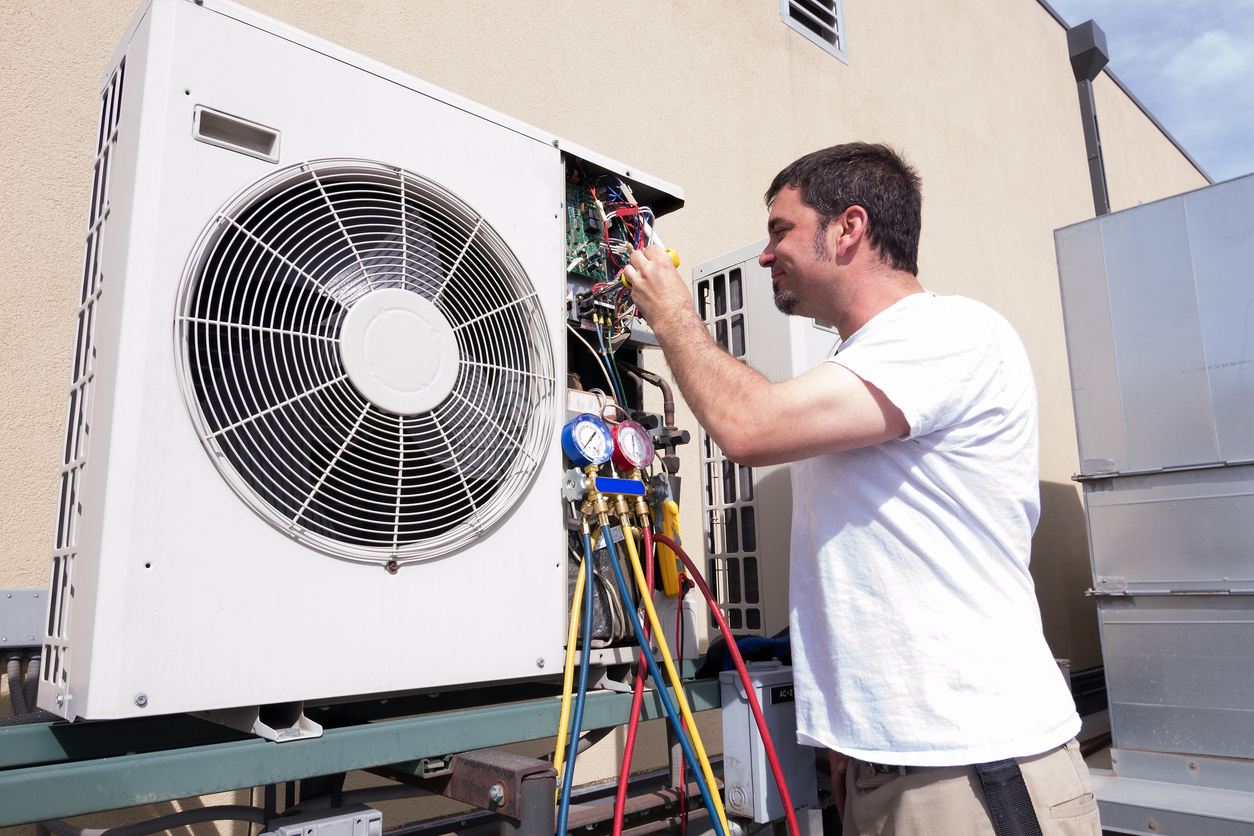
Reading an air conditioner fault code before beginning diagnosis in Dubai
Start Here

A Code Names the Subsystem, Not the Broken Part

If your AC is showing an error code, the single most valuable thing to understand before you call anyone is what that code is actually telling you.

It identifies which subsystem the machine is unhappy about. It does not identify which component has failed. Those are different statements, and the gap between them is where most unnecessary spending happens.

Take a refrigerant-family code. It narrows the search to charge, piping and discharge temperature — genuinely useful. But it cannot distinguish between refrigerant that has leaked out, a restriction in the liquid line that has lost nothing at all, and a sensor reporting incorrectly. Three causes, one code, three very different repairs.

Or a protection code. It tells you which protective function operated, which is not the same as what caused it to operate. Freeze protection might mean a genuine refrigeration problem, or it might mean a filter so loaded that airflow collapsed. The code names the guardian; measurements name the culprit.

So the honest sequence is: read the code, use it to identify the subsystem, then measure to identify the fault. This page explains how each major brand reports, and where our published information stops.
How Brands Report Faults

Four Retrieval Methods, and Which One You Have

Before decoding anything, work out how your unit is trying to communicate.

🔢

Screen Codes

An alphanumeric code on the indoor display or wired controller. Most brands here work this way. Photograph it exactly as shown.

💡

Blink Patterns

Indicator lamps flashing in counted groups, used by O General among others. Count the flashes per group and note which lamp.

📱

Remote Diagnostic Mode

Some units, Panasonic among them, hold fault history in memory and hand it over through a mode entered from the remote.

🔁

Alternating Displays

Samsung service conditions cycle a letter-number pair with a two-digit number. The number is the informative part.

✅

Not All Codes Are Faults

Filter reminders, auto-clean and defrost indicators mean the unit is doing something normal. Worth checking before calling anyone.

🚫

No Code At All

Plenty of real faults never generate one — a sagging duct, a blocked drain, a fouled coil. Diagnosis then works from symptom.

Brand By Brand

Where We Publish Codes, and Where We Deliberately Do Not

Every brand page on this site follows the same rule: publish what can be verified for this market, explain what cannot. Here is where each one landed.

Published — scheme verified

  • Daikin — documented letter families across split, Sky Air and VRV, with the specific codes we verified
  • Samsung — the Gulf-documented set, including which indicators are not faults at all
  • LG — the CH-prefix codes we verified, plus the tropical versus non-tropical question
  • Mitsubishi Electric — E and P families, with the model-prefix identification block

Symptom-led — mappings not verifiable

  • O General — blink method supported, individual mappings not
  • Gree — no UAE-market OEM documentation obtainable
  • Midea — the manufacturer itself looks codes up by model, so we do too
  • Super General — built across many factories, so one table cannot be right
  • Carrier — regionally varied sourcing; identified by model series
  • Panasonic — retrieval method published, full mappings not
  • Mitsubishi Heavy Industries — tables inconsistent and widely confused with Mitsubishi Electric
  • SKM — thin public documentation; ducted faults are airflow-led anyway
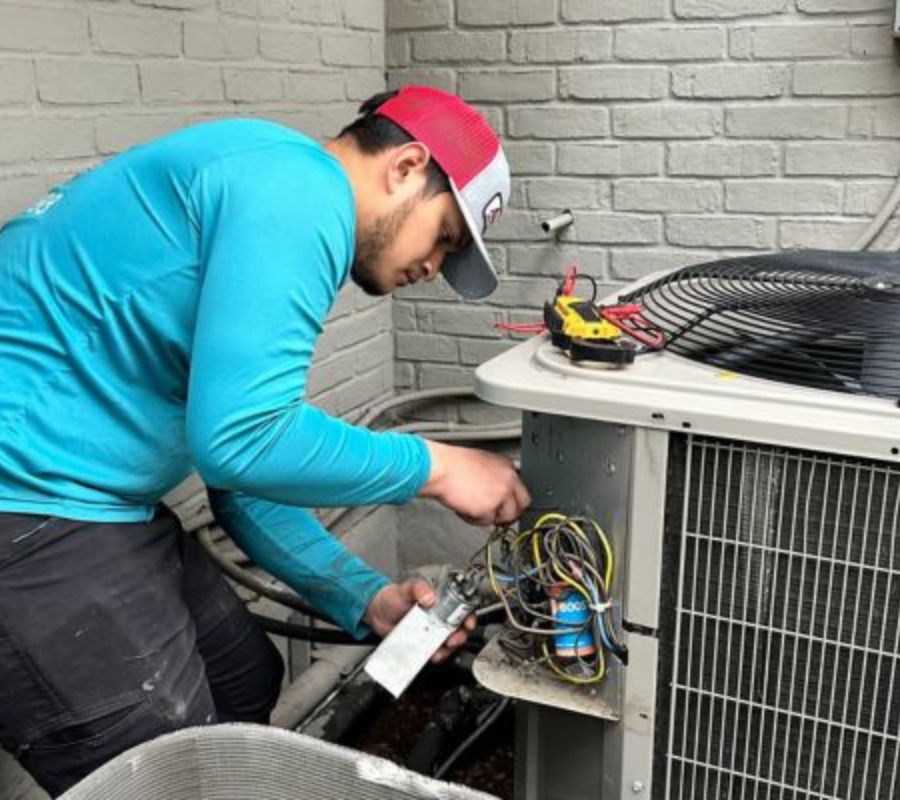
Measuring components after reading a fault code on a Dubai air conditioner
The Two-Step Rule

Read the Code, Then Measure. Never Just One.

Every brand page on this site follows the same diagnostic sequence, and it is worth stating plainly here because it is what separates a diagnosis from a guess.

Step one: the code identifies the subsystem. Refrigerant, communication, protection, sensors, power, indoor unit, outdoor unit. That narrows the field enormously and it is genuinely valuable.

Step two: measurements identify the fault. Airflow and the temperature difference across the coil. Superheat and subcooling read together, because either alone will mislead. Capacitor microfarad value against its rating. Current draw against the nameplate figure. Sensor resistance against expected values. Head pressure and condensing temperature.

Skip step two and you are replacing whichever component is most commonly associated with that code — which is right often enough to seem reasonable and wrong often enough to be expensive.

There is also a case that catches people out: a code stored from an intermittent fault that is not currently occurring. On brands that keep fault history, reading it is how you diagnose something that refuses to happen while a technician is standing there.

Start From the Symptom Instead

No Code? Most Real Faults Never Generate One

Plenty of the faults we attend produce no code whatsoever, because nothing electrical or refrigeration-related has gone out of range.

🌡️

Not Cooling

The ranked cause list, with refrigerant fifth rather than first.

AC Not Cooling →

💧

Water Leaking

Four causes, four repairs, and how the pan tells you which.

Water Leaking →

🌀

Low Airflow

Cold air that never arrives — the blower wheel nobody cleans.

Low Airflow →

🧊

Freezing Up

Ice is usually airflow, not gas — and we measure to prove which.

Freezing Up →

🔊

Making Noise

Grinding, humming, rattling and banging are four different faults.

Making Noise →

👃

Bad Smell

Musty, sour, chemical or burning — and one means switch off now.

Bad Smell →

Related Pages

More AC Repair Help

Back to the main service page, or straight to the repair your code points toward.

❄️

Main Service Page

Our full AC service — split, window, ducted and chilled-water systems across all four emirates.

AC Repair & Maintenance →

🔌

AC Not Turning On

When there is no display at all to read a code from, start here.

Not Turning On →

🧠

PCB Board Repair

Where a code points at the board — and why boards are condemned far more often than they fail.

PCB Board Repair →

🎛️

Thermostat Not Working

Sensor drift is behind a surprising share of codes. Measured, not guessed.

Thermostat →

🧯

AC Gas Filling

What a refrigerant-family code should and should not lead to.

AC Gas Filling →

🏢

FCU Not Cooling

District-cooled apartments, where most of a code scheme simply does not apply.

FCU Not Cooling →

FAQ

AC Error Codes — Your Questions

What does an AC error code actually tell me?

It tells you which subsystem the machine is unhappy about — not which component has failed. That distinction is the most useful thing on this page. A code in a refrigerant family narrows the search to charge, piping and discharge temperature; it does not distinguish between a leak, a restriction and a sensor reading incorrectly, and those are three different repairs at three very different prices. Treating a code as a parts list is how people end up buying a component that was working perfectly.

Why does my unit show blinking lights instead of a code?

Because brands report faults in different ways. Some display an alphanumeric code on a screen. Others, notably O General, use indicator lamps on the indoor unit that flash in counted patterns, with the outdoor board able to report by pulse counts as well. Neither method is better; they simply need reading differently. If your unit flashes rather than displays, count the flashes in each group and note which lamp is doing it, or record a short video. That pattern is the equivalent of a code.

Why do you publish tables for some brands and not others?

Because we only publish what we can verify to a standard we are willing to stand behind. Where a manufacturer documents a scheme that is public, standardised and consistent across the models sold here, we publish it. Where the mappings vary between model generations or manufacturing sources, or where we could not verify them against documentation for this market, we say so and go symptom-led instead. A table that is wrong for your model is worse than no table, because it produces a confident wrong answer.

Can I clear the code myself and carry on?

You can usually clear it, and we would advise against relying on that. Most codes are generated by protection systems that shut the machine down to prevent damage, so clearing the code without addressing the condition means the protection simply operates again — and in the meantime the machine keeps running into whatever it was protecting itself from. There is one exception worth knowing: some codes are not faults at all. A filter reminder, an auto-clean indicator or a defrost indicator is the unit telling you it is doing something normal.

My apartment is on district cooling. Do error codes apply?

Less so, and this is worth knowing before anyone quotes you. In a district-cooled apartment there is no refrigerant and no compressor — you have a fan coil unit fed with chilled water — so the whole refrigeration side of any code scheme is irrelevant to you. What you may see are thermostat or controller faults. The genuine causes of poor cooling in that setting are a stuck valve actuator, a clogged filter, a fouled coil, a blocked strainer or a tired blower, and none of those necessarily produces a code at all.

What information should I send when I book?

Two things, and they matter equally. The code exactly as it appears — including whether it alternates on a loop or flashes in a pattern — and the model number from the rating plate. The model is what turns a code into a diagnosis, because meanings vary between manufacturers and often between generations of the same brand. A photo of each is ideal. With both, we can check the fault against the correct reference before we set off and bring the parts that are actually likely to be needed.

Send Us the Code and the Model Number.

Those two together let us look the fault up against the right reference before we arrive, rather than guessing from a generic table.

Book a Code Diagnosis

Tell Us the Code and the Model

A photo of the display or the flashing lamps, plus the model number from the rating plate. The model is what makes a code meaningful.

📞 Phone

+971 50 988 6591
Daily, 8:00 AM – 6:00 PM

💬 WhatsApp

+971 50 988 6591
Send a photo of the code and the rating plate

Request a Code Diagnosis

Opens WhatsApp with your request pre-filled — nothing is stored on this site.

Your details go directly to our team on WhatsApp. See our Privacy Policy.

Call Now+971 50 988 6591 WhatsAppInstant chat reply