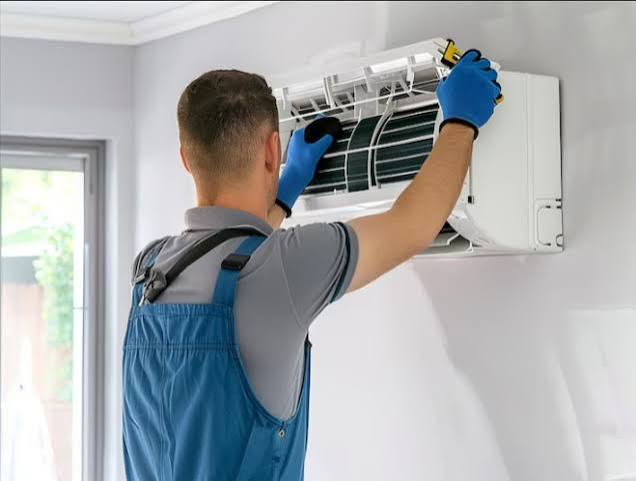
Midea publishes its error codes against the specific model, not as one universal list. That is the correct approach, and it is exactly why a generic table copied from the internet will mislead you.
We are an independent repair company â we are not affiliated with, endorsed by, or an authorized service provider of Midea. The brand name is used here only to identify the machines we repair, and all trademarks remain the property of their owners.

Midea AC repair in Dubai has one distinctive requirement that separates a proper diagnosis from a guess: the model number matters as much as the fault code.
Midea maintains an error-code lookup that is searched by model, barcode or serial number rather than published as one universal table. That is a deliberate design, and it is telling. It means the manufacturer itself does not treat its codes as interchangeable across product lines and model years â because they are not.
Once you know that, the long generic Midea code tables scattered across the internet look rather different. Each has flattened a model-specific system into one list, usually by taking codes from a single product line and presenting them as universal. Follow one of those and you can very reasonably end up buying a component that was never your problem.
There is a second reason the nameplate matters here. Midea is among the largest air conditioner manufacturers in the world and also produces units sold under other brand names. The badge on the front does not always tell the full story; the plate on the side does.
So on these units we ask for a photograph of the rating plate alongside the display. With both, the code can be looked up against the right reference before anyone opens the machine.
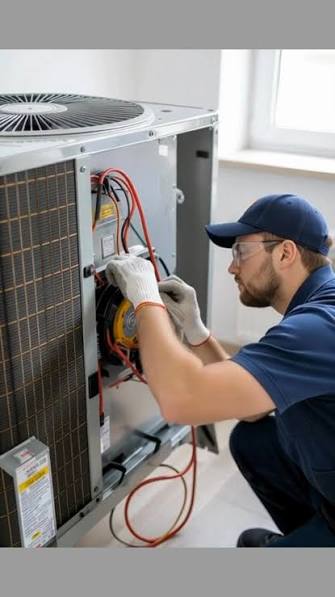
Of all the brands we cover, Midea is the one where the manufacturer's own approach most clearly supports our editorial policy.
We ask for the model or serial number together with the code, and look the fault up against the reference that actually applies to your unit. That is a small extra step for you and it removes an entire class of misdiagnosis.
Then, as with every brand on this site, the code is treated as a starting point rather than a conclusion. It identifies a subsystem. Measurements identify the failed component â capacitor value against rating, current against nameplate, temperature split across the coil, sensor resistance against expected values, and superheat with subcooling where refrigerant is in play.
Midea provides code information through a lookup searched by model, barcode or serial number, rather than a single universal published table. We take that at face value: if the manufacturer does not treat its codes as universal, neither should we.
Publishing a flattened generic table would contradict how the system is actually documented, and would risk pointing you at the wrong component. So we hold the same line here as on every other brand page â publish what can be verified, explain what cannot, and diagnose your specific unit with measurements.
Whether or not a code is showing, this is the order the diagnosis follows.
Condenser condition first, then airflow, then charge measured as superheat and subcooling together rather than by gauge pressure alone.
Usually a protection device operating. The code says which system; coil condition, supply quality and sensors say why.
Capacitor value, contactor and control signal, in that order. The compressor is the last suspect, never the first.
Obstruction first, then motor and capacitor, then board output. The cheap checks come before the expensive part.
Blocked condensate drain, full pan or a dried trap. Nothing here relates to refrigerant.
Batteries and line of sight, then the receiver, then the indoor control board.

Not every point on a brand page has to be a warning. Midea's manufacturing scale produces a real, practical benefit for owners in Dubai, and it is worth stating plainly.
Because Midea builds an enormous volume of equipment â both under its own name and for other brands â the common service components are widely stocked in this market. Capacitors, contactors, fan motors, sensors and many control components are ordinarily available without a long wait or a special order.
The practical effect is on turnaround and cost. A repair that would stall for a week on a thinly distributed brand is frequently a same-visit or next-visit job on a Midea. It also keeps pricing sensible, because widely available parts are competitively supplied rather than sole-sourced.
Where that does not apply, we say so before you commit. Proprietary inverter boards and model-specific assemblies can still carry availability constraints, and on an older unit the honest question becomes whether the part is worth its cost against the remaining life of the machine. You will get that assessment with the reasoning rather than a quotation with no context.
Model or serial number, plus any code on the display. On a Midea this is the step that makes everything after it accurate.
If the unit is still within manufacturer warranty we will tell you to use it rather than pay us.
Not against a generic table. That is the whole point of asking for the plate.
Capacitor value, current against nameplate, temperature split, sensor resistance, and superheat with subcooling where refrigerant applies.
Common components are usually straightforward here. Where a board or proprietary assembly is involved, you get the availability and cost picture before committing.
Fault, fix and cost agreed before anything is dismantled, with a 90-day warranty on parts and labour.
âšī¸ Independent third-party repair notice: we are not an authorized service center, dealer or affiliate of Midea. We have no endorsement from them and no authorization to carry out warranty work on their behalf. If your unit is still within its manufacturer warranty period, contact the retailer or the brand's own support channel first.
Back to the main service page, compare with another brand, or read about the symptom.
Not sure the code you are seeing is on our list? Compare it across every brand. All Brand Error Codes →
Our full AC service â split, window, ducted and chilled-water systems across all four emirates.
The other high-volume manufacturer here, and our position on its code tables.
The UAE's own brand â and why it is not O General, despite the name.
The ranked cause list behind weak cooling, whatever the badge says.
The cheapest meaningful AC repair, and the one that imitates a dead compressor.
Because on a Midea the model number is what makes an error code meaningful. Midea maintains an error-code lookup that is searched by model, barcode or serial number rather than presenting one universal table, and that design tells you something important: the same code can carry different meanings across different product lines and model years. So a code without a model is only half the information. Photograph the rating plate as well as the display and you have given us everything needed to look it up properly before we arrive.
No, and in Midea's case the manufacturer's own approach is the clearest argument against doing so. Midea provides model-specific code lookup rather than a single published list, precisely because the meanings are not universal across its range. Any generic Midea table you find online has flattened that distinction, usually by copying from one product line and applying it to all. We would rather look your code up against your actual model than hand you a table that is right for someone else's unit.
It carries a Midea badge, but the wider point is worth knowing: Midea is one of the largest air conditioning manufacturers in the world and also manufactures units sold under other brand names. The practical consequences for you are good ones. Parts commonality across the market is high, components are widely available in Dubai, and repairs are rarely held up waiting for something obscure. The diagnostic consequence is the one above â always work from the nameplate rather than the badge.
The range found in UAE homes and small commercial premises â wall-mounted splits in inverter and fixed-speed forms, ducted units, cassettes, portable and window units. Refrigerant depends on age and model, with both R410A and R32 in circulation, which affects the parts and the procedure. Give us the model number from the rating plate when you book so we bring correct components rather than a best guess.
If it is still within the manufacturer warranty period, contact the retailer you bought it from or the brand support channel for your region first. An independent repair can affect that cover, and there is no sense in paying for work you are entitled to have done. Our service is for units out of warranty, or where the owner has chosen an independent repairer. We will say so plainly if we think you should use the warranty instead.
Generally yes, and that is one of the genuine practical advantages of the brand here. Midea has broad channel depth in the UAE and the scale of its manufacturing means common components â capacitors, contactors, fan motors, sensors and boards â are widely available. In practice that keeps repair turnaround short and costs sensible compared with brands that have a thin local parts presence. Where a specific board or proprietary component is involved we will tell you honestly what availability looks like before you commit.
On a Midea the model number is not optional â it is what makes the code meaningful. Photograph the rating plate and the display together.
The model or serial from the rating plate, plus any code on the display. On these units the model is what turns a code into a diagnosis.
+971 50 988 6591
Daily, 8:00 AM â 6:00 PM
+971 50 988 6591
Send a photo of the rating plate and the display code