đŸ›ī¸ Licensed & Registered — Trade Licence 134585 (Ajman) 🕒 Open Daily 8:00 AM – 6:00 PM 📞 +971 50 988 6591
đŸŒĄī¸ AC Not Cooling

AC Not Cooling in Dubai — Why Gas Is the Last Question

Almost every "AC not cooling" call in Dubai gets answered with a gas top-up. Most of them do not need one. Here is the order a technician should actually work through, and why that order saves you money.

⚡ Same-Day Visits đŸ›Ąī¸ 90-Day Warranty 💲 Quote Before Any Work đŸ›ī¸ Licence No. 134585
â„šī¸

We are an independent repair company — not an authorized service center of any air conditioning brand. Brand names on this page are used only to identify the systems we repair, and all trademarks remain the property of their owners.

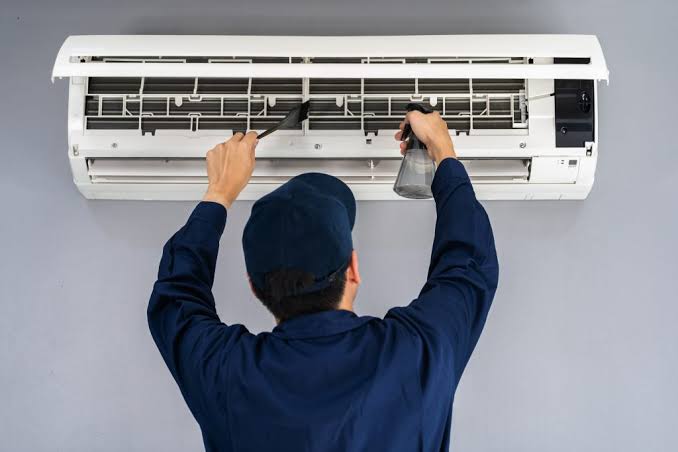
Cleaning a felted evaporator coil that was preventing an air conditioner from cooling
The Honest Version

"AC Not Cooling" Almost Never Starts With Gas

If your AC is not cooling in Dubai, the response you will most often get is an offer to top up the gas. It is quick, it is easy to sell, and a great deal of the time it is the wrong answer.

Start from the physics. A refrigerant circuit is sealed. It does not burn refrigerant off in use, and it does not need periodic refilling as a matter of maintenance. If the charge really is low, then refrigerant has left through a leak — and putting more in without finding that leak means you will be back in the same position within weeks or months.

Meanwhile, at least four other faults produce exactly the same complaint, and several of them cost a fraction of a refrigerant job: a condenser coil packed with dust so the system cannot reject heat, filters and a blower wheel choking the airflow, a capacitor that has drifted out of tolerance so a fan or compressor is not running properly, or a fan motor that has failed outright.

So the order matters. Cheapest and most likely first, most expensive and least likely last. That ordering is the whole content of this page.
The Ranked Cause List

Six Causes, In the Order We Check Them

This sequence is not arbitrary. It runs from most likely and cheapest to least likely and most expensive, so you are never paying to rule out the costly options first.

1ī¸âƒŖ

Airflow: Filters and Blower

Choked filters and a blower wheel caked with grime cut airflow long before anyone notices. Cheapest possible fix, and it restores cooling more often than any other single action.

2ī¸âƒŖ

Condenser Coil Fouling

Dust and sand packed into the outdoor fin surface stop the system rejecting heat. Classic signature: fine in the morning, useless in the afternoon.

3ī¸âƒŖ

Capacitor Drifted Out

A capacitor reading well below its rated microfarad value leaves a fan or compressor struggling. Measured, not guessed — tolerance is only about six percent.

4ī¸âƒŖ

Fan Motor Failure

Indoor blower or outdoor condenser fan not turning. A steady hum with no rotation usually means the capacitor, not the motor, so the cheap part gets tested first.

5ī¸âƒŖ

Genuine Refrigerant Loss

Only diagnosed by superheat and subcooling read together. If the charge is truly low, the leak gets found and repaired — not topped up and forgotten.

6ī¸âƒŖ

Compressor or Restriction

Last, and least common. A liquid-line restriction mimics undercharge closely, and a failing compressor is usually the result of one of the faults above being left unfixed.

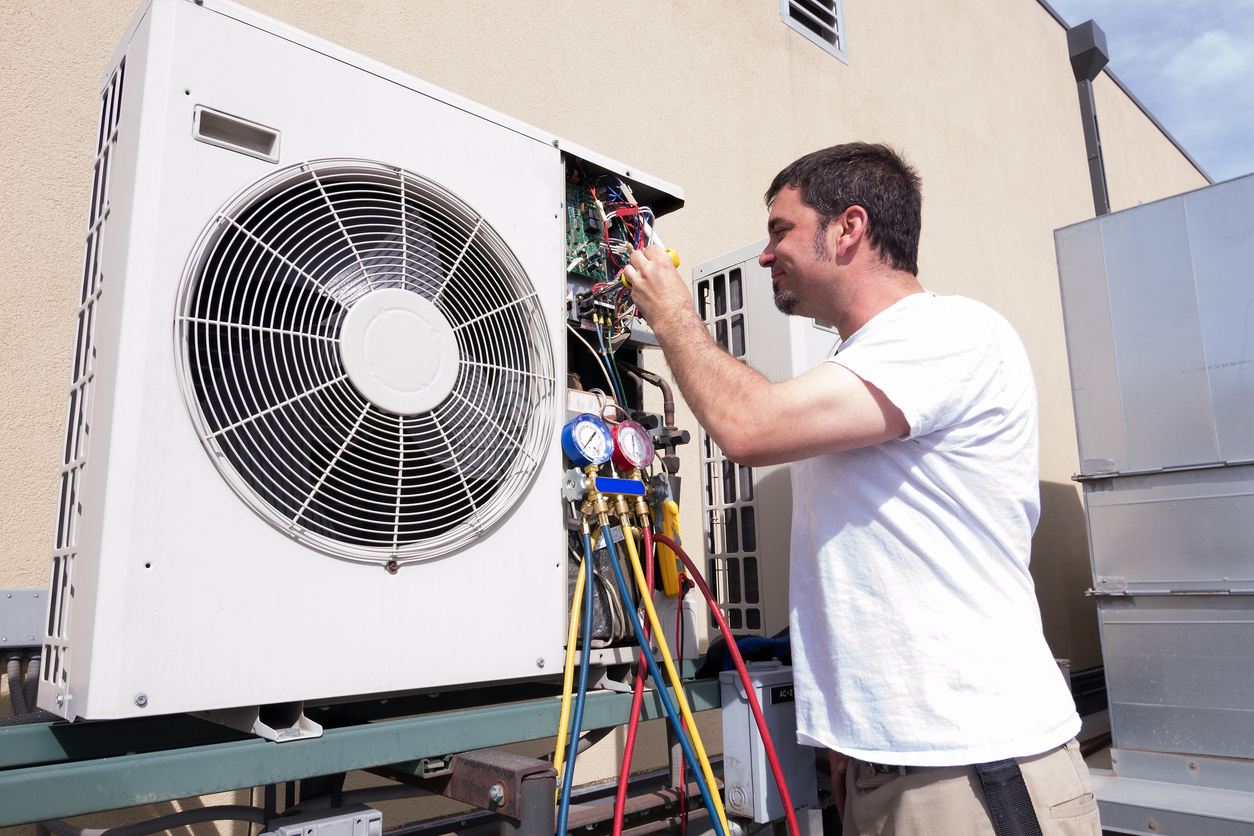
Reading superheat and subcooling together to diagnose why an air conditioner is not cooling
How the Diagnosis Actually Works

Two Numbers, Read Together

The single most useful thing to understand about refrigerant diagnosis is that gauge pressure alone tells you very little. Two measurements read as a pair do almost all the work.

Superheat describes how much the refrigerant has warmed past the point of fully boiling. Subcooling describes how much it has cooled past the point of fully condensing. Their combination separates faults that look identical from the outside.

High superheat with low subcooling means there is genuinely not enough refrigerant in the system — a real undercharge, which means a real leak to find. High superheat with high subcooling means refrigerant is present but something is restricting its flow, typically a blocked filter drier or a faulty expansion device. No refrigerant has been lost at all, and adding gas to that system makes it worse.

Separately, a fouled condenser announces itself as high head pressure and high condensing temperature with a normal charge, usually with raised compressor current. Same complaint from the customer, entirely different repair.

Different Systems, Different Answers

What "Not Cooling" Means On Your Type of System

Dubai runs two quite different cooling technologies, and the same complaint has different causes on each.

Split and ducted systems — refrigerant on site

  • Condenser coil fouling, the dominant local cause
  • Filter, blower wheel and duct airflow losses
  • Capacitor value drift affecting fan or compressor
  • Genuine undercharge from a leak, proved by measurement
  • Liquid-line restriction imitating undercharge
  • Compressor wear, usually secondary to the above

Chilled-water FCUs — no refrigerant at all

  • Stuck chilled-water control valve or actuator
  • Clogged filter and felted coil face
  • Blower wheel loading and motor or bearing wear
  • Air-locked coil or a blocked strainer
  • Thermostat fault, or a thermostat orphaned by a fit-out
  • Building-side supply problem, which is not ours to fix

If your building is on district cooling, refrigerant work does not apply to your apartment. Anyone offering to gas a fan coil unit has misread the system.

Before You Call

Four Safe Checks, and Where To Stop

These take a few minutes and occasionally solve the problem outright. The stopping point matters as much as the checks.

1. Check the thermostat properly

Set to cool, not fan-only, and set below the current room temperature. On systems with zone controls, check the zone for that room is actually calling for cooling.

2. Look at the filters against the light

If you cannot see light through them, that alone can account for the whole complaint. Wash or replace and run the system again.

3. Clear space around the outdoor unit

Stored items, a cover left on, or plants grown in close all restrict discharge air and raise head pressure. Give it clear breathing room.

4. Check the breaker

If the outdoor unit is silent while the indoor fan runs, a tripped breaker or isolator is worth ruling out before anything else.

🛑 Stop here

Do not open the outdoor unit, do not remove electrical covers, and do not attempt anything involving refrigerant. Refrigerant handling is regulated, R32 is mildly flammable, and venting refrigerant is an environmental offence.

Then call us

Tell us what you found. Ruling those four out genuinely narrows the diagnosis and often shortens the visit.

Related Pages

More AC Repair Help

Back to the main service page, or straight to the specific job your system needs.

Showing a code rather than just a symptom? Start here. Decode Your Error Code →

â„ī¸

Main Service Page

Our full AC service — split, window, ducted and chilled-water systems across all four emirates.

AC Repair & Maintenance →

đŸ§¯

AC Gas Filling

If the charge genuinely is low: why the leak gets found first, and how a charge is weighed in properly.

AC Gas Filling →

💧

AC Water Leaking

Water appearing with poor cooling often shares a root cause. The leak-location decision tree.

Water Leaking →

🔌

AC Not Turning On

If nothing runs at all, this is the page you want instead.

Not Turning On →

đŸˇī¸

By Brand

Brand-specific fault codes and known weak points.

Daikin →
O General →

📍

By Area

Same-day cover across Dubai's villa and tower communities.

Silicon Oasis →
Dubai Marina →

FAQ

AC Not Cooling — Your Questions

My AC is not cooling. Does it need gas?

Probably not, and this is the most expensive assumption in the Dubai market. A sealed refrigerant circuit does not consume refrigerant the way a car consumes fuel. If the charge is genuinely low, refrigerant has escaped through a leak, and adding more without finding that leak just resets the clock for a few weeks. Before charge is even considered we check the condenser coil, the filters and airflow, the capacitor and the fans, because every one of those produces the same complaint and several of them are far cheaper to put right.

How do you tell low gas apart from a blocked coil?

By measuring rather than guessing. Superheat and subcooling are read together as a pair, because either one alone can mislead. High superheat with low subcooling genuinely points to undercharge. High superheat with high subcooling points to a restriction in the liquid line, which loses no refrigerant at all. A fouled condenser shows itself differently again, as high head pressure and high condensing temperature with a normal charge, usually alongside raised current draw. Gauge pressure on its own is not a charge diagnosis.

The air feels cold but the room never gets cool. What is that?

That is usually an airflow problem rather than a cooling problem, and the distinction matters because the fixes are completely different. If the air leaving the grille is genuinely cold but there is not much of it, the system is producing cooling that is not reaching the room. Look at filters, a blower wheel caked with grime, collapsed or sagging flexible duct in a hot roof void, or grilles blocked by furniture or partitioning. Capacity is fine; delivery is not.

My apartment is on district cooling. Is this page relevant?

Partly, and the difference is important. If your building is served by Empower, Emicool or Tabreed, there is no refrigerant and no compressor in your apartment at all — you have a fan coil unit fed with chilled water. So the refrigerant sections here do not apply to you. What does apply is airflow: filters, coil cleanliness and blower condition. The other common cause in your case is a stuck chilled-water control valve, where the fan runs happily but no cold water reaches the coil.

Why does my AC cool fine in the morning but not in the afternoon?

That pattern points strongly at heat rejection, which means the condenser. In the cooler part of the day the system has enough margin to cope even with a partly blocked coil. As ambient temperature climbs past the mid forties, that margin disappears: head pressure rises, the compressor draws more current, and the unit either loses capacity or trips out on protection. It is one of the most diagnostic symptoms you can report, and it usually resolves with proper condenser cleaning rather than any part.

Can I do anything myself before calling?

Yes, and it is worth five minutes. Check the thermostat is actually set to cool and to a temperature below the room. Take the filters out and look at them against the light — if you cannot see through them, wash or replace them. Make sure the outdoor unit has clear space around it and is not surrounded by stored items, and check the breaker has not tripped. Stop there. Anything involving refrigerant, opening electrical enclosures or removing panels from the outdoor unit is not a homeowner job, both for safety and because refrigerant handling is regulated.

AC Running But Not Cooling? Get It Diagnosed Properly.

We measure before we quote, and we tell you if a clean will fix it. The price is agreed before any work and every repair carries a 90-day warranty.

Book a Diagnosis

Tell Us What the Air Is Doing

Is air coming out at all? Is it warm or just not cold enough? Did it fade over weeks or stop suddenly? Those answers point at very different faults.

📞 Phone

+971 50 988 6591
Daily, 8:00 AM – 6:00 PM

đŸ’Ŧ WhatsApp

+971 50 988 6591
Send a photo of the indoor unit and the outdoor unit

âœ‰ī¸ Email

info@fixmyacdubai.ae

Request an AC Not Cooling Visit

Opens WhatsApp with your request pre-filled — nothing is stored on this site.

Your details go directly to our team on WhatsApp. See our Privacy Policy.

Call Now+971 50 988 6591 WhatsAppInstant chat reply