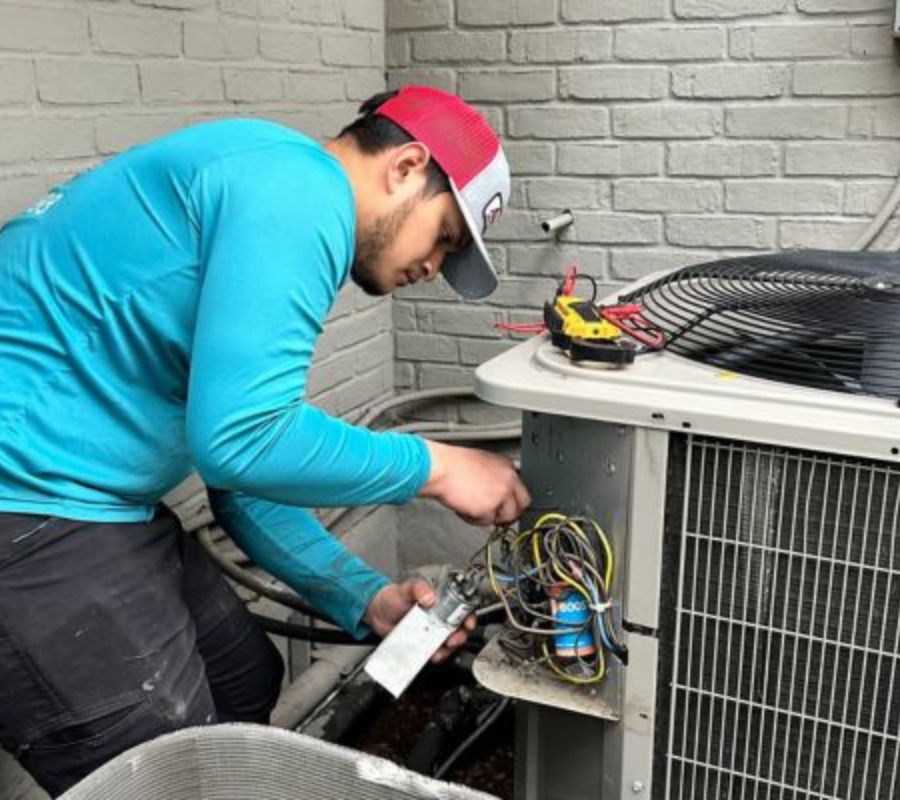
An AC that is completely dead and an AC that has power but will not start are different problems with different checks. Knowing which one you have is most of the diagnosis.
We are an independent repair company â not an authorized service center of any air conditioning brand. Brand names on this page are used only to identify the systems we repair, and all trademarks remain the property of their owners.

When an AC is not turning on, the single most useful thing you can establish before anyone touches it is which of two situations you are in. They share a complaint and share almost nothing else.
No power at all means nothing responds. No display, no indoor fan, no click from the outdoor unit. The fault is upstream of the equipment: a tripped breaker or RCD, an isolator switched off, a blown fuse, or a supply problem. This is the cheaper and more common of the two, and it is frequently something as ordinary as an isolator that a painter switched off and never switched back.
Power but no start means the unit clearly has electricity â a display lights, or the indoor fan runs â but the system will not begin cooling. Here the fault is inside the equipment: a capacitor out of tolerance, a contactor not pulling in, a control signal not reaching the outdoor unit, a protection device locked out, or a safety switch such as a condensate float doing its job.
Working out which of those two you have takes about thirty seconds and determines everything that follows. Skipping that step is how people end up being quoted for a compressor when an isolator was off.
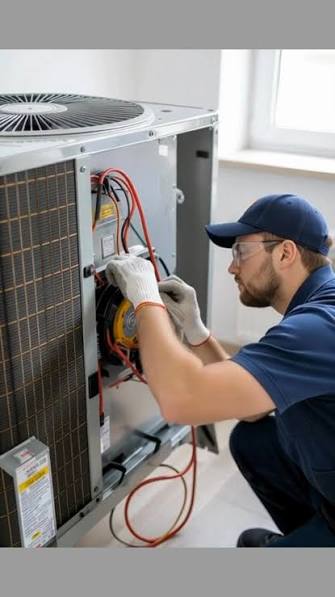
This is the sequence a technician should follow. It runs from the trivial to the expensive, so you never pay to rule out the costly options first.
A tripped breaker or RCD, or an isolator switch turned off near the unit. Genuinely the most common cause of a completely dead AC, and it costs nothing to find.
A condensate float switch cutting the unit because the drain pan is full. The unit is fine; the drain is not. Clearing the line restores operation.
Batteries, line of sight, correct mode, and whether the unit responds to its own manual button. Separates a control fault from a system fault.
Measured against the rated microfarad figure, not guessed. Tolerance is around six percent, and a weak capacitor is the classic cause of an outdoor unit that hums without starting.
Is the contactor coil receiving its control voltage, and are the contacts actually passing power? Pitted contacts get replaced, never filed.
Last. Boards are condemned far more often than they fail, so fuses, sensors and supply quality come first â and a compressor is confirmed by measurement, never assumed.

The scenario: indoor unit runs, outdoor unit hums but the fan does not turn, or the unit tries to start and immediately gives up. This is very frequently reported to homeowners as a failed compressor, which is one of the most expensive repairs on an AC system.
In practice, a capacitor whose capacitance has drifted well below its rating cannot provide the phase shift a single-phase motor needs to get started. The motor sits there drawing heavy current and going nowhere â exactly the sound and behaviour of a seized compressor to anyone who does not measure.
So the capacitor gets measured. Accepted tolerance is roughly six percent of the rated value, meaning a 45 microfarad capacitor should read somewhere around 42 to 48. Anything meaningfully below that is failing, and any bulging or oil weeping means replacement regardless of what it measures.
One more honest detail: a compressor with a tripped internal thermal overload reads as open circuit and mimics a dead compressor perfectly. Let it cool and re-test before condemning it. And if a capacitor fails repeatedly, the answer is not another capacitor â look for high motor current, the wrong microfarad rating fitted, or a motor on its way out.
A breaker that trips is not a nuisance to be reset â it is information. When it trips tells you what is wrong.
A short circuit or an earth fault somewhere in the wiring or a motor winding. This needs finding, not resetting. Leave the breaker off and call.
High starting current. Usually a weak capacitor, a stiff or failing compressor, or a contactor with burnt contacts. Measurable and usually repairable.
The Dubai signature. A fouled condenser cannot reject heat, so pressure and current climb until protection operates. Condenser cleaning usually resolves it.
Same root cause as above, in a milder form. The system has no margin left at peak ambient. Worth fixing before it takes the compressor with it.
Each reset re-applies full current into a known fault. If it trips twice, leave it off.
Which of the four you have narrows the diagnosis substantially before we arrive, and often determines which parts we bring.
These are genuinely worth doing and occasionally solve it outright. The stopping point is not negotiable.
Look for a tripped breaker or RCD on the AC circuit. Reset once. If it trips again, leave it off and tell us.
A small switched box near the indoor or outdoor unit. Frequently switched off during cleaning, painting or other work and never switched back.
Fresh batteries, cool mode, temperature set below the room. Try the manual button on the indoor unit if it has one.
If there is water in the drain tray, a float switch may have cut the unit deliberately. That is a drainage repair, not an electrical one.
Do not open electrical enclosures on either unit and do not remove the outdoor cover. Capacitors hold a dangerous charge after power is removed, and electrical installation and modification work in Dubai must be carried out by appropriately approved contractors.
Parts and labour carry a 90-day warranty. If the same fault returns inside that window, we come back to it.
Back to the main service page, or straight to the related fault.
Showing a code rather than just a symptom? Start here. Decode Your Error Code →
Our full AC service â split, window, ducted and chilled-water systems across all four emirates.
If it starts but will not cool, this is the page you want instead.
If a float switch cut the unit because the pan is full, the real repair is here.
Where a protection lockout turns out to be charge-related, this explains the honest approach.
Same-day cover across Dubai's villa and tower communities.
Start at the breaker board and look for a tripped breaker or RCD for the AC circuit. Then find the isolator switch, which is usually a small switched box near the indoor or outdoor unit and is very often switched off by a cleaner, a painter or whoever last worked in the room. If a breaker has tripped, you may reset it once. If it trips again immediately, stop and leave it off, because a breaker tripping repeatedly is telling you there is a genuine fault and resetting it in a loop is not safe.
Usually not, and this is one of the most over-diagnosed faults in the market. Where the indoor unit clearly has power and the outdoor unit does nothing, the likely candidates in order are the run or start capacitor, the contactor that switches power through to the compressor, the control signal reaching the outdoor unit, and a protection device that has locked out. All of those are ordinary repairs. A failed compressor is a possibility but it sits at the bottom of that list, not the top, and it needs measurements to confirm rather than an assumption.
A breaker that trips instantly is protecting the circuit against a short or an earth fault, and that needs finding rather than working around. It is a different signature from a breaker that trips a few seconds later when the compressor engages, which usually points to high starting current from a weak capacitor or a stiff compressor, and different again from a breaker that trips after twenty minutes in the afternoon heat, which usually means a fouled condenser has pushed pressure and current up. Please do not keep resetting it â tell us which of those three patterns you have.
Not necessarily, and the cheap causes are worth ruling out first. Fresh batteries, correct line of sight to the receiver, and confirming the remote is on cool rather than fan or timer. Many units have a manual or test button on the indoor unit itself; if the unit responds to that, the problem is in the remote or the receiver rather than in the system, which is a much smaller repair. If it does not respond to either, the fault is on the control side.
Yes, and it is a genuinely common cause that surprises people. Many systems have a float switch in the condensate pan that cuts the unit off when the water level rises, specifically to stop an overflow damaging the ceiling. So a unit that has gone dead may simply have a full drain pan and a safety device doing exactly what it is designed to do. Clearing and flushing the drain restores operation, and nothing electrical needed replacing at all.
The breaker, the isolator switch, the remote batteries and the thermostat setting are all reasonable for a homeowner to check. Beyond that, stop. Do not open electrical enclosures on either unit, and do not remove the cover from the outdoor unit. Capacitors hold a charge after power is removed and can give you a serious shock even with the isolator off, and in Dubai only appropriately approved contractors may carry out electrical installation and modification work. Diagnosis past the isolator is a technician job.
Whether the indoor fan runs, whether any light shows, and whether the breaker has tripped. Those three answers narrow it before we arrive.
Nothing at all, or the indoor unit runs while the outdoor unit stays silent? Those are two different faults and two different repairs.
+971 50 988 6591
Daily, 8:00 AM â 6:00 PM
+971 50 988 6591
Send a photo of the indoor display and the breaker board