đŸ›ī¸ Licensed & Registered — Trade Licence 134585 (Ajman) 🕒 Open Daily 8:00 AM – 6:00 PM 📞 +971 50 988 6591
💧 AC Water Leaking

AC Water Leaking in Dubai — Find the Source, Not the Symptom

Water from an air conditioner has four quite different causes, and they need four different repairs. Clearing a drain that was never blocked is why so many people have this fixed twice.

⚡ Same-Day Visits đŸ›Ąī¸ 90-Day Warranty 💲 Quote Before Any Work đŸ›ī¸ Licence No. 134585
â„šī¸

We are an independent repair company — not an authorized service center of any air conditioning brand. Brand names on this page are used only to identify the systems we repair, and all trademarks remain the property of their owners.

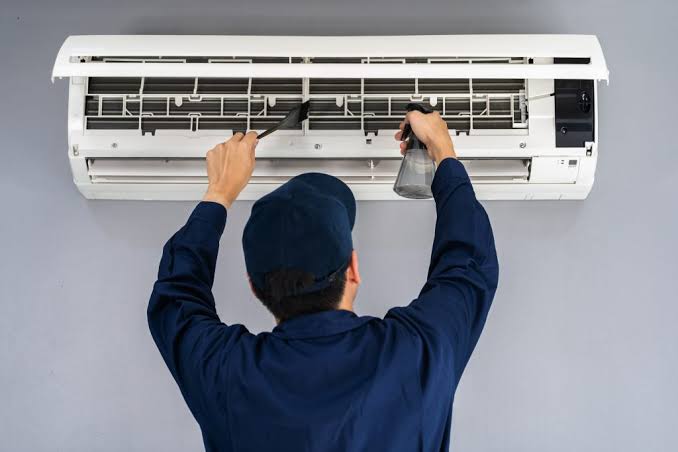
Clearing a blocked condensate drain line from an air conditioner pan in a Dubai apartment
Where Does the Water Come From?

Your AC Makes Water On Purpose — Until It Cannot Get Rid Of It

An AC leaking water is not doing anything abnormal in producing the water itself. Cooling air means condensing moisture out of it, and in Dubai's humidity a single indoor unit can pull a surprising volume out of a room over a day. That water collects in a shallow pan beneath the cold coil and leaves through one narrow drain pipe.

The leak, then, is never really about water being created. It is about water not leaving. And there are exactly four ways that goes wrong, each with its own repair:

The line can be blocked, usually by biofilm growing in a warm, permanently wet pipe. The trap can be missing or dried out, so the unit draws air up the pipe instead of pushing water down. The pan itself can be cracked, corroded, or sitting without enough fall to drain. Or the water may not be drainage water at all, but condensation forming on uninsulated cold pipework somewhere else entirely.

Telling these apart takes minutes if you look in the right order. Guessing wrong is why so many people have had this same leak "fixed" more than once.
The Decision Tree

Six Findings, and What Each One Means

The state of the pan and the position of the water do almost all the diagnostic work. Here is how each combination reads.

đŸĻ 

Standing Water, Blocked Line

Pan full, pipe restricted. Biofilm has narrowed the bore. The commonest cause of all — and it needs the whole line flushed, not just the visible blockage cleared.

🚱

Standing Water, Clear Line

Pipe flows freely but the pan still floods. Points to a missing or dried-out trap, or a drain run with no continuous fall.

đŸ•ŗī¸

Cracked or Corroded Pan

Water escapes below the coil regardless of drainage. Honest warning: replacing a pan usually means pulling the coil, so it is a much bigger job than a drain clean.

đŸĨļ

Dry Pan, Wet Pipe

Not a drainage fault at all. Insulation missing or crushed on a cold line, so the pipe condenses and water runs along it. Reinstating the lagging is the fix.

🛑

Unit Shut Itself Down

The float switch has done its job and cut the unit to prevent an overflow. The shutdown is correct behaviour; the drainage fault behind it is the repair.

🧊

Ice, Then Water

Water arriving in bursts after the unit runs a while often means a coil that iced up and then thawed. That is an airflow or charge problem showing itself as a leak.

Checking condensate line fall and trap on a ducted air handler in a Dubai villa roof void
Why It Comes Back

Blockages Recur When the Pipework Is the Real Fault

Here is the pattern we are called to correct most often: someone cleared the drain six months ago, the leak stopped, and now it is back. The conclusion drawn is usually that the unit is old and failing. Almost always, the pipework was the problem all along.

A condensate line has to fall continuously to its outlet. If it runs level for a stretch, dips and rises, or has more bends than it needs, water stops moving and sits. Warm standing water in a dark pipe grows biofilm quickly, the bore narrows again, and you are back where you started. Clearing the blockage treated the consequence; the geometry caused it.

The same applies to the trap. A trap that is too small dries out during a cool spell or a holiday, and once the water plug is gone the unit can draw air up the pipe. That produces the confusing case where the pipe is demonstrably clear and the pan still overflows.

So the durable repair checks three things beyond the blockage itself: does the line fall all the way, is there a correctly sized working trap, and is the float switch functioning as a last line of defence. In apartments the recurring offender is a long horizontal run into a shaft — common in tower layouts, and worth knowing about before you are told to replace a healthy unit.

Why Dubai Makes This Worse

Humidity, Volume and Biofilm

Three local conditions combine to make condensate the most common AC fault in this market, particularly near the coast.

High humidity means high volume

Coastal Dubai and Sharjah air carries a great deal of moisture. The same unit produces far more condensate here than it would inland or in a temperate climate, so any drainage weakness is exposed much sooner.

Warm pipes grow biofilm fast

A drain line sitting in a hot ceiling void, permanently damp, is close to ideal conditions for biological growth. This is why the same line can block again within months if water is allowed to stand in it.

Long horizontal runs in towers

Apartment drains often travel a considerable distance across a ceiling void before reaching a riser. Length plus minimal fall is the recurring apartment offender.

Concealed units, expensive consequences

Where the unit sits above a gypsum ceiling, an overflow does not announce itself until the damage is visible. The repair is cheap; the ceiling is not.

Roof voids in villas

On ducted villa systems the drain tray sits in a void that can exceed 50 degrees. Trays corrode, and an overflow lands on an upstairs ceiling.

Which is why we flush, not poke

Clearing at the outlet with a wet vacuum and flushing the full line, then treating it, is what stops the return visit.

Before You Call

Three Safe Steps, and Where To Stop

These limit the damage while you wait. The stopping point matters as much as the steps.

1. Switch the unit off

At the thermostat. The water is condensate the unit makes while running, so switching it off stops more arriving.

2. Protect below

Container under the drip, and move anything that matters. If water is near light fittings or sockets, switch that circuit off at the breaker.

3. Note where it appears

At the unit, from a ceiling some distance away, or running along a pipe? Take a photo. That single detail often identifies which of the four causes it is.

🛑 Stop here

Do not open ceiling access panels yourself, do not pour chemicals down the drain line, and do not remove covers from the indoor unit. Wet gypsum is heavier and weaker than it looks.

Then call us

Tell us what you saw. Where the water appears and whether the pan holds water narrows the diagnosis before we arrive.

90-day warranty

Parts and labour carry a 90-day warranty. If the same leak returns inside that window, we come back to it.

Related Pages

More AC Repair Help

Back to the main service page, or straight to the related fault.

Showing a code rather than just a symptom? Start here. Decode Your Error Code →

â„ī¸

Main Service Page

Our full AC service — split, window, ducted and chilled-water systems across all four emirates.

AC Repair & Maintenance →

đŸŒĄī¸

AC Not Cooling

Poor cooling alongside a leak often shares a root cause — an iced coil that thaws.

AC Not Cooling →

🔌

AC Not Turning On

If a float switch has cut the unit and it will not restart, start here.

Not Turning On →

đŸ§¯

AC Gas Filling

Where a leak turns out to be refrigerant rather than water, this is the honest version.

AC Gas Filling →

📍

Tower Areas

Ceiling leaks are the signature fault in the chilled-water tower districts.

JLT →
Business Bay →

đŸˇī¸

By Brand

Brand-specific fault codes and known weak points.

Daikin →
O General →

FAQ

AC Water Leaking — Your Questions

Should I switch the AC off if it is leaking water?

Yes. Turn it off at the thermostat and put a container under the drip. The water is condensation the unit is producing as it runs, so switching it off stops more arriving and gives you time. If water is anywhere near electrical fittings or light fixtures, switch the circuit off at the breaker too. What you should not do is keep running it and hope, because an overflowing pan in a ceiling void does expensive damage to gypsum, paint and anything stored above.

Why is the water appearing a metre away from the AC unit?

Because the water is escaping into the ceiling void and then finding the lowest point, which is rarely directly under the unit. The pan beneath the coil overflows, water spreads across the top of the gypsum, and it comes through at a joint, a light fitting or a screw head some distance away. This is why the stain position can be misleading and why the diagnosis has to start at the unit rather than at the stain.

What is a drain trap and why does it matter?

It is a small U-shaped dip in the condensate pipe that holds a little water. That water plug stops air being drawn back up the drain line. If the trap is missing, undersized, or has simply dried out during a period when the AC was not used, the unit can pull air up the pipe instead of pushing water down it. The result is a pan that floods while the pipe itself is completely clear — which is exactly the case that gets misdiagnosed most often.

Water is running down a pipe inside my ceiling. Is the drain blocked?

Probably not. That pattern usually means condensation on the pipe rather than a drainage fault. Cold refrigerant lines and chilled-water pipes have to be insulated; where the insulation was cut, crushed or never reinstated properly, the bare metal condenses heavily in humid air and water runs along the pipe until it drips. The tell is simple: a drainage fault leaves standing water in the pan under the coil, while a condensation fault leaves the pan dry and the pipe wet.

My AC shut itself down and there is water in the tray. Is it broken?

More likely it protected itself correctly. Many systems have a float switch in the condensate pan that cuts the unit off when the water level rises, precisely to stop an overflow damaging your ceiling. So the shutdown is the safety device doing its job, and the real fault is whatever stopped the pan draining. Clearing and flushing the line, checking the fall, and testing the float switch is the repair; the shutdown itself needs no fixing.

Will cleaning the drain stop it happening again?

Only if the underlying reason is addressed too. Clearing the immediate blockage restores drainage today, but blockages recur when the line has inadequate fall, too many bends, or no working trap, because water sits in the pipe and biofilm grows back quickly. So we flush the whole line rather than just clearing the visible obstruction, check that it falls continuously to the outlet, and fit or replace the trap and pan treatment. That is the difference between a fix and a postponement.

Water Coming From Your AC? Switch It Off and Call.

Turning the unit off stops more water arriving while we get to you. We find which of the four causes it actually is, and the price is agreed before any work.

Book a Leak Diagnosis

Tell Us Where the Water Appears

At the indoor unit itself, from a ceiling some distance away, or running down a pipe? Where the water shows up is the single most useful clue.

📞 Phone

+971 50 988 6591
Daily, 8:00 AM – 6:00 PM

đŸ’Ŧ WhatsApp

+971 50 988 6591
Send a photo of where the water is appearing

âœ‰ī¸ Email

info@fixmyacdubai.ae

Request an AC Leak Repair

Opens WhatsApp with your request pre-filled — nothing is stored on this site.

Your details go directly to our team on WhatsApp. See our Privacy Policy.

Call Now+971 50 988 6591 WhatsAppInstant chat reply