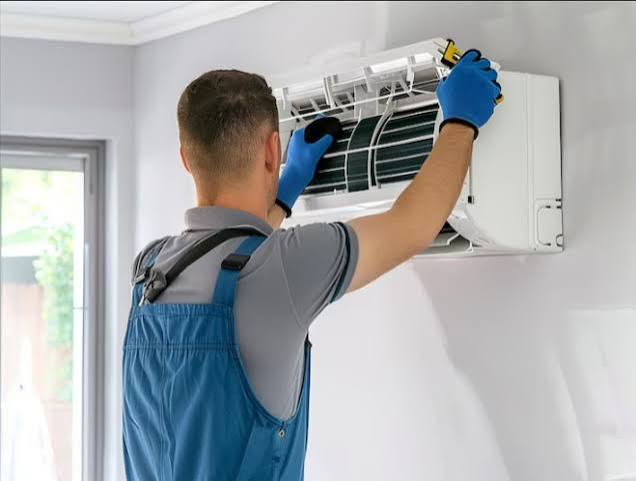
There is one question about an LG unit in the UAE that matters more than any fault code: was it built for this climate? LG splits its own catalogue into tropical and non-tropical, and installing the wrong one here causes real summer failures.
We are an independent repair company — we are not affiliated with, endorsed by, or an authorized service provider of LG. The brand name is used here only to identify the machines we repair, and all trademarks remain the property of their owners.

LG AC repair in Dubai has an unusual starting point, because LG itself divides its catalogue in a way that matters enormously here and is almost never mentioned at the point of sale.
LG sells both tropical and non-tropical models. The tropical range uses a compressor the manufacturer markets as operating at substantially higher ambient temperatures than a standard unit. That is a real specification difference, not a badge.
Now consider what a Dubai summer asks of an air conditioner: months of ambient temperatures in the forties, with the condenser rejecting heat into that air for most of the day. A unit specified for a temperate market is being operated outside its intended envelope, and it behaves exactly as you would expect — adequate in winter, marginal in May, tripping out in August.
So when we are called to an LG that "has never been reliable in summer", the first thing worth establishing is which side of that divide the unit sits on. If it is a non-tropical model, no amount of component replacement will make it comfortable here, and knowing that changes the conversation from repair to honest advice.
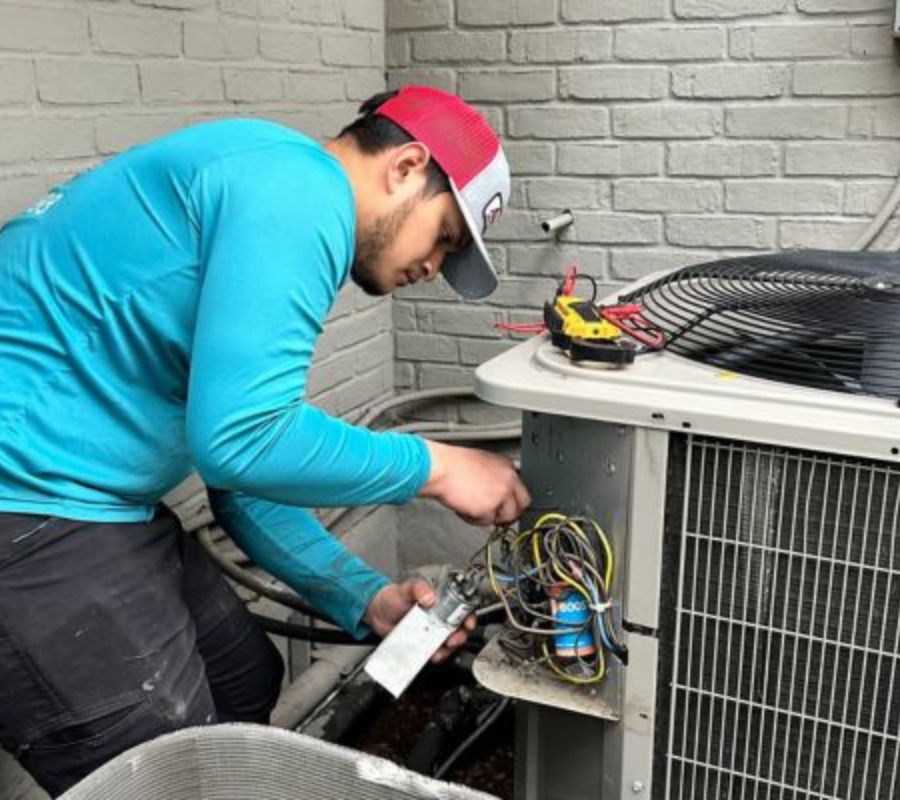
LG uses a CH prefix and publishes its codes, which makes the scheme genuinely usable. These are the two we encounter most often, with the diagnosis that should follow.
The two halves of the system are not communicating. The documented first step is a full power cycle: off at the breaker for about five minutes, then back on. A genuine proportion of CH05 events clear there.
If it returns, the investigation runs through the interconnecting wiring between indoor and outdoor units, terminal connections that have corroded or loosened, and then the control boards at each end. It is a control fault. Refrigerant has nothing to do with it, and no one should be quoting gas for a CH05.
The board is not seeing the indoor fan behave as expected. Check for physical obstruction first, because something fouling the blower wheel is a common and cheap cause. Then the motor and its capacitor where one is fitted, then the board output.
You will find long LG code tables online. Many are copied between sites and some describe models never sold in this market, which is how people end up buying parts for a fault they do not have.
We publish the codes we have verified and explain the scheme. For anything outside that, we read the code on your unit against the correct reference for your model and confirm it with measurements — airflow, temperature split, capacitor value, current draw, and superheat with subcooling where refrigerant is involved.
A code names a subsystem. It is where the diagnosis starts, not where it ends.
If no code is showing, the diagnosis works from behaviour instead.
Condenser condition first, then airflow, then charge measured properly as superheat and subcooling together. On a non-tropical unit in peak summer, expect limits.
Protection responding to high pressure, usually from a fouled coil — or a non-tropical unit at the edge of its envelope.
Capacitor value, contactor and control signal checked before the compressor is ever suspected.
Often the CH10 territory above. Obstruction first, then motor and capacitor, then board output.
Blocked condensate drain, a full pan, or a dried trap. Nothing to do with refrigerant.
Batteries and line of sight, then the receiver, then the indoor board. Cheap causes checked before expensive ones.

The DUALCOOL Dual Inverter range is the bulk of what we see, and inverter systems change the repair conversation in one important way: they contain a drive board, and drive boards are expensive.
They are also condemned far more often than they fail. A board gets blamed when the actual fault is a sensor reading out of range, a blown fuse on the board, a poor-quality incoming supply, or a fan motor that has shorted and taken out its driver stage. Replacing the board without finding that upstream cause means the new board fails the same way.
So on an LG inverter fault we check supply quality and earthing, board fuses, sensor resistance against expected values, and the condition of the motors the board drives — before concluding the board itself is the fault. Where a board genuinely has failed, we will tell you honestly whether component-level repair is realistic or whether a full replacement is the sensible route, and on an older unit whether either is worth it against the value of the machine.
One genuine positive: LG publishes a long compressor warranty across much of the inverter range. If your unit is still inside it, that is the first thing to use.
The CH code if one is showing, plus the model number. That tells us the subsystem, the refrigerant, and whether the unit is a tropical model.
LG's compressor warranty is long on much of the inverter range. If you are still covered, use it rather than paying us.
On a CH05 we will power-cycle properly before assuming a hardware fault, because that is the documented step and it sometimes resolves it.
Airflow and temperature split, capacitor value against rating, current against nameplate, sensor resistance, and superheat with subcooling where refrigerant is in play.
Fault, fix and cost agreed before anything is dismantled. On an older unit we will give you the honest repair-versus-replace position.
Parts and labour carry a 90-day warranty. If the same fault returns inside that window, so do we.
ℹ️ Independent third-party repair notice: we are not an authorized service center, dealer or affiliate of LG. We have no endorsement from them and no authorization to carry out warranty work on their behalf. If your unit is still within its manufacturer warranty period, contact the retailer or the brand's own support channel first.
Back to the main service page, compare with another brand, or read about the symptom.
Not sure the code you are seeing is on our list? Compare it across every brand. All Brand Error Codes →
Our full AC service — split, window, ducted and chilled-water systems across all four emirates.
The other high-volume apartment brand here, and how its Gulf code scheme differs.
Trip timing as a diagnostic — instant, on compressor start, or after twenty minutes in the heat.
The cheapest meaningful AC repair, and why it is measured rather than guessed.
CH05 is a communication error between the indoor and outdoor units — the two are not talking to each other properly. The documented first step is genuinely worth trying yourself: switch the unit off at the breaker, leave it off for around five minutes, then restore power. A surprising number of CH05 events clear at that point. If it returns, the cause is usually the interconnecting wiring between the units, a connection that has corroded or worked loose, or a control board on one end. It is a communication fault, not a refrigerant fault, so nobody should be adding gas because of it.
LG divides its own catalogue into tropical and non-tropical models, and the tropical range uses a compressor LG markets as operating at substantially higher ambient temperatures. In the UAE that distinction is not marketing, it is functional. A non-tropical unit installed here is being asked to work outside the conditions it was specified for, and the result is exactly what people describe as unreliability: poor performance and protection trips through the hottest months. If your LG struggles every summer and always has, this is worth checking before anything is replaced.
CH10, which some models display as E6, points to the indoor fan motor circuit — the motor is not running as the board expects. A genuinely common real-world cause is physical obstruction rather than electrical failure: something fouling the blower wheel or blocking the fan. So the sequence is to look for obstruction first, then check the motor and its capacitor where fitted, then the board output. Replacing the board on a CH10 without checking for obstruction is a expensive way to not fix the problem.
The range found in UAE homes and small commercial spaces, centred on the DUALCOOL Dual Inverter wall splits, plus ducted, cassette and window units. Refrigerant varies with age — current DUALCOOL units are R32, older stock is R410A — which changes both the parts and the procedure. Give us the model number from the rating plate when you book so we bring the right components.
If the unit is still within its manufacturer warranty, contact the retailer you bought it from or the brand support channel for your region first. LG publishes a long compressor warranty on much of its inverter range, so it is genuinely worth checking before paying anyone. An independent repair can affect that cover. Our service is for units out of warranty, or where the owner has chosen to use an independent repairer, and we will say so plainly if we think you should use the warranty instead.
We publish the codes we have verified and describe the scheme rather than reproducing a long list we cannot stand behind for every model. LG uses a CH prefix and publishes codes on its own regional support material, which makes the scheme genuinely usable — unlike some brands where the mappings vary by manufacturing source. Where a code is not one we can confirm applies to your specific model, we read it on your unit against the correct reference and verify with measurements rather than guessing from a generic table.
The code plus the model tells us the subsystem before we arrive. Same-day slots, and the price is agreed before any work begins.
The CH code from the display and the model number from the rating plate. If you know whether the unit is a tropical model, that helps too.
+971 50 988 6591
Daily, 8:00 AM – 6:00 PM
+971 50 988 6591
Send a photo of the display code and the rating plate