đŸ›ī¸ Licensed & Registered — Trade Licence 134585 (Ajman) 🕒 Open Daily 8:00 AM – 6:00 PM 📞 +971 50 988 6591
⚡ AC Tripping Breaker

AC Tripping the Breaker in Dubai — Timing Tells You Why

When your AC trips the breaker, when it trips is the diagnosis. Instantly, on compressor start, or twenty minutes into a hot afternoon are three different faults with three different repairs.

⚡ Same-Day Visits đŸ›Ąī¸ 90-Day Warranty 💲 Quote Before Any Work đŸ›ī¸ Licence No. 134585
â„šī¸

We are an independent repair company — not an authorized service center of any air conditioning brand. Brand names on this page are used only to identify the systems we repair, and all trademarks remain the property of their owners.

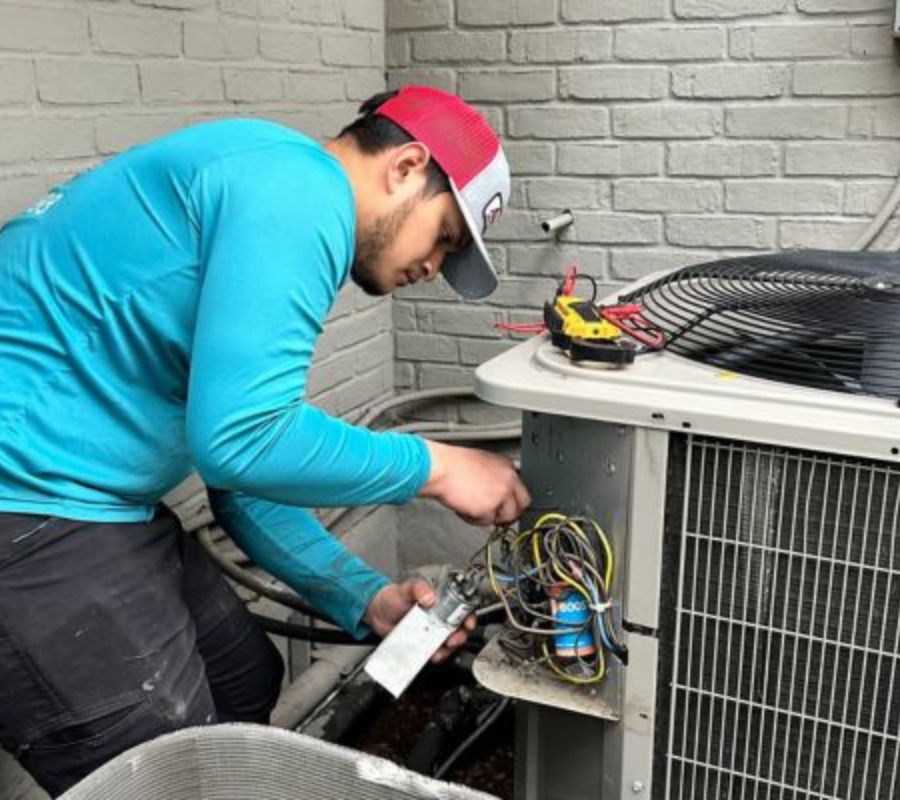
Clamp meter measuring compressor current on an air conditioner that keeps tripping its breaker
The Timing Is the Diagnosis

A Tripping Breaker Is Information, Not a Nuisance

When an AC trips the breaker, the instinct is to reset it and hope. That wastes the most useful diagnostic signal you have, because the interval between switching on and tripping tells you almost exactly what is wrong.

A breaker operates for one of two reasons. Either current has exceeded what the circuit can safely carry — an overload — or current is escaping to earth, which is what an RCD detects. Those are different failures, and where they sit in time is different too.

An instant trip is a short or an earth fault. There is a direct low-resistance path that should not exist.

A trip a few seconds in, as the compressor engages, is a starting-current problem. Something is making the start surge larger or longer than the breaker will tolerate.

A trip after twenty minutes on a hot afternoon is a running-current problem, and in Dubai that almost always means the system cannot reject heat. This is the pattern we see most, and it is usually the cheapest to fix.

So the first question we ask is not what brand you have. It is: how long does it run before it goes?
Read Your Pattern

Six Trip Patterns and What Each One Means

Find the row that matches your unit. The cause and the likely cost follow from it.

đŸ’Ĩ

Instantly, Every Time

Short circuit or earth fault. A motor winding broken down to earth, chafed cabling, or water in an electrical enclosure. Leave the breaker off and call.

âąī¸

Seconds In, On Compressor Start

High starting current. Weak run capacitor first, then a stiff compressor, then a contactor with pitted contacts. The capacitor is the common and cheap answer.

🌇

After 20 Minutes, Hot Afternoons

The Dubai signature. A fouled condenser drives head pressure and current up until protection operates. Cleaning usually resolves it.

💧

Trips the RCD Specifically

Current leaking to earth. Water from an overflowing drain pan reaching a board or terminal block is a genuinely common cause.

đŸŒĄī¸

Only In the Hottest Weather

The same root cause as the afternoon trip, in a milder form. The system has no margin left at peak ambient. Worth fixing before it takes the compressor.

🎲

Randomly, No Pattern

Often a deteriorating connection — a loose terminal heating up, or a contactor arcing. Intermittent, and worth finding before it becomes permanent.

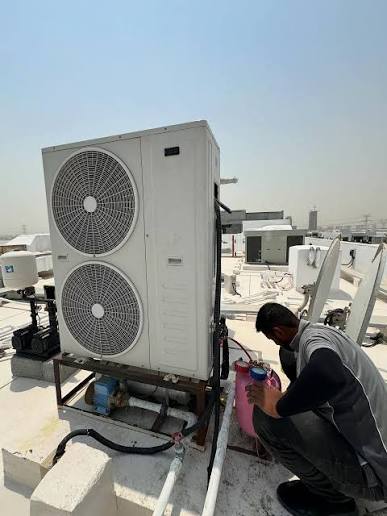
Dust-blinded condenser coil causing high running current and afternoon breaker trips in Dubai
The Dubai Pattern Explained

Why a Dirty Coil Trips an Electrical Device

It seems odd that a dusty coil should trip a breaker. The chain is straightforward once laid out, and understanding it explains most AC trips in this city.

Your condenser rejects heat to outdoor air. To do that it needs air to flow across its fin surface. Pack those fins with fine dust and sand and airflow collapses. The refrigerant then cannot condense at the temperature it should, so condensing temperature rises, and with it head pressure — the pressure the compressor works against.

A compressor pushing against higher pressure draws more current. That is simply what happens. On a mild morning the extra current sits within what the breaker tolerates. As ambient climbs through the forties, outdoor air is already hot before it reaches the coil, the margin disappears, and running current climbs past the trip threshold. Twenty minutes of that and the breaker goes.

Two things follow. First, the repair is usually cleaning, not an electrical component. Second, and more importantly: every hour that compressor spent running at elevated pressure and current shortened its life. The trip is the warning. Ignoring it and resetting daily through a Dubai summer is how a cleaning job becomes a compressor job.

How We Diagnose It

Measured, In Order

Electrical fault finding on an AC system follows a sequence. Skipping steps is how the wrong part gets replaced.

1. Establish the pattern

Instant, on start, or on a long run. Breaker or RCD. Hot weather only, or always. This determines everything that follows.

2. Insulation and earth checks

On an instant trip, resistance to earth from motor windings and cabling, and inspection of enclosures for water ingress or chafed insulation.

3. Capacitor value

Measured against the rated microfarad figure. Tolerance is roughly six percent; any bulging or oil weep means replacement regardless of reading.

4. Contactor condition

Coil continuity, correct control voltage arriving, and whether the contacts actually pass power. Pitted contacts are replaced, never filed — filing removes the plating and they re-oxidise quickly.

5. Running current under load

Clamp-meter current compared against the nameplate rated figure, alongside head pressure and condensing temperature. This is where the fouled-coil pattern proves itself.

6. Compressor last

Winding resistance and resistance to earth, with a hot compressor allowed to cool before condemning it — a tripped internal overload reads open and mimics a dead compressor perfectly.

Before You Call

What To Note, and Where To Stop

Gathering these details genuinely shortens the visit. The stopping point is not negotiable.

1. Time it

How long from switch-on to trip? Seconds, minutes, or a long run? Does it only happen on hot days?

2. Breaker or RCD?

If you can tell which device operated, say so. An RCD points at an earth-leakage path, which narrows things considerably.

3. Look for water

Check the indoor drain tray. Water plus an RCD trip is a strong and specific combination.

4. Check outdoor clearance

Stored items, a cover left on, or plants grown close all raise head pressure and current. Clear it and see if the pattern changes.

🛑 One reset only

Reset once to see if it was a one-off. If it trips again, leave it off. Do not open electrical enclosures or the outdoor cover — capacitors hold a dangerous charge after power is removed.

90-day warranty

Parts and labour carry a 90-day warranty. If the same fault returns inside that window, we come back to it.

Related Pages

More AC Repair Help

Back to the main service page, or straight to the repair your fault points to.

Showing a code rather than just a symptom? Start here. Decode Your Error Code →

â„ī¸

Main Service Page

Our full AC service — split, window, ducted and chilled-water systems across all four emirates.

AC Repair & Maintenance →

🔋

Capacitor Replacement

The commonest cause of a start-up trip, and the cheapest meaningful AC repair there is.

Capacitor Replacement →

đŸŒĄī¸

AC Not Cooling

The fouled-condenser chain in full, and why cleaning comes before any part is quoted.

AC Not Cooling →

🔧

Compressor Replacement

If the trips were ignored long enough — and why the cause must be fixed too.

Compressor Replacement →

🔌

AC Not Turning On

If it will not start at all rather than tripping, this is the page you want.

Not Turning On →

💧

AC Water Leaking

Water reaching electrics is a real cause of earth-leakage trips.

Water Leaking →

FAQ

AC Tripping the Breaker — Your Questions

Is it safe to keep resetting the breaker?

No. A breaker is a protective device, and when it operates it is telling you that current has exceeded what the circuit can safely carry, or that current is leaking to earth. Resetting it re-applies full power into a fault that has not been fixed. Reset it once to establish whether the trip was a one-off. If it goes again, leave it off and get it diagnosed. Repeatedly resetting into a genuine fault risks damage to the equipment and, with an earth fault, risks a great deal more than that.

Why does my AC only trip in the afternoon?

That is the most common pattern in Dubai and it usually has nothing to do with the electrics being faulty. As ambient temperature climbs into the forties, a condenser that is partly blocked by dust can no longer reject heat properly. Condensing temperature and head pressure rise, the compressor has to work harder against that pressure, and its current draw climbs with it. In the cool of the morning there is enough margin to cope. By mid-afternoon there is none, and either a pressure switch or the breaker intervenes. Cleaning the condenser usually resolves it.

It trips the instant I switch it on. What does that mean?

An instantaneous trip points to a short circuit or an earth fault rather than an overload, and that needs locating rather than working around. Common locations are a compressor or fan motor winding that has broken down to earth, damaged cabling — often where it passes through a wall or has been chafing against metalwork — or water ingress into an electrical enclosure, which is a genuine possibility if a condensate drain has been overflowing onto a board. Leave the breaker off and tell us, because this is the one pattern where continuing to try is actively unwise.

It runs for a few seconds then trips. Is that different?

Yes, and it points somewhere quite specific. If the unit trips at the moment the compressor engages, the issue is almost always high starting current. A motor draws a large surge on start-up, and anything that makes that surge worse or longer will trip a breaker: a run capacitor that has drifted well below its rated value, a compressor that has become mechanically stiff, or a contactor with burnt and pitted contacts. All three are measurable, and the capacitor is both the most common cause and the cheapest fix.

Could a water leak cause the breaker to trip?

Yes, and it is more common than people expect. Many indoor units sit above or beside their own electrical components, and if a condensate drain blocks and the pan overflows, that water can reach a control board or a terminal block. The result is a leakage path to earth, which is exactly what an RCD is designed to detect. So a unit that trips the RCD and has water in its drain tray is telling you two connected things at once, and clearing the drain is part of the electrical repair rather than a separate job.

What can I check myself before calling?

Establish the pattern and stop there. Note whether the trip is instant, a few seconds in, or after a long run, and whether it only happens on hot days. Check whether it is the breaker or an RCD that operates, if you can tell them apart. Look for water in the indoor drain tray. Make sure the outdoor unit has clear space around it and is not covered or boxed in. Do not open electrical enclosures on either unit, and do not remove the outdoor cover — capacitors hold a dangerous charge even after the power is off, and electrical installation and modification work in Dubai must be carried out by appropriately approved contractors.

Breaker Tripping? Tell Us When It Happens.

Instantly, on start-up, or after twenty minutes in the heat. That single detail usually identifies the fault before we arrive.

Book an Electrical Diagnosis

Tell Us the Trip Timing

How long the unit runs before it trips, and whether it only happens in hot weather. Those two answers do most of the diagnostic work.

📞 Phone

+971 50 988 6591
Daily, 8:00 AM – 6:00 PM

đŸ’Ŧ WhatsApp

+971 50 988 6591
Send a photo of the breaker board and the outdoor unit

âœ‰ī¸ Email

info@fixmyacdubai.ae

Request a Tripping Breaker Visit

Opens WhatsApp with your request pre-filled — nothing is stored on this site.

Your details go directly to our team on WhatsApp. See our Privacy Policy.

Call Now+971 50 988 6591 WhatsAppInstant chat reply