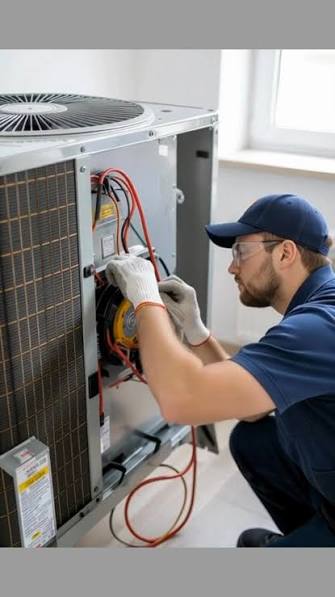
A compressor almost never dies of old age. It dies because something else was wrong and nobody fixed it. Replace the compressor without finding that cause and the new one follows the old one.
We are an independent repair company — not an authorized service center of any air conditioning brand. Brand names on this page are used only to identify the systems we repair, and all trademarks remain the property of their owners.

AC compressor replacement is the single largest line item in split-system repair, and it is also the repair most often done badly — not because the fitting is hard, but because the reason the first compressor died goes uninvestigated.
Compressors are robust. They do not typically wear out inside a normal service life if they are allowed to operate in the conditions they were designed for. What kills them is being made to work outside those conditions for a long time.
In Dubai the list is short and predictable. A condenser coil blinded by dust and sand, so heat cannot be rejected and head pressure climbs. A refrigerant charge that has been low for months because a leak was topped up rather than repaired, leaving the compressor poorly cooled and poorly lubricated. A run capacitor that has drifted, so the motor labours on every start. A restricted expansion device or filter drier starving the coil.
Every one of those is fixable and every one is cheaper than a compressor. And critically: if the cause is still present when the new compressor goes in, the new compressor is on the same path as the old one. That is why our quotation for this job always includes finding the cause, not just fitting the part.
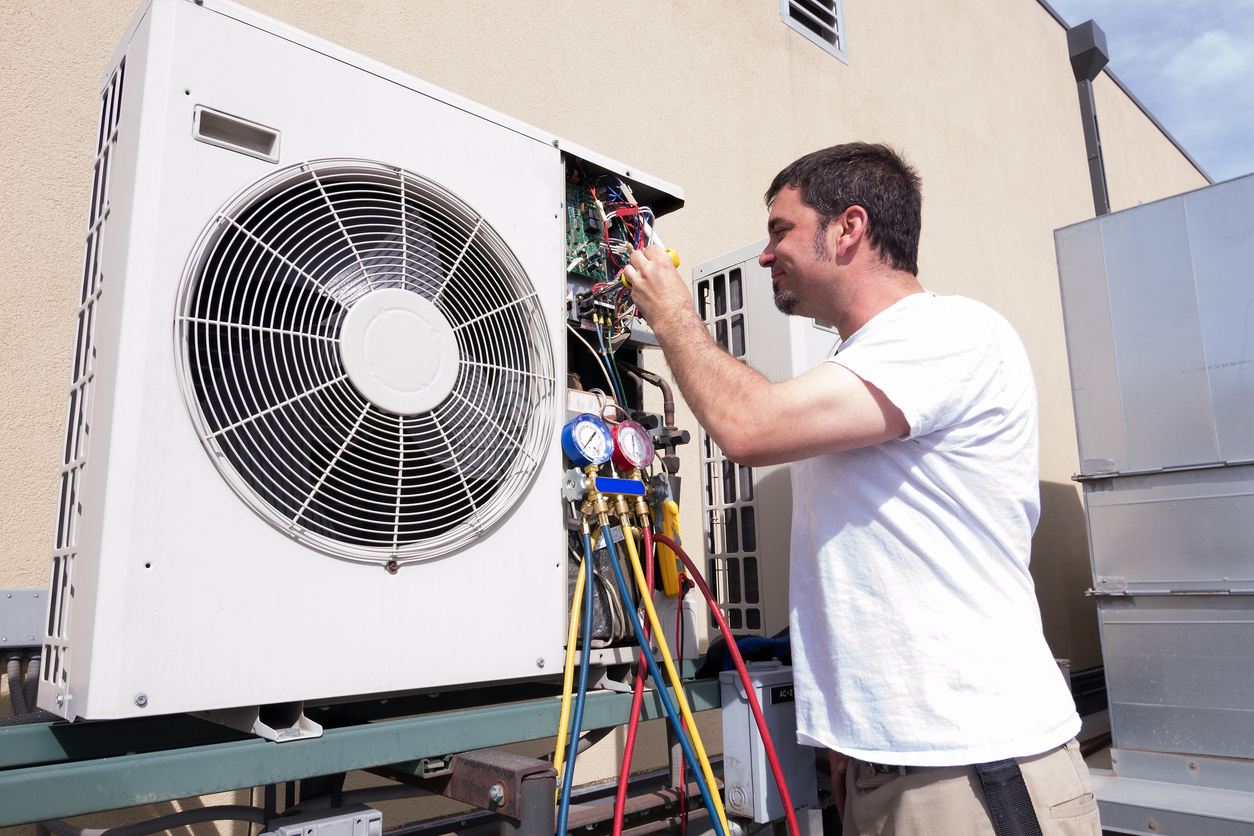
Each of these can produce symptoms identical to a failed compressor, and each is dramatically cheaper. This is the second-opinion checklist.
Measured against rating, tolerance about six percent. A weak capacitor leaves the motor humming and drawing heavy current — indistinguishable from a seizure without a meter.
Coil continuity, control voltage arriving, contacts actually passing power. Burnt or pitted contacts starve the compressor of the supply it needs.
A tripped internal thermal overload reads open and mimics a dead compressor exactly. A hot compressor must cool and be re-tested before any verdict.
A compressor drawing high current because its coil is blinded is not a failed compressor. Clean the coil, re-measure, then decide.
Common-to-run lowest, common-to-start several times higher, and the two adding to the start-to-run reading. A mismatch means an open winding.
Any measurable continuity from a terminal to clean ground means the motor has broken down internally. This is the check that genuinely confirms failure.

The mechanical swap is the straightforward part. The steps around it decide whether the new compressor lasts years or months.
Recover, never vent. The existing charge goes into a recovery cylinder. Releasing it is an environmental offence and a marker of a contractor to avoid.
Check the oil. Oil condition and acidity tell you whether the system is contaminated. On a burnout, acid has circulated through the whole circuit and simply fitting a new compressor into it guarantees a repeat failure.
Always fit a new filter drier — liquid line as standard, and a suction-line drier as well on a burnout. This is the step most often skipped to save money, and it is the one that protects the new compressor from whatever the old one left behind.
Pressure test with dry nitrogen, then evacuate deeply and hold the vacuum with the pump isolated. That proves the system is both leak-free and dry. Moisture left in a circuit forms acids that attack the new compressor from the inside.
Weigh in the nameplate charge rather than charging by feel, then verify superheat, subcooling and current draw against the rated figures. If those numbers are not right at handover, the job is not finished.
We do not publish prices for this job, because the honest cost depends on the refrigerant, the compressor and what caused the failure. What we can publish is the reasoning.
Against its expected working life. A compressor in a machine near the end of its life buys you less time than the same repair in a younger one.
R22 is being phased out and supply is shrinking, which changes the economics considerably. R410A and R32 systems do not carry that problem.
A burnout contaminates the whole circuit with acid. It is recoverable with proper cleanup and driers, but the risk of repeat failure is genuinely higher.
For that specific model and capacity. A correctly matched compressor matters; an approximate substitute causes its own problems.
Condenser coil condition, fan motor, board. Fitting a costly compressor into a tired unit leaves you exposed on everything else.
If two or more of those point the wrong way, we will tell you replacing the unit is better value than replacing the compressor. You will get both options with the reasoning.
Two things we decline, and why saying so up front is more useful than taking the booking.
Parts fitted are OEM-standard compatible and matched to your model. Every repair carries a 90-day warranty on parts and labour.
Back to the main service page, or to the faults that damage compressors in the first place.
Showing a code rather than an obvious fault? Start here. Decode Your Error Code →
Our full AC service — split, window, ducted and chilled-water systems across all four emirates.
The cheap part that gets misdiagnosed as a dead compressor more often than anything else.
Afternoon trips are the warning sign that precedes most compressor failures here.
Running undercharged for months is a leading cause of compressor damage. Why the leak matters.
The ranked cause list — most of which, left alone, ends at the compressor.
Rooftop condensers in full desert sun are where we see the most compressor damage.
It could, and it frequently is. A compressor that hums without starting, or draws heavy current and gives up, looks identical to a compressor whose run capacitor has drifted well below its rated value. The capacitor is a fraction of the cost. There is also a specific trap: a compressor with a tripped internal thermal overload reads as an open circuit and mimics a dead compressor perfectly, but recovers once it cools. So before condemning one we measure the capacitor, check the contactor, test winding resistance and resistance to earth, and allow a hot compressor to cool and be re-tested.
Because of what we ask of them here, not because the machines are poor. The dominant local cause is a condenser coil packed with dust and sand. Once the coil cannot reject heat, condensing temperature and head pressure climb, the compressor works harder and hotter, and current draw rises. Sustain that through a five-month summer at forty-plus ambient and you are running the compressor well outside its comfortable envelope for hours every day. Long-term low refrigerant charge, a weak capacitor and a restricted expansion device do similar damage by different routes.
Electrically and then mechanically. On the windings, resistance between the three terminals should follow a consistent relationship — common to run is the lowest reading, common to start is typically several times higher, and the two smaller readings should add up to the reading across start and run. A mismatch indicates an open winding. Separately, resistance from any terminal to a clean chassis ground should be effectively infinite; measurable continuity to earth means the motor has broken down and the compressor has failed. Then current draw under load is compared against the rated figure on the plate.
It depends on five things, and any honest answer has to weigh them rather than default to selling you the job. The age of the unit against its expected life. Whether the refrigerant is R22, which is being phased out and increasingly expensive. Whether the failure was a burnout, because a contaminated system carries a much higher risk of repeat failure. Whether a compressor is still available for that model. And the condition of the condenser coil and fan motor, since replacing the compressor in a tired machine leaves you exposed elsewhere. If two or more of those point the wrong way, we will tell you replacement is the better value.
Recovering the existing refrigerant into a cylinder rather than venting it, isolating and locking off the electrical supply, removing the failed compressor, and checking the oil for acidity because that tells you whether the system is contaminated. Then fitting the new compressor with the correct oil type, always fitting a new liquid-line filter drier — and a suction-line drier as well on a burnout — pressure testing with dry nitrogen, evacuating to a deep vacuum and holding it to prove the system is dry and tight, weighing in the nameplate charge, and finally verifying superheat, subcooling and current draw against the rated figures. Skipping the drier or the vacuum is how a replacement fails early.
You will find rewinding offered locally, and we would not recommend it for a domestic split-system compressor. These are hermetic units — the motor and pump are sealed inside one welded shell, running in refrigerant and oil. Opening that shell, rewinding and re-sealing does not reliably restore the cleanliness and tolerances the original manufacture achieved, and any contamination left inside circulates through the whole system. For the kind of units in UAE homes, replacement with a correctly matched compressor is the durable answer.
Compressors are condemned far more often than they fail. We measure before we conclude, and we tell you honestly whether replacement is worth it on your unit.
The model from the rating plate, the age of the unit, and whether it has been tripping or losing gas. That history usually explains the failure.
+971 50 988 6591
Daily, 8:00 AM – 6:00 PM
+971 50 988 6591
Send a photo of the outdoor unit rating plate