đŸ›ī¸ Licensed & Registered — Trade Licence 134585 (Ajman) 🕒 Open Daily 8:00 AM – 6:00 PM 📞 +971 50 988 6591
🧊 AC Freezing Up

AC Freezing Up in Dubai — Ice Is Usually Airflow, Not Gas

An iced coil gets diagnosed as low refrigerant more often than any other fault, and it is wrong more often than it is right. Restricted airflow freezes a coil just as readily, and the two are easy to tell apart if you measure.

⚡ Same-Day Visits đŸ›Ąī¸ 90-Day Warranty 💲 Quote Before Any Work đŸ›ī¸ Licence No. 134585
â„šī¸

We are an independent repair company — not an authorized service center of any air conditioning brand. Brand names on this page are used only to identify the systems we repair, and all trademarks remain the property of their owners.

Felted evaporator coil and loaded filter that caused an air conditioner to freeze up in Dubai
Why Ice Forms At All

A Cold Coil Needs Warm Air Passing Over It

When an AC is freezing up, the explanation is a balance that has tipped. Your indoor coil is deliberately cold — that is how it pulls heat and moisture out of the room. What keeps its surface above freezing is a continuous flow of warm room air across it.

Break that balance in either direction and ice forms. Reduce the airflow — a loaded filter, a caked blower wheel, a collapsed duct, closed vents — and there is not enough heat arriving to keep the surface above zero. Or reduce the refrigerant so that it boils off too early in the coil, and the remaining coil surface runs colder than intended.

Both produce the same picture: frost, then a solid sheet of ice, then no cooling at all. And here is the part that makes it self-accelerating — the ice itself blocks airflow, which drops the surface temperature further, which grows more ice.

The commercially important point is that these two causes cost very different amounts to fix. Cleaning a filter and a blower wheel is inexpensive. Refrigerant work is not. Yet an iced coil is diagnosed as "needs gas" more often than almost any other fault in this market, and a large share of the time that is simply wrong.
The Two Families

Six Causes, Split Between Airflow and Charge

Four airflow causes and two refrigerant causes. The airflow group is both more common and cheaper, which is why it gets checked first.

đŸ§Ŋ

Loaded Filter

The single most common cause. A filter you cannot see light through starves the coil of the warm air that keeps it above freezing.

🌀

Caked Blower Wheel

Grime on the blower blades destroys airflow more effectively than a dirty coil, and almost no general cleaning service touches it.

💤

Blower Not Running

A failed motor or, very commonly, its capacitor. No air over the coil means ice within minutes. Check this before touching the charge.

🚧

Blocked Ducts or Vents

Crushed or sagging flexible duct in a hot roof void, closed registers, or return grilles blocked by furniture and storage.

đŸ§¯

Genuine Undercharge

Refrigerant boils off too early in the coil. Confirmed by high superheat with low subcooling — and it means a leak to find, not a top-up.

đŸ”ģ

Liquid-Line Restriction

A blocked filter drier or faulty expansion device starves the coil while the charge is intact. Adding gas here makes it worse.

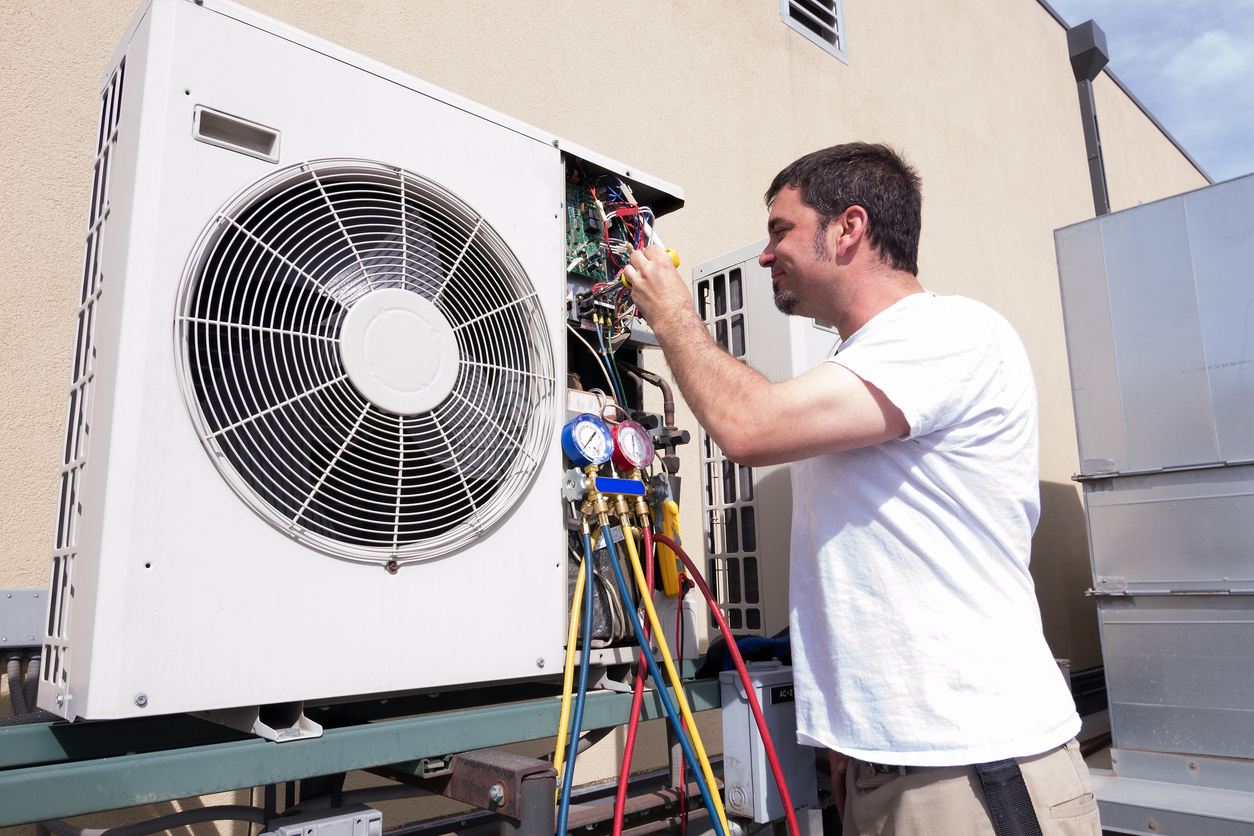
Measuring superheat and subcooling to separate low refrigerant from an airflow restriction
How We Prove Which One

Airflow or Charge — the Measurement That Settles It

You cannot tell these apart by looking at ice, which is exactly why guessing is so common. What separates them is a pair of measurements taken together, once the system has thawed and is running.

Airflow first, because it is cheap and quick. Filter condition, blower wheel condition, blower actually running at correct speed, and the temperature difference across the coil. On a ducted system, duct condition and register positions too. A restriction here is usually visible and always measurable.

Then the refrigerant numbers. Superheat and subcooling read as a pair. High superheat with low subcooling indicates genuine undercharge — refrigerant has leaked out and the leak needs finding. High superheat with high subcooling indicates a restriction in the liquid line, where nothing has leaked and adding gas would be actively harmful.

Doing it in that order matters commercially as well as technically. If the filter and blower explain the fault, you have paid for a clean instead of a refrigerant job. If the numbers point at charge, you get a leak search rather than a top-up that fails again next season.

One more chain worth knowing: a dead blower ices the coil, the ice thaws and floods, and the customer reports a water leak. Three symptoms, one root cause, and only one of them is the actual fault.

Right Now

What To Do While You Wait

These steps limit the damage and speed up the thaw. One of them is a genuine safety point.

1. Turn cooling off

Stop asking the system to cool. Continuing to run a frozen coil risks liquid refrigerant reaching the compressor, which is the expensive outcome.

2. Run fan-only if you can

Circulating room air over the coil thaws it far faster than switching everything off, and lets meltwater drain through the pan rather than over the casing.

3. Put towels down

A thawing coil releases a lot of water, often outside the pan. Protect flooring and move anything that matters.

🛑 Never chip the ice

Coil fins and the tubing behind them puncture very easily. A scraped coil turns an airflow problem into a refrigerant leak and a much larger bill.

4. Look at your filters

Hold them to the light. If you cannot see through, that may be the whole answer — and it is worth telling us when you book.

5. Note where the ice was

Indoor coil only, or on the copper pipework outside too? That detail helps direct the diagnosis before we arrive.

Why It Matters Here

Freezing In a Dubai Summer Does Real Damage

Three reasons this fault deserves attention rather than tolerance, particularly through the peak months.

Liquid refrigerant reaching the compressor

A compressor is built to compress vapour, not liquid. A restricted, iced coil can allow liquid to return down the suction line, and repeated episodes cause genuine mechanical wear.

Water damage you did not budget for

Meltwater escaping the pan reaches ceilings, flooring and sometimes electrical components. In an apartment with concealed units the making-good costs more than the repair.

Physical stress on the coil

Ice expands. Repeated freeze cycles stress fins and tubing, and a fin pack that has been iced and thawed many times passes air less well even once clean.

Dust makes it recur faster here

Filters load quickly in this climate, so an airflow-driven freeze that is fixed but not maintained will simply come back next season.

It masks a drainage fault

Flooding gets blamed on the ice, while a genuinely blocked drain sits underneath. We check the pan and line once the system is thawed.

90-day warranty

Parts and labour carry a 90-day warranty. If the same fault returns inside that window, we come back to it.

Related Pages

More AC Repair Help

Back to the main service page, or straight to the underlying cause.

Showing a code rather than just a symptom? Start here. Decode Your Error Code →

â„ī¸

Main Service Page

Our full AC service — split, window, ducted and chilled-water systems across all four emirates.

AC Repair & Maintenance →

🌀

AC Low Airflow

The most common root cause of an iced coil, and the blower wheel nobody cleans.

Low Airflow →

🔋

Capacitor Replacement

A dead blower ices a coil fast, and its capacitor is the usual reason the blower stopped.

Capacitor Replacement →

đŸ§¯

AC Gas Filling

If the numbers genuinely point at charge, why the leak gets found rather than topped up.

AC Gas Filling →

💧

AC Water Leaking

Thawing ice floods, and a real drainage fault can be hiding underneath.

Water Leaking →

đŸŒĄī¸

AC Not Cooling

The ranked cause list, and why gas sits fifth rather than first.

AC Not Cooling →

FAQ

AC Freezing Up — Your Questions

Why does an air conditioner freeze up in a hot country?

Because freezing has nothing to do with the outdoor temperature and everything to do with what happens at the indoor coil. That coil runs cold by design — it has to, in order to condense moisture out of the air. It stays above freezing only because a steady stream of warm room air passes over it and carries heat into it. Reduce that airflow, or reduce the amount of refrigerant boiling inside the coil, and the surface temperature drops below zero. Moisture then freezes onto it instead of draining away, and the ice layer makes the airflow problem worse, so it accelerates.

Is ice on the coil a sign that I need gas?

It might be, but restricted airflow is the more common cause and it is much cheaper. The two produce the same visible symptom, which is why so many iced systems get a refrigerant top-up they never needed. The distinction is made by measurement rather than by looking. Low refrigerant shows as high superheat with low subcooling, whereas an airflow restriction with a correct charge shows a quite different signature. Anyone reaching for gauges and a gas bottle before checking the filter and the blower is guessing.

What should I do right now if my AC is iced up?

Switch the cooling off, but if your system allows it, leave the fan running on fan-only mode. That circulates room air over the coil and thaws the ice far faster than switching everything off, and it lets the meltwater drain through the pan rather than escaping. Expect it to take a while, and put towels down, because a thawing coil releases a surprising amount of water. Do not chip or scrape at the ice — the coil fins and the tubing behind them damage very easily, and a punctured coil turns a cheap job into an expensive one.

Why does water go everywhere when the ice melts?

Because the volume of meltwater arrives faster than the drain pan and line were designed to carry, and because ice often forms outside the pan area entirely. A coil encased in ice sheds water down the casing, past the pan, and onto whatever is below. That is why an iced system frequently presents as a water leak first and a cooling problem second. It also means a genuine drainage fault can be hiding underneath, which we check once the system has thawed.

My blower is not running and the coil is iced. Are those connected?

Directly, and this is one of the most useful chains to understand. If the indoor blower stops, no room air passes over the coil, so the coil temperature plummets and ice forms quickly. The system then appears to have a refrigerant problem when the actual fault is a failed blower motor or, very often, the capacitor that motor depends on. Checking the blower before condemning the charge is the difference between a modest repair and an unnecessary refrigerant bill.

Can freezing damage my system?

Yes, and this is why it is worth acting on rather than living with. A coil blocked by ice restricts refrigerant flow and can allow liquid refrigerant to return to the compressor, which is not designed to compress liquid. Repeated episodes cause real mechanical wear. Ice also puts physical stress on the fins and tubing, and the excess meltwater can damage ceilings and reach electrical components. Running a frozen system through a full Dubai summer is a reliable way to shorten the life of the most expensive part in it.

Ice On Your Coil? Switch It Off First.

Running a frozen system risks the compressor. Switch to fan-only to thaw it, then let us find out whether it is airflow or charge — measured, not assumed.

Book a Frozen Coil Diagnosis

Tell Us Where the Ice Forms

On the indoor coil, on the copper pipe outside, or both? And when did you last change the filters? Those answers point in different directions.

📞 Phone

+971 50 988 6591
Daily, 8:00 AM – 6:00 PM

đŸ’Ŧ WhatsApp

+971 50 988 6591
Send a photo of the ice and the indoor filters

âœ‰ī¸ Email

info@fixmyacdubai.ae

Request a Frozen Coil Visit

Opens WhatsApp with your request pre-filled — nothing is stored on this site.

Your details go directly to our team on WhatsApp. See our Privacy Policy.

Call Now+971 50 988 6591 WhatsAppInstant chat reply