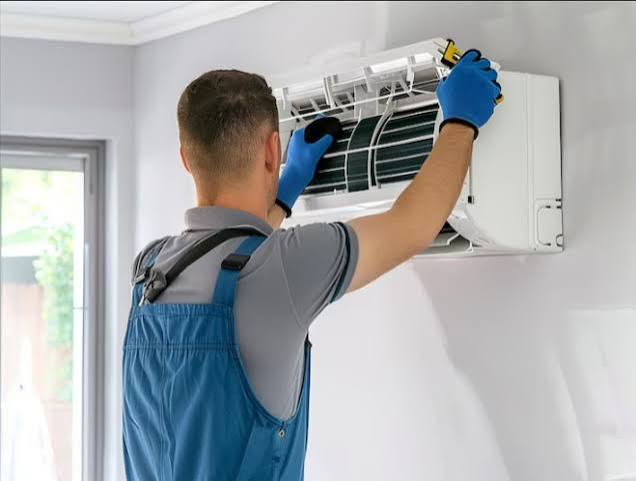
Before any diagnosis: check whether you actually have Mitsubishi Electric or Mitsubishi Heavy Industries. They are different companies with different codes, and mixing them up is the most common error on this brand in the UAE.
We are an independent repair company â we are not affiliated with, endorsed by, or an authorized service provider of Mitsubishi Electric or Mitsubishi Heavy Industries. Brand names are used here only to identify the machines we repair, and all trademarks remain the property of their owners.

Mitsubishi Electric AC repair in Dubai has to begin with a check that sounds pedantic and is not: which Mitsubishi do you actually have?
Mitsubishi Electric and Mitsubishi Heavy Industries are separate companies. Both make air conditioning. Both are present in the UAE. Their products are not related, their platforms are different, and â critically for repair â their diagnostic schemes are not interchangeable.
This causes real, expensive errors. A code is read off one company's unit, looked up against the other company's table because a search result did not distinguish them, and the resulting diagnosis points at the wrong component entirely. We have attended jobs to correct exactly that.
The good news is that telling them apart takes ten seconds once you know where to look, and the model prefix on the rating plate does it reliably. The section below sets it out.
Get the identification right and Mitsubishi Electric is one of the more satisfying brands to diagnose, because its scheme is genuinely well structured and consistent across the ranges sold here.
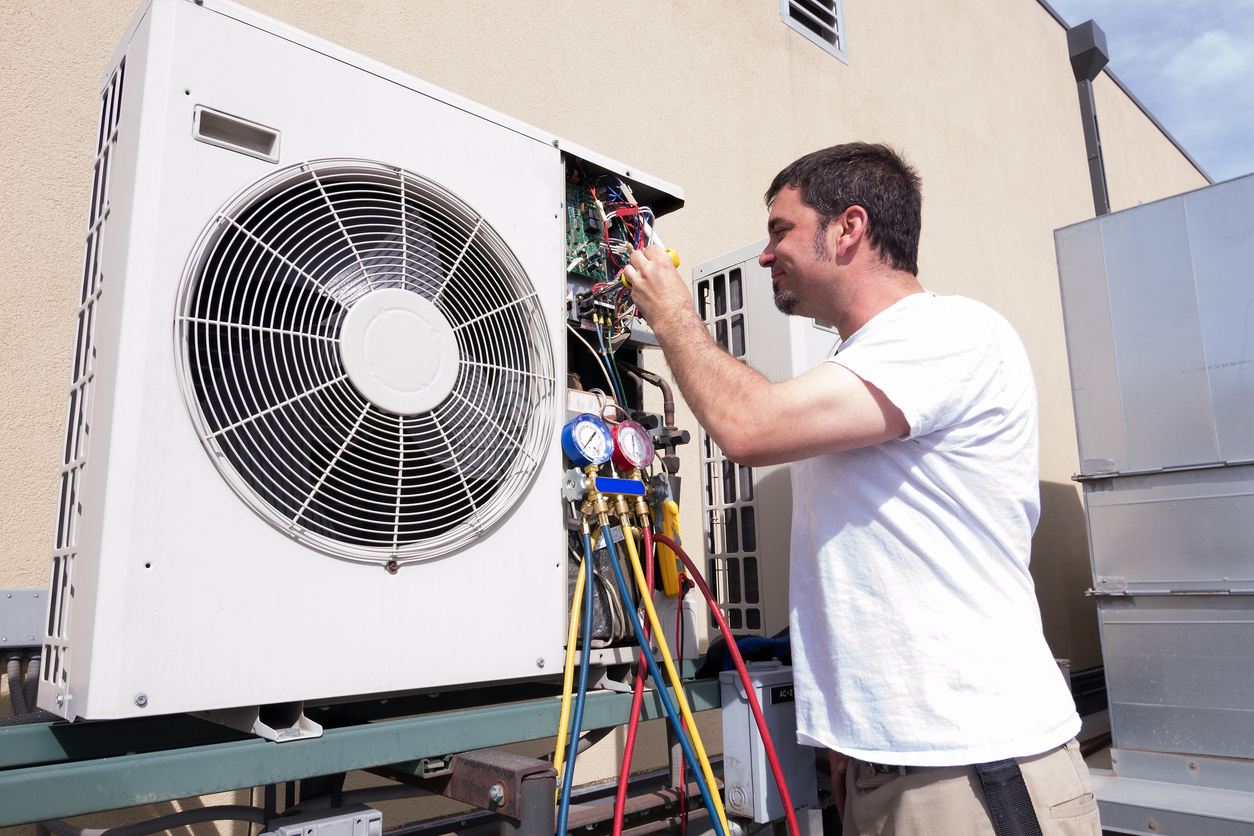
This is the single most useful thing on the page. The prefix tells you which company built the unit.
Uses E codes for communication faults and P codes for protection trips.
A different company with a different scheme. If your plate shows one of these prefixes, tell us when you book â we service those units too, but the diagnosis follows a different route.
Codes are not transferable between the two. Looking a code up against the wrong company produces a confident, wrong answer â and in air conditioning that means paying for a component that was working perfectly.
The family tells you which part of the system to investigate. That is what makes this scheme genuinely useful.
Signal faults between the remote controller and the indoor unit, or between indoor and outdoor units. Control-side rather than mechanical.
Protection trips: sensor abnormalities, drain system faults, freeze and overheat protection. The system defending itself.
A transmitting or receiving error between the indoor controller and the remote controller. Wiring and connections come before boards.
An abnormality in the room temperature thermistor. Measured against expected resistance rather than replaced on suspicion.
The family structure is stable; individual meanings can differ across model generations. Yours gets checked against the right reference.
Then we work from behaviour: condenser condition, airflow, capacitor value, current draw, and superheat with subcooling.

The most common mistake with a protection code is treating it as a parts list. It is not â it tells you which protective function operated, which is a different thing from what caused it to operate.
Take a freeze protection trip. The system detected the indoor coil getting too cold and shut down to prevent ice damage. That is correct behaviour. But the cause might be a filter so loaded that airflow collapsed, a blower running slowly because its capacitor has drifted, a duct that has been crushed, or a genuine refrigerant problem. Four causes, one code, four very different repairs.
Or a sensor code. A thermistor reading abnormally might be a failed sensor â or a healthy sensor correctly reporting an abnormal condition that something else created. Replacing the sensor in the second case fixes nothing.
So our sequence is: read the code, identify the protective function and therefore the subsystem, then measure. Airflow and temperature split. Sensor resistance against expected values. Capacitor value against rating. Current against nameplate. Drain condition where the code points that way.
That approach is why a diagnosis here takes a little longer than reading a table, and why the part we replace is usually the one that was actually at fault.
The rating plate settles which company built the unit before anything else happens. Send the code too if one is showing.
If the unit is still within manufacturer warranty we will tell you to use that rather than pay us.
Including any the system has recorded and cleared, which are often more informative than the code currently displayed.
Communication or protection, then the measurements that identify the actual cause rather than the guardian that tripped.
Fault, fix and cost agreed before anything is dismantled, with OEM-standard compatible parts matched to your model.
Parts and labour carry a 90-day warranty. If the same fault returns inside that window, so do we.
âšī¸ Independent third-party repair notice: we are not an authorized service center, dealer or affiliate of Mitsubishi Electric or Mitsubishi Heavy Industries. We have no endorsement from them and no authorization to carry out warranty work on their behalf. Code families and diagnostic procedures referenced here are the manufacturer's own scheme, used for identification and repair purposes only. If your unit is still within its manufacturer warranty period, contact the retailer or the brand's own support channel first.
Back to the main service page, compare with another brand, or read about the symptom.
Not sure the code you are seeing is on our list? Compare it across every brand. All Brand Error Codes →
Our full AC service â split, window, ducted and chilled-water systems across all four emirates.
The other well-documented Japanese scheme, and how its letter families compare.
The other major ducted platform in UAE villas, diagnosed by model series and symptom.
What sits behind a freeze protection trip, and why it is usually airflow rather than gas.
Where a communication fault turns out to be board-side, and why boards get condemned too readily.
Same-day cover across Dubai's villa and apartment communities.
By the model prefix on the rating plate, and it genuinely matters because these are two separate companies rather than two ranges from one manufacturer. Mitsubishi Electric models generally begin MSZ or MS for wall-mounted splits, and PUY, PKA or PEAD across the Mr.Slim range, with City Multi for VRF systems. Mitsubishi Heavy Industries models generally begin SRK for wall units, FDT for cassettes, and KX for VRF. Their diagnostic schemes are not interchangeable, so a code looked up against the wrong company points you at the wrong component.
They describe different families of fault, and knowing which you have tells you where to look. E codes relate to communication â signals between the remote controller and the indoor unit, or between indoor and outdoor units. They are control-side problems rather than mechanical ones, and they frequently trace to interconnecting wiring or a connection rather than to an expensive component. P codes are protection trips, covering things like temperature sensor abnormalities, the drain system, and freeze or overheat protection. A P code usually means the system detected a condition and shut down to protect itself.
We publish the family structure and the codes we can stand behind, and we check anything else against the correct reference for your model rather than reproducing a long table. Mitsubishi Electric documents its scheme in service literature and the structure is consistent across the Mr.Slim and City Multi ranges, which is why we are comfortable explaining how the families work. Individual code meanings can still vary between model generations, so for your specific unit we verify against the right document instead of guessing from a generic list.
Usually it means the system has protected itself rather than failed, which is a meaningful distinction. A protection code indicates a monitored condition went outside its acceptable range â a sensor reading abnormally, the drain system not clearing, or a freeze or overheat condition developing. Sometimes the underlying cause is trivial, such as a filter restricting airflow enough to trigger freeze protection, or a drain that needs clearing. The code identifies which protection operated; measurements identify what caused it. Clearing the code without finding the cause simply means it recurs.
The range found in UAE homes and small commercial spaces â MSZ and MS wall-mounted splits, and the Mr.Slim range including PUY, PKA and PEAD ducted and light-commercial units. We also work on City Multi VRF where the fault sits in an indoor unit or its controls. Give us the model number from the rating plate when you book, since the prefix determines both which company built it and which parts and procedures apply.
If the unit is still within its manufacturer warranty, contact the retailer you bought it from or the brand support channel for your region first. An independent repair can affect that cover, and there is no sense paying for work you are entitled to have done. Our service is for units out of warranty, or where the owner has chosen an independent repairer. We will tell you plainly if we think the warranty route is the better one for you.
The prefix on the rating plate tells us which Mitsubishi you actually have. With that and the code, the diagnosis starts in the right place.
The model number from the rating plate â the prefix matters â plus any code showing on the controller or flashing on the indoor unit.
+971 50 988 6591
Daily, 8:00 AM â 6:00 PM
+971 50 988 6591
Send a photo of the rating plate and the controller