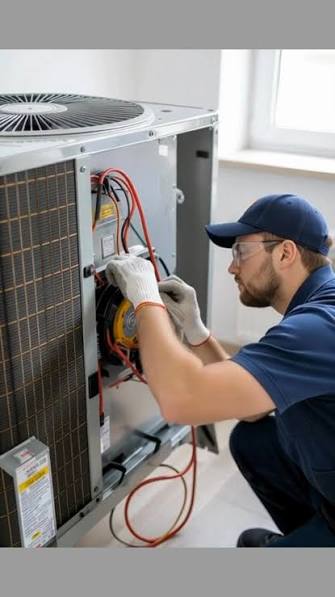
Carrier is the villa ducted and packaged workhorse in this market. Diagnosis here starts with the model series rather than a code table, because Carrier residential codes vary by where the unit was built.
We are an independent repair company â we are not affiliated with, endorsed by, or an authorized service provider of Carrier. The brand name is used here only to identify the machines we repair, and all trademarks remain the property of their owners.

Carrier AC repair in Dubai skews differently from the apartment brands. Where LG and Samsung dominate wall splits in apartments, Carrier turns up heavily in villa ducted systems, packaged units and light-commercial installations.
That changes what a repair visit involves. A ducted system is not simply a bigger split â the cooling has to be distributed through a network of ducts, dampers and grilles that is usually hidden in a roof void, and that network degrades on its own timetable regardless of how healthy the plant is.
So a Carrier call-out here is frequently not a component failure at all. It is a duct that has sagged, insulation that has hardened and fallen away in a void running well above fifty degrees, a damper that has stuck, or balancing that drifted years ago and was never reset.
The lines we see most in UAE homes are the Optimax and Optimax Pro wall splits, the Optima range, Aspire inverter splits, and QSM inverter ducted systems covering roughly one and a half to five tons, plus packaged units on villas and small premises. Refrigerant is predominantly R410A across much of the installed base with R32 on newer models.
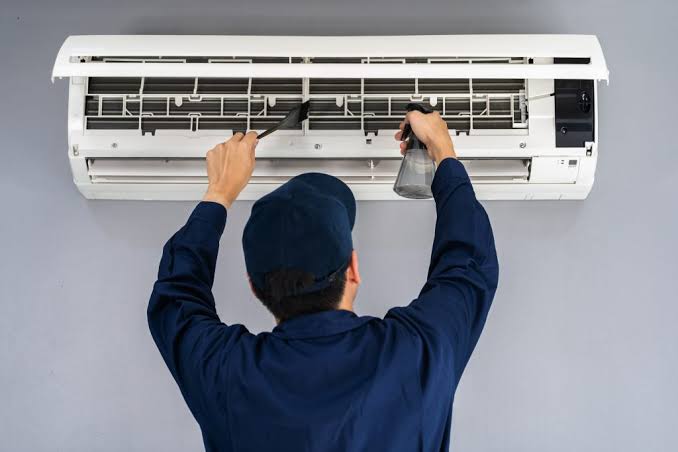
Carrier is a global manufacturer with regionally varied sourcing, and that has a direct consequence for diagnosis.
We start from the model series on the rating plate. That tells us the platform, the likely refrigerant, whether the unit is inverter or fixed-speed, and which components are actually fitted â which is the information that determines the repair.
From there the diagnosis is symptom-led and measured: airflow and temperature split, duct and damper condition on ducted systems, capacitor value against rating, current against nameplate, and superheat with subcooling where the refrigerant circuit is involved.
For a ducted audience this is genuinely more useful than a code list anyway, because the most common faults on these systems are distribution problems that no code would report.
Carrier residential and light-commercial products are built and sourced across different regions, and some models are joint-venture or contract-built product. Fault indication can therefore differ between units that look similar and carry the same badge.
A single published table would be right for part of the UAE installed base and wrong for the rest, and a table that misidentifies a fault is worse than no table â it sends you to buy the wrong part with confidence.
So we hold the same line as on every brand page here: publish what can be verified, explain what cannot, and diagnose your specific unit by identification and measurement.
Organised the way ducted and packaged systems actually fail.
Distribution rather than plant. Damper position, duct condition, joint separation or a blocked return â not a refrigerant fault.
Filters, blower wheel, and duct losses across the network. Measured at the grilles rather than assumed at the unit.
Condenser condition first, then airflow, then charge read as superheat and subcooling together.
Capacitor value, contactor and control signal before the compressor is ever suspected.
On ducted systems, the drain tray in the roof void. Corrosion and blocked runs are both common.
Zone thermostats and damper actuators on multi-zone villa systems. Traceable and usually inexpensive.

If there is one thing worth understanding about ducted systems in Dubai villas, it is that the duct network fails more often than the equipment does â and it fails invisibly.
The network lives in a roof void that becomes extremely hot through summer. Insulation hardens, cracks and separates under those conditions, so cooled air picks up heat before it reaches the room. Flexible duct sections sag under their own weight over years, or get crushed by anything stored or walked on above. Joints work loose and start discharging conditioned air into the void itself rather than into the house.
Every one of those reduces what arrives at the grille while the plant continues working perfectly. Measure at the unit and everything looks fine. Measure at the grille in the affected room and the problem is obvious.
This is also why a single warm room is such a reliable indicator. Refrigerant faults weaken everything at once; distribution faults affect the branch they occur on. When a customer tells us three rooms are fine and one is not, we already know roughly where to look before arriving.
So our ducted diagnosis includes the void: duct condition, insulation integrity, damper positions, joint security and return air paths â not just the readings at the plant.
Platform, refrigerant, inverter or fixed-speed, and system type. This is what replaces a code table on this brand.
If the unit is still covered, particularly on newer inverter ducted equipment, we will tell you to use that instead.
Plant readings plus duct condition, insulation, dampers, joints and return paths. Measured at the grilles that matter.
Airflow and temperature split, capacitor value, current against nameplate, and superheat with subcooling where refrigerant applies.
Common components are straightforward. Where a model-specific board or assembly is involved you get availability and cost before committing.
Fault, fix and cost agreed before anything is dismantled, with a 90-day warranty on parts and labour.
âšī¸ Independent third-party repair notice: we are not an authorized service center, dealer or affiliate of Carrier. We have no endorsement from them and no authorization to carry out warranty work on their behalf. If your unit is still within its manufacturer warranty period, contact the retailer or the brand's own support channel first.
Back to the main service page, compare with another brand, or read about the symptom.
Not sure the code you are seeing is on our list? Compare it across every brand. All Brand Error Codes →
Our full AC service â split, window, ducted and chilled-water systems across all four emirates.
The other major ducted platform here, and the one brand whose code families we publish.
Duct losses, sagging flex and blocked returns â the core ducted fault set.
Roof-void drain trays on ducted systems, and how we tell drainage from condensation.
Ducted systems dominate the villa communities we serve.
Inverter ducted boards, and why they are condemned more often than they fail.
No, and the reason is specific to how Carrier residential equipment reaches this market. Carrier is a global manufacturer whose residential and light-commercial products are built and sourced in different regions, and some models are joint-venture or contract-built product. That means fault indication can differ between models that look similar and carry the same badge. A single published table would be correct for some units in UAE homes and wrong for others. Instead we identify the model series from the rating plate and diagnose from there, which works reliably across the whole range.
The lines we encounter most in UAE homes are the Optimax and Optimax Pro wall-mounted splits, the Optima range, the Aspire inverter wall splits, and the QSM inverter ducted splits which cover roughly one and a half to five tons. Packaged units also appear on villas and small commercial premises. Refrigerant is predominantly R410A across much of the installed base, with R32 on newer models, and that distinction affects both parts and procedure â which is why we ask for the plate.
Almost certainly not the unit itself. A refrigerant or compressor problem weakens the whole system, not a single room. A single warm room on a ducted system points to air distribution: a damper stuck or badly balanced, a flexible duct crushed or sagging in the roof void, a duct joint that has separated and is discharging into the ceiling, or a return path blocked by furniture or storage. Those are traceable faults and they cost considerably less to put right than anything involving the refrigerant circuit.
The plant is only part of the job. On a wall split, almost everything that matters is in two boxes. On a ducted system, the air has to travel through a distribution network that is usually hidden in a roof void, and that network can degrade independently of the equipment. Insulation hardens and falls away in a void that gets extremely hot, flexible sections sag or crush, joints separate, and dampers drift out of balance. A ducted diagnosis that never leaves the plant room misses most of what commonly goes wrong.
Common service components â capacitors, contactors, fan motors, sensors, thermostats â are generally available without difficulty, and those account for the majority of repairs. Where availability needs checking is model-specific boards and proprietary assemblies, particularly on inverter ducted units, and that is exactly the situation where we would rather establish availability and cost before you commit than start a job and stall. On an older unit we will also give you the honest view on whether a costly part is worth it against the remaining life.
If the unit is still within its manufacturer warranty, contact the retailer or the brand support channel for your region first. An independent repair can affect that cover, and on newer inverter ducted equipment the expensive components are exactly what a warranty is for. Our service is for units out of warranty, or where the owner prefers an independent repairer. We will tell you plainly if we think you should use the warranty route.
The model series tells us the platform, the refrigerant and the likely parts. With that we arrive prepared rather than diagnosing from scratch.
The model number from the rating plate, and whether it is a wall split, a ducted system or a packaged unit. That shapes everything that follows.
+971 50 988 6591
Daily, 8:00 AM â 6:00 PM
+971 50 988 6591
Send a photo of the rating plate on the outdoor unit