đŸ›ī¸ Licensed & Registered — Trade Licence 134585 (Ajman) 🕒 Open Daily 8:00 AM – 6:00 PM 📞 +971 50 988 6591
đŸĸ FCU Not Cooling

FCU Not Cooling in Dubai — No Gas, No Compressor, Real Fixes

If your building runs on district cooling, your apartment has no refrigerant and no compressor. Anyone offering to put gas in your fan coil unit has misread the system before opening the ceiling.

⚡ Same-Day Visits đŸ›Ąī¸ 90-Day Warranty 💲 Quote Before Any Work đŸ›ī¸ Licence No. 134585
â„šī¸

We are an independent repair company — not an authorized service center of any air conditioning brand, and not affiliated with or appointed by Empower, Emicool, Tabreed or any district cooling provider. Utility names appear here only to describe the systems we service.

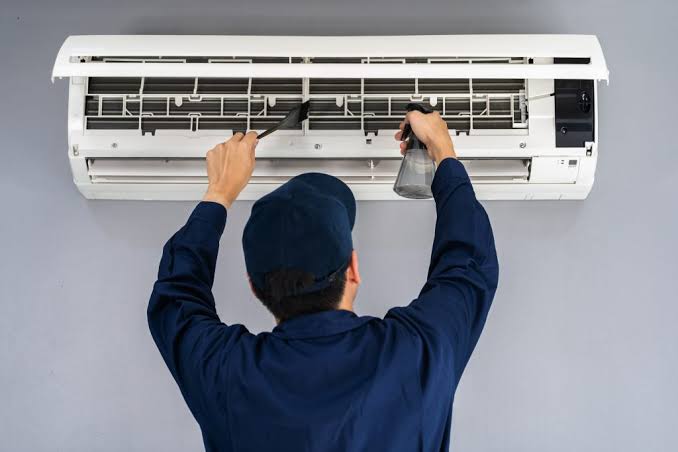
Servicing a ceiling fan coil unit in a district-cooled Dubai apartment
Different Machine, Different Faults

Your Apartment Has No Refrigerant and No Compressor

If your FCU is not cooling, the first thing worth establishing is what you actually own — because a district-cooled apartment is a fundamentally different machine from a split system, and diagnosing it with split-system assumptions produces wrong and expensive answers.

In a district cooling arrangement, chilled water is produced at a central plant and piped into your building. Inside your ceiling sits a fan coil unit: a coil carrying that chilled water, a blower that moves room air across it, a filter, a drain pan, and a motorised valve controlling how much water flows.

That is the whole machine. No refrigerant circuit. No compressor. No outdoor unit that belongs to you. Which means an entire category of common AC diagnoses simply does not apply — gas top-ups, compressor failures, condenser cleaning, refrigerant leaks. None of it exists in your apartment.

What does fail is specific and, encouragingly, mostly inexpensive: valves and actuators, strainers, filters, coils, blower motors and drains. The list is short, which is exactly why a proper diagnosis here should be quick.

And it is worth saying plainly: if anyone has quoted you for gas in a district-cooled apartment, that quote was for work your system cannot receive.
The Real Cause List

Six Reasons an FCU Stops Cooling

Ranked roughly by how often we find each one. Note that none of them involves refrigerant.

đŸŽ›ī¸

Stuck Valve Actuator

The commonest cause of "air moving but nothing cold". The valve has stuck shut, so no chilled water reaches the coil at all.

đŸ§Ŋ

Choked Filter

Airflow falls until the unit cannot deliver its cooling into the room. The cheapest fault on the list and the easiest to prevent.

🧊

Fouled Coil Face

A felted mat of fine dust across the fins. Air cannot pass through it, so heat transfer collapses even with good water flow.

🚰

Blocked Strainer

Silt and debris restricting the small strainer ahead of the valve. Water flow drops, and so does the cooling you receive.

🌀

Blower Motor or Bearings

A blower running slowly or not at all. The coil may be perfectly cold while almost no air is being moved across it.

đŸŽšī¸

Thermostat or Sensor Fault

A failed thermostat, or one orphaned in the wrong room by a previous fit-out, so the system never properly calls for cooling.

Testing a chilled-water valve actuator and strainer on a Dubai apartment fan coil unit
The Three-Step Test

Signal, Stroke, Flow — In That Order

When an FCU blows air that is not cold, three things could be true, and they cost very different amounts to put right. Testing them in order avoids replacing the wrong one.

First, signal. Is the thermostat actually calling for cooling and sending that instruction to the actuator? A failed thermostat, a dead sensor or a wiring connection disturbed during a previous fit-out all stop the chain at step one. Replacing a perfectly good valve because the thermostat was silent is a genuinely common error.

Second, stroke. Is the actuator physically moving through its full travel? Actuators seize, lose drive, or stall part-way, and a valve that only opens slightly delivers weak cooling that gets blamed on the coil.

Third, flow. Is chilled water actually passing through the valve and coil? A silted strainer or a partly blocked branch restricts flow even with a healthy valve and a correct signal. Temperature readings across the coil tell us whether real heat transfer is happening.

Only once those three are established does attention turn to the air side — filter condition, coil face and blower performance. Two ways to fail, tested separately: water not arriving, or air not moving.

Scope, Stated Plainly

Where Our Work Ends and the Building's Begins

District cooling has a firm ownership boundary. Knowing it before you book saves a wasted appointment.

Inside your apartment — our work

  • Chilled-water control valves, actuators and strainers
  • Coil cleaning, filters and blower wheel
  • Blower motors, bearings and fan speed faults
  • Condensate pans, drain lines, traps and float switches
  • Thermostats, sensors and in-unit control wiring
  • Grille and airflow problems inside the apartment

Beyond your apartment — not ours

  • The district cooling plant and the energy transfer station
  • Building risers, secondary pumps and heat exchangers
  • System-wide balancing and pressure zoning
  • Common-area air handling plant, where the building appoints its own contractor
  • Any work requiring building chilled water to be isolated without management approval

We are not affiliated with, appointed by, or acting for Empower, Emicool, Tabreed or any district cooling provider. Utility names appear only to describe how a building is cooled.

Before You Call

Three Checks Worth Making

Quick, safe, and they occasionally identify the problem outright.

1. Is air moving at all?

Air moving without cooling points at the valve or water side. No air at all points at the blower or its power supply. Two different faults from one observation.

2. Pull the filter and look at it

Hold it to the light. If none passes, that alone can explain weak cooling, and it is the cheapest possible outcome.

3. Ask a neighbour

If several apartments are affected, the fault is upstream in the building system rather than in your unit — and that is building management's to resolve, not ours.

🛑 Do not open the ceiling

Fan coil units sit above access panels alongside water pipework and electrical connections. Opening ceilings is not a homeowner job here.

4. Note the building and floor

Access arrangements vary tower by tower, and knowing the floor helps us anticipate the pressure conditions on your branch.

90-day warranty

Parts and labour carry a 90-day warranty. If the same fault returns inside that window, we come back to it.

Related Pages

More AC Repair Help

Back to the main service page, or to the tower districts where these systems are standard.

Showing a code rather than just a symptom? Start here. Decode Your Error Code →

â„ī¸

Main Service Page

Our full AC service — split, window, ducted and chilled-water systems across all four emirates.

AC Repair & Maintenance →

💧

AC Water Leaking

Drain pan overflow is the other dominant fan coil unit fault. The full leak decision tree.

Water Leaking →

🌀

AC Low Airflow

When the coil is cold but not enough air reaches the room — filters, blower and grilles.

Low Airflow →

🔊

AC Making Noise

Water hammer and valve noise are chilled-water signatures. What each sound means.

Making Noise →

📍

Tower Districts

Where fan coil units are the standard arrangement across Dubai.

JLT →
Downtown Dubai →

đŸ™ī¸

More Tower Areas

Marina and Business Bay are also predominantly district-cooled.

Dubai Marina →
Business Bay →

FAQ

FCU Not Cooling — Your Questions

Does my fan coil unit need gas?

No. This is the most important thing on the page and it saves people real money. In a district-cooled building, chilled water is produced at a central plant and piped to your apartment, where a fan coil unit passes room air over a water coil. There is no refrigerant circuit and no compressor anywhere in your apartment. So refrigerant cannot be low, because there is none. If a company offers to gas your fan coil unit, they have misdiagnosed the system before opening the ceiling, and anything they charge you for is not fixing the actual fault.

The fan is running but the air is not cold. What is that?

That is the classic fan coil unit symptom, and it usually means cold water is not reaching the coil. A small motorised actuator opens and closes a valve on the chilled-water branch when the thermostat calls for cooling. When the actuator sticks shut, loses its control signal, or the valve and its strainer have silted up, the fan keeps circulating air happily while the coil stays at room temperature. We check three things in order: is the thermostat sending a signal, is the actuator physically stroking, and is water actually passing.

How do I know whether I am on district cooling?

A few reliable indicators. You have no outdoor unit of your own — no condenser on a balcony, roof or in a yard. You receive a separate cooling charge alongside your utilities rather than cooling appearing purely as electricity. And the unit itself is typically concealed in the ceiling with a supply grille and a return grille, rather than being a wall-mounted split. If you are unsure, tell us the building name when you book and we will confirm on arrival rather than assuming.

The whole building is warm, not just my apartment. Can you help?

No, and we would rather tell you that immediately than take a booking we cannot deliver on. The district cooling provider owns and maintains the central plant up to the energy transfer station in your building, and the building itself owns the pumps, risers and heat exchangers beyond it. Our work is the fan coil unit inside your apartment. If cooling has failed across multiple apartments or the whole tower, the fault sits upstream of anything we can lawfully or practically touch, and building management is who you need.

Can you isolate the chilled water to work on my unit?

Only in coordination with building management, and that is a genuine constraint rather than a formality. Chilled water is a shared building service, so isolating a branch affects more than your apartment and must go through the people responsible for the system. Many towers also require their own appointed contractor for anything beyond the apartment boundary. Most fan coil unit work — filters, coil cleaning, drain pan and line, blower, thermostat — does not need isolation at all. Where a job does, we will tell you what has to be arranged before we start.

Why does my FCU cool well in one room and badly in another?

Usually because the air is not being distributed as originally designed. Many apartments have one fan coil unit feeding several rooms through short duct runs and grilles, and that arrangement is easily disturbed. Grilles get blocked by furniture or sealed behind partitions during a fit-out, return air paths get closed off, and dampers drift out of balance. The unit is producing cooling perfectly well; it is simply not arriving where you need it. That is an airflow investigation, not a valve or coil fault.

Fan Running But Nothing Cold? Book an FCU Visit.

That specific symptom usually means the chilled-water valve, not the unit. We test the valve, strainer and coil rather than guessing — price agreed before work.

Book an FCU Repair

Tell Us the Tower and the Symptom

Building name and floor, and whether air is moving at all. Air moving without cooling and no air at all are two different faults.

📞 Phone

+971 50 988 6591
Daily, 8:00 AM – 6:00 PM

đŸ’Ŧ WhatsApp

+971 50 988 6591
Send a photo of the ceiling grille and thermostat

âœ‰ī¸ Email

info@fixmyacdubai.ae

Request an FCU Repair Visit

Opens WhatsApp with your request pre-filled — nothing is stored on this site.

Your details go directly to our team on WhatsApp. See our Privacy Policy.

Call Now+971 50 988 6591 WhatsAppInstant chat reply