🏛️ Licensed & Registered — Trade Licence 134585 (Ajman) 🕒 Open Daily 8:00 AM – 6:00 PM 📞 +971 50 988 6591
🎛️ Thermostat Not Working

AC Thermostat Not Working in Dubai — Test Before Replace

Most thermostat complaints are not a broken thermostat. They are a drifting sensor, a disturbed wire, or a thermostat sitting in the wrong room after somebody moved a wall.

⚡ Same-Day Visits 🛡️ 90-Day Warranty 💲 Quote Before Any Work 🏛️ Licence No. 134585
ℹ️

We are an independent repair company — not an authorized service center of any air conditioning brand. Brand names on this page are used only to identify the systems we repair, and all trademarks remain the property of their owners.

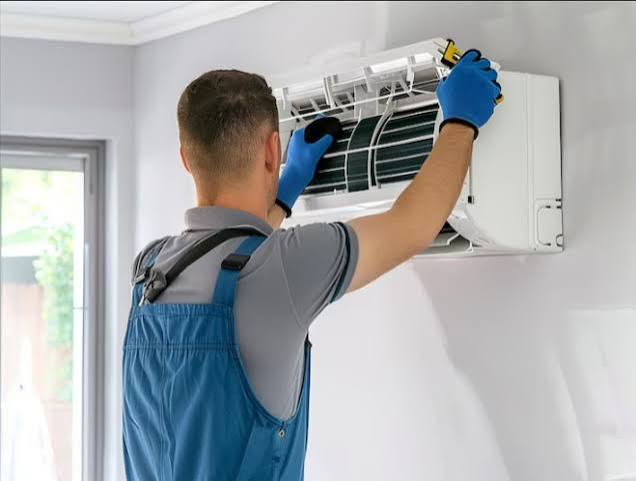
Measuring thermistor resistance during an AC thermostat diagnosis in Dubai
Three Different Faults

"The Thermostat Is Not Working" Usually Means Something Else

When an AC thermostat is not working, the complaint covers at least three distinct situations, and they need three different repairs.

It is dead. Blank display, no response to anything. This is a power or device fault, and the first checks are the breaker, the isolator switch and, on battery units, the batteries.

It responds but the system ignores it. The display works and buttons register, yet nothing changes. Here the thermostat is fine and the signal is not reaching or not being acted on — wiring, a receiver, or the control board.

It works but reads wrongly. The most common of the three, and the most misdiagnosed. The thermostat is reporting faithfully; the sensor feeding it has drifted out of calibration. Replacing the thermostat changes nothing because the thermostat was never at fault.

There is a fourth case that is not a fault at all: the thermostat is in the wrong place. After a partition or a fit-out it can end up controlling a store room or a corridor while the occupied space it is meant to serve goes unheeded.

Working out which of these you have takes measurement rather than replacement, and it is the difference between a small repair and buying a controller you did not need.
The Cause List

Six Reasons a Thermostat Appears To Fail

Roughly in order of how often we find them. Only one involves replacing the thermostat itself.

🌡️

Sensor Drift

A thermistor reporting a few degrees off. The system behaves illogically with no error, because nothing has technically failed.

📍

Wrong Location

Orphaned into a corridor or store room by partitioning, or sitting in direct supply airflow. It satisfies on a temperature that is not the room.

🔌

No Power

Breaker, isolator switch or flat batteries. Genuinely the most common cause of a completely blank display, and it costs nothing to check.

🔗

Disturbed Wiring

A control wire loosened or disconnected during other works. The device is fine; the signal is not arriving.

📡

Receiver Fault

On remote-controlled units, the receiver in the indoor unit rather than the handset. Test with the unit's own manual button to separate them.

🎛️

Failed Thermostat

It does happen — but it sits at the bottom of the list rather than the top, and it is confirmed by elimination rather than assumed.

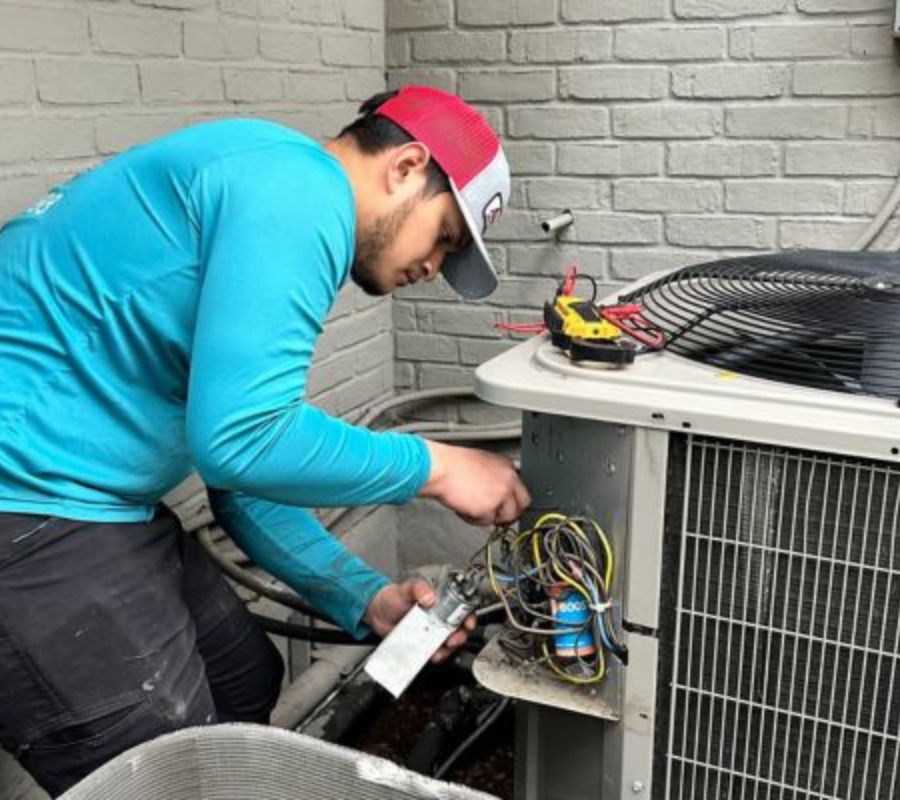
Comparing measured sensor resistance against the expected value on a Dubai AC system
How Sensors Are Actually Tested

Resistance Against Expected Value, Not Guesswork

A thermistor's whole function is that its electrical resistance changes predictably with temperature. That predictability is also how you test it.

Measure the resistance, measure the actual temperature at the sensor, and compare the reading against what that sensor should show at that temperature. A sensor within tolerance is reporting correctly. One reading substantially outside it has drifted and is feeding the system bad information.

That test distinguishes the two cases that matter. If the sensor is accurate and the system still behaves oddly, the fault is downstream — wiring, controller or board. If the sensor has drifted, replacing it resolves the behaviour and the controller was never the problem.

One important detail on replacement: the specification has to match. Sensors are made in different resistance families, and fitting one where the board expects a different value throws an immediate error code. It is a real field mistake, it looks like a board fault to whoever inherits it, and it is entirely avoidable by matching the part properly.

This is also why we treat sensor faults seriously rather than as a minor item. A coil sensor reading incorrectly can trigger freeze protection with no ice present, or miss genuine icing. The sensor is small and cheap; the behaviour it drives is not.

The Fit-Out Problem

When the Thermostat Is In the Wrong Room

Nothing is broken, and nothing can be repaired — the control logic has simply been disconnected from reality.

The original layout made sense

The thermostat was positioned to sense the space it controlled, away from direct supply air and in a representative location.

Then walls moved

Partitioning is common in offices and apartments here. The thermostat stays where it is; the room around it changes completely.

Now it senses the wrong space

A store room, a corridor or a small side area — which cools fast, satisfies quickly, and shuts the system down.

The occupied rooms stay warm

They are still calling for cooling in every practical sense, but nothing is listening to them.

Or the opposite

A thermostat sitting in direct supply airflow reads cold immediately and cuts the cycle short, so the space never actually comes down.

The fix is relocation

Moving the sensing point to somewhere representative of the space being served. Modest work, and no component replacement solves it.

Both System Types

Thermostat Faults On Your Kind of System

The controls differ between Dubai's two cooling technologies, and so does what the thermostat actually commands.

Split and ducted systems

  • Room and coil thermistors feeding the indoor board
  • Wall thermostats and remote-control receivers
  • Zone thermostats and damper actuators on multi-zone villas
  • Control wiring between indoor and outdoor units
  • The thermostat commands the compressor and fan directly

Chilled-water fan coil units

  • The thermostat commands a chilled-water valve actuator, not a compressor
  • A dead thermostat and a stuck actuator look identical from the room
  • Room sensors, often integrated into the wall unit
  • Control wiring between thermostat, actuator and fan
  • Frequently orphaned by fit-outs in office and apartment towers

On a chilled-water system, testing whether the thermostat is sending a signal is step one of the whole diagnosis — because a valve that never receives the command behaves exactly like a valve that has failed.

Related Pages

More AC Repair Help

Back to the main service page, or straight to the related fault.

Showing a code rather than just a symptom? Start here. Decode Your Error Code →

❄️

Main Service Page

Our full AC service — split, window, ducted and chilled-water systems across all four emirates.

AC Repair & Maintenance →

🏢

FCU Not Cooling

On chilled water, a silent thermostat and a stuck valve look identical. How we separate them.

FCU Not Cooling →

🔧

FCU Valve Actuator

What the thermostat is actually commanding in a district-cooled apartment.

Valve Actuator →

🧠

PCB Board Repair

Where a control fault turns out to be board-side, and why boards get condemned too readily.

PCB Board Repair →

🔁

AC Short Cycling

A drifting sensor or badly placed thermostat is a classic cause of cycles that end too early.

Short Cycling →

🔌

AC Not Turning On

If nothing responds at all, the ordered power checks start here.

Not Turning On →

FAQ

AC Thermostat Not Working — Your Questions

My thermostat shows the wrong temperature. Is it broken?

Possibly, but the sensor behind it is the more common culprit and it is usually the cheaper fix. Most room and coil sensors in air conditioning are thermistors — components whose electrical resistance changes predictably with temperature. They tend to drift out of calibration rather than fail outright, so the thermostat is reporting faithfully what a sensor is telling it, and the sensor is simply wrong. We measure resistance against the expected value for that temperature rather than replacing the controller on suspicion.

What does it mean if my thermostat is in the wrong room?

It means it is controlling a zone it can no longer sense properly, and it is a surprisingly common outcome of partitioning. The thermostat stays on its original wall, the wall becomes the inside of a store room, a corridor or a small side space, and that little area now decides the temperature for the whole zone. It cools down quickly, the thermostat is satisfied, and the occupied rooms stay warm. Nothing has failed — the control logic has been disconnected from the space it is meant to serve.

The display is completely blank. What now?

Start with power. Check the breaker for the AC circuit, and find the isolator switch near the indoor or outdoor unit, which is very often switched off by whoever last worked in the room. On battery-powered thermostats, replace the batteries. If power is confirmed and the display remains dead, the fault is either the thermostat itself or the low-voltage supply feeding it from the control board — and those are two different repairs at two different prices, which is why we measure rather than assume.

My remote works but the wall thermostat does not, or vice versa.

That is genuinely useful information, because it separates the control device from the system. If the unit responds correctly to one control input and not another, the system, its board and its motors are evidently working — so the fault is in the device that is being ignored, or in the wiring or receiver connecting it. That narrows the diagnosis considerably and usually means an inexpensive repair rather than anything involving the machine itself. Tell us which one works when you book.

Why do sensors drift rather than just fail?

Because of what they are. A thermistor is a semiconductor whose resistance varies with temperature, and that relationship can shift gradually with age, heat exposure and thermal cycling. In Dubai, where equipment runs long hours through a five-month summer, that exposure is substantial. The result is a sensor that still works but reports a few degrees off, which is worse in practice than one that fails cleanly — a dead sensor throws an error, while a drifting one just makes the system behave illogically with no obvious explanation.

Can a wrong sensor cause other faults?

Yes, and this is why sensor accuracy matters more than people assume. A coil sensor reading incorrectly can trigger freeze protection when there is no ice, or fail to trigger it when there is. A room sensor reading low makes the system stop before the space is comfortable. And fitting a replacement sensor of the wrong specification — the wrong resistance value for what the board expects — throws an immediate error code, which is a real and common field mistake. Sensors get measured and matched properly rather than approximated.

Thermostat Ignoring You? It May Not Be the Thermostat.

We measure the sensor against its expected value and check the wiring before anything gets replaced. Price agreed before any work.

Book a Thermostat Diagnosis

Tell Us What It Is Doing

Blank display, unresponsive buttons, or working but reading the wrong temperature? Those are three different faults.

📞 Phone

+971 50 988 6591
Daily, 8:00 AM – 6:00 PM

💬 WhatsApp

+971 50 988 6591
Send a photo of the thermostat and its display

Request a Thermostat Visit

Opens WhatsApp with your request pre-filled — nothing is stored on this site.

Your details go directly to our team on WhatsApp. See our Privacy Policy.

Call Now+971 50 988 6591 WhatsAppInstant chat reply