🏛️ Licensed & Registered — Trade Licence 134585 (Ajman) 🕒 Open Daily 8:00 AM – 6:00 PM 📞 +971 50 988 6591
🚰 FCU Actuator Valve

FCU Actuator Valve Replacement in Dubai — Chilled Water Systems

In a district-cooled tower there is no gas to top up and no compressor in your apartment. When a fan coil unit stops cooling, the valve that lets chilled water through it is the first thing worth testing.

⚡ Same-Day Visits 🛡️ 90-Day Warranty 💲 Quote Before Any Work 🏛️ Licence No. 134585
ℹ️

We are an independent repair company — not an authorized service center of any air conditioning brand, and not affiliated with or appointed by Empower, Emicool, Tabreed or any district cooling provider. Utility names appear here only to describe the systems we service.

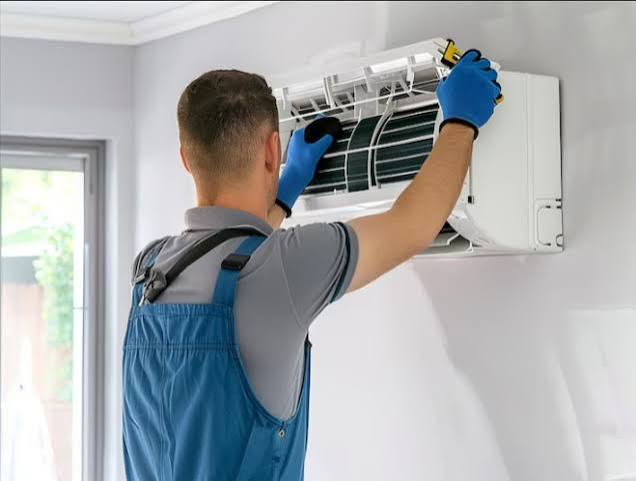
Replacing a two-port chilled-water actuator on a ceiling fan coil unit in a Dubai tower
A Different Machine Entirely

No Gas, No Compressor, No Outdoor Unit

FCU actuator valve replacement in Dubai belongs to a kind of air conditioning that a great many repair adverts here simply ignore, because it does not work like a split system at all.

If you live in a district-cooled tower — much of Dubai Marina, JLT, Downtown, Business Bay and Motor City among others — your apartment contains no refrigerant and no compressor. Chilled water is produced at a central plant, distributed through the building, and passed through a fan coil unit above your ceiling. A fan blows room air across that cold coil.

This matters commercially as well as technically, because it means AC gas filling is the wrong service for your home. There is no gas in your apartment to fill. Anyone quoting you for a refrigerant top-up in a chilled-water tower has not established what system you have.

What you do have is a valve, an actuator that drives it, a strainer protecting it, a coil, a fan, a drain pan and a thermostat. Those are the parts that fail, and those are what this page is about.
Diagnosis

Six Checks on a Fan Coil That Will Not Cool

Done in this order, because each one rules out a whole category before the next.

🌡️

Are the Pipes Cold?

Felt at the unit while it calls for cooling. Cold pipes mean a water supply problem is ruled out immediately.

🔁

Does the Stem Move?

The actuator is commanded open and closed and the valve stem watched. A stem that never moves is the fault, not a symptom.

🧺

Strainer Condition

Cleaned and inspected before any valve is condemned. A clogged strainer starves a perfectly good valve.

🎛️

Control Signal Present

Confirming the thermostat is actually commanding the actuator. No signal means the fault is upstream in the controls.

🧼

Coil and Filter

Cold pipes with warm air is airflow, not water. A fouled coil or a neglected filter produces the same complaint.

🔒

Isolation Valves Hold

Checked before work is scheduled. A seized isolation valve turns a short job into a building-coordination exercise.

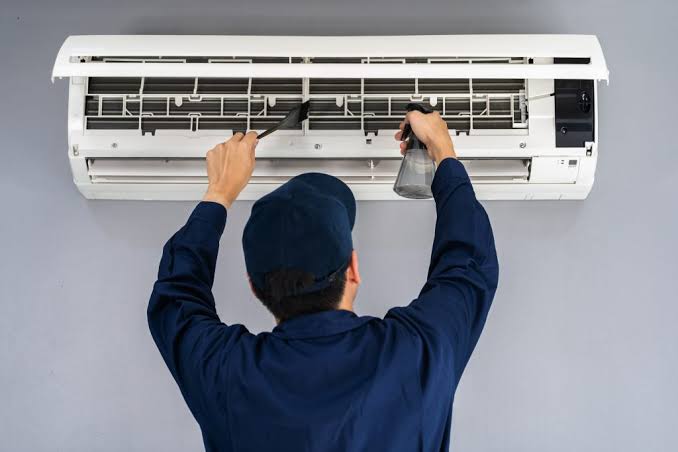
Cleaning a chilled-water strainer basket during fan coil unit service in a Dubai apartment
The Honest Boundary

Where Our Work Stops and the Utility Begins

This is the part most competitor pages leave vague, and being precise about it is genuinely useful to you.

A district cooling provider owns and operates the central plant and the network that carries chilled water to your building. Their responsibility ends at the energy transfer station. From that point the building owns the distribution, and your apartment owns the fan coil units, valves, actuators, controls, filters and condensate drains inside it.

That apartment-side equipment is legitimately ours to service, and it is where essentially every fault a resident experiences actually occurs. We do not work on the plant, the energy transfer station or the building risers, and we are not appointed by or affiliated with any provider.

Two practical consequences follow. First, isolating chilled water beyond your own unit needs building management involvement — we cannot simply shut a riser. Second, many towers mandate a nominated contractor for common plant, so if a fault turns out to be upstream of your apartment we will tell you to raise it with the building rather than quote you for work we should not be doing.

Saying so costs us the occasional job. It also means you are not paying us to discover a problem that was never yours to fix.

The Method

How an Actuator and Valve Are Replaced

Most of the risk in this job is water management, not the component swap itself.

1. Confirm the diagnosis

Stem movement, control signal and strainer condition established first, so a valve is not replaced to cure a blocked strainer.

2. Verify isolation

The isolation valves either side are proved to actually hold. Where they do not, building management is involved before a date is set.

3. Protect the ceiling

Chilled-water lines hold water under pressure and the unit sits above a finished ceiling. Containment goes in before anything is opened.

4. Actuator or valve body

Often only the actuator has failed and the valve body is sound, which is a much smaller job. We fit what is needed, not the whole assembly by default.

5. Clean the strainer

Done while the line is open, because it costs nothing extra at that moment and protects the part just fitted.

6. Refill, vent and prove

Air vented from the coil, joints checked under pressure, then the unit run and the temperature drop across the coil measured.

Straight Answers

Actuator, Valve Body, or Something Else

The three are commonly quoted as one job. They are not the same, and they do not cost the same.

Replace the actuator only

  • Stem does not move when the actuator is commanded
  • Actuator receives a correct control signal and does nothing with it
  • Valve body turns freely when operated by hand
  • Stuck open, leaving a room overcooled and consumption high
  • Audible buzzing with no movement, which is a failing drive

Look past the valve

  • Pipes properly cold but air still warm — coil or filter, not water
  • Flow restored by cleaning the strainer alone
  • No control signal arriving — the fault is in the thermostat or wiring
  • Whole floor or several apartments affected — a building-side issue
  • Water appearing below the unit — a drain fault, not a valve fault

If the fault turns out to sit upstream of your apartment, we will say so and tell you to raise it with building management rather than quote for it.

Related Pages

More AC Repair Help

Back to the main service page, or to the chilled-water pages that pair with this one.

Showing a code rather than an obvious fault? Start here. Decode Your Error Code →

❄️

Main Service Page

Our full AC service — split, window, ducted and chilled-water systems across all four emirates.

AC Repair & Maintenance →

🏢

FCU Not Cooling

The full symptom walkthrough for fan coil units in district-cooled apartments.

FCU Not Cooling →

🎛️

Thermostat Not Working

The device that commands this valve. A blank or unresponsive thermostat stops it dead.

Thermostat Not Working →

💧

Drain Pan Replacement

Fan coil units drip for the same reasons split systems do, and the pan sits above your ceiling.

Drain Pan Replacement →

🧼

AC Coil Cleaning

Cold pipes with warm air means the coil, not the valve. This is that job.

Coil Cleaning →

🌊

AC Repair Dubai Marina

A district-cooled tower area where fan coil units are the standard system.

Dubai Marina →

FAQ

FCU Valves and Actuators — Your Questions

What does the actuator valve on a fan coil unit actually do?

It is the part that decides whether chilled water is allowed into your fan coil unit. In a district-cooled building, cold water is circulated to your apartment continuously. Your thermostat does not cool anything directly — it tells the actuator to open or close a valve on that water line. Open, and cold water flows through the coil while the fan blows room air across it. Closed, and the coil warms up and the unit blows ambient air. So an actuator that has failed closed gives you a fan that runs endlessly without ever cooling, which is the most common complaint we attend in towers.

My fan coil blows air but it is never cold. Is the valve always the cause?

Not always, but it is the right place to start and it is easy to narrow down. Feel the two pipes at the unit while it is calling for cooling. If neither gets cold, water is not reaching the coil, which points at the valve, the actuator, a blocked strainer or a fault in the building supply. If the pipes are properly cold but the air is not, water is reaching the coil and the problem is airflow — a fouled coil or a filter nobody has changed. That single check separates two completely different repairs before anyone opens anything.

Do you work on the district cooling system itself?

No, and it is worth being precise about the boundary. The provider owns and maintains the central plant and the network up to the energy transfer station serving your building. Beyond that point the building owns the distribution and your apartment owns the fan coil units, valves, actuators, controls and drains. We work on that apartment-side equipment. We do not work on the plant, the energy transfer station or the risers, and we are not appointed by any district cooling provider. Many towers also require their own nominated contractor for common plant, which is a building rule rather than ours.

What is a strainer and why does it need cleaning?

A strainer is a small filter fitted in the chilled-water line ahead of the valve, there to catch debris circulating in the system before it reaches and jams the valve seat. In older buildings that debris can be considerable — scale, sediment and corrosion products from decades of pipework. When a strainer clogs it restricts flow through your coil, so the symptom looks identical to a failing valve: water is not getting through. It is cheap to clean and should be checked before a valve is condemned. Skipping it means fitting a new valve that is then starved by the same blockage.

Can the valve be replaced without draining the whole building riser?

Usually yes, provided the isolation valves either side of your unit are present and actually hold. Most installations include them for exactly this purpose. Where they are missing, seized or passing — which does happen in older towers — isolation has to happen further upstream, and that requires coordination with building management rather than something we can do unilaterally. We check the isolation before committing to a date, because discovering a seized isolation valve halfway through a job is how a two-hour visit becomes a week of waiting for building approvals.

My actuator seems stuck open — the room is freezing and my cooling bill is high. What is happening?

That is the opposite failure and it is expensive in a way people often do not notice for months. An actuator stuck open leaves chilled water flowing through the coil regardless of what the thermostat asks. The room overcools, and because district cooling is billed on consumption you are paying for cooling you did not request. A useful clue is a room that stays cold when the system is switched off entirely, or pipes that remain cold long after the unit stops. Testing is straightforward: the actuator is commanded closed and the valve stem is observed to see whether it actually moves.

Fan Coil Running But Never Getting Cold?

In chilled-water apartments the valve and its actuator are the usual cause, and both are testable before anything is replaced.

Book an FCU Diagnosis

Tell Us What Your Fan Coil Is Doing

Whether the fan runs, whether the pipes get cold, and whether one room or the whole apartment is affected. Each narrows it down considerably.

📞 Phone

+971 50 988 6591
Daily, 8:00 AM – 6:00 PM

💬 WhatsApp

+971 50 988 6591
Tell us your building and floor if you can

Request an FCU Valve Diagnosis

Opens WhatsApp with your request pre-filled — nothing is stored on this site.

Your details go directly to our team on WhatsApp. See our Privacy Policy.

Call Now+971 50 988 6591 WhatsAppInstant chat reply