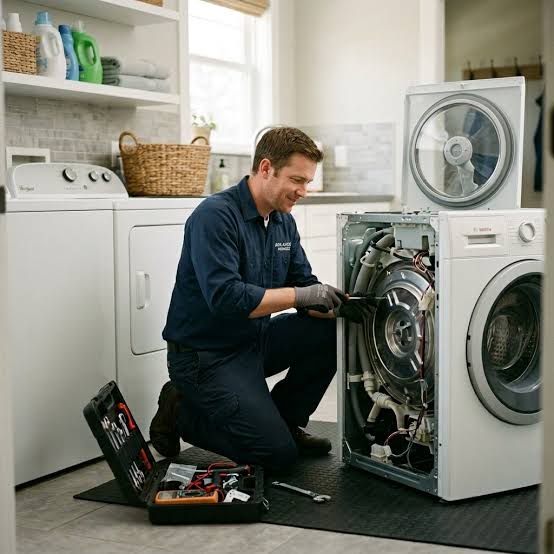
Before anyone replaces your pump, it should be proved to have failed. A large share of "pump failures" are blocked impellers that need clearing, not replacing — and that is a repair with no parts bill at all.
We are an independent repair company — not an authorized service center of any washing machine brand. Brand names on this page are used only to identify the machines we repair. All trademarks belong to their respective owners.
This distinction is worth understanding before you accept a quote from anyone, because it is the difference between a parts bill and no parts bill at all.
A drain pump is a small electric motor turning an impeller — a plastic paddle wheel that pushes water out of the machine. When something solid reaches that impeller and jams it, the pump stops moving water. The machine reports a drain fault. The symptom is identical to a burnt-out pump, but the pump itself is perfectly healthy and simply needs clearing.
In our experience a large share of drain-fault callouts are exactly this. A coin, a hair clip, a button or a compacted mass of lint sitting where it should not be. Clearing it restores full function, and the only cost is the visit.
A pump should be replaced when it has been tested and shown to have failed — not because the machine will not drain. If someone quotes you for a pump without having opened the filter and tested the winding, it is entirely reasonable to ask what they checked.

A correct diagnosis takes minutes and removes all the guesswork. This is the sequence our technicians follow.
That last check matters more than people expect. It is the difference between solving the problem and returning next week with the same symptom.
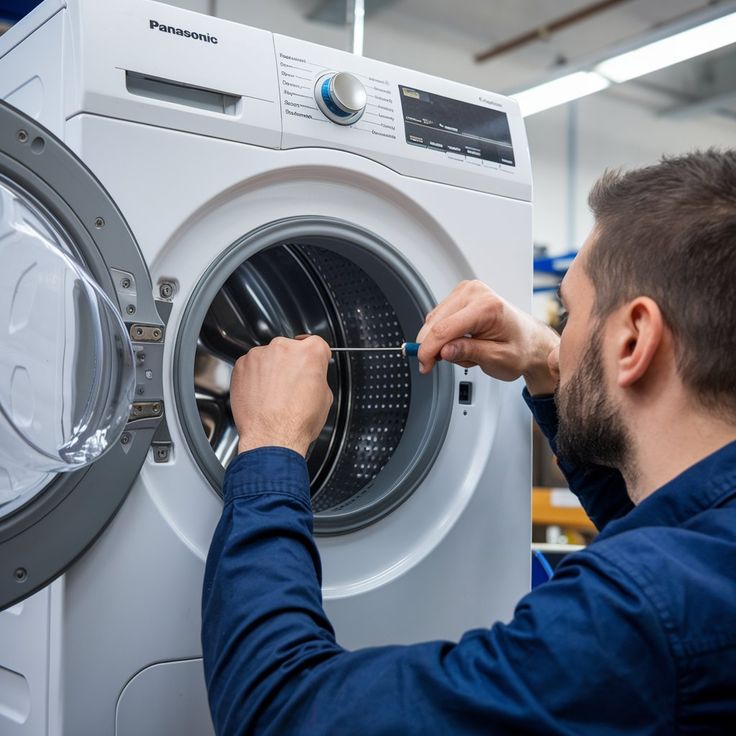
It is one of the more straightforward repairs on a washing machine, and normally a single-visit job.
The drum and sump are emptied in a controlled way through the emergency hose, so nothing ends up on your floor when the pump comes off.
Depending on the model, the pump is reached through the front panel, from underneath, or via the rear. Floor protection goes down first.
Wiring is unplugged and the hose clips released. The sump hose is checked at the same time, since blockages often sit there too.
The replacement goes in with hoses and wiring reconnected and clips properly seated — a loose clip is a future leak.
The wide hose between drum and pump is inspected while access is open. A sock lodged here causes the same symptom.
A complete cycle is run and watched, confirming the drain works and that nothing leaks at the new connections.
Drain pumps are among the least expensive washing machine components, and the labour is modest. This is a cheap repair by any standard.
Pumps for mainstream brands are widely stocked in the UAE, so this is usually completed on the first visit.
Almost always yes. A pump failure never justifies replacing a machine that is otherwise sound.

Drain pumps rarely die of old age. They die because something reached them and they spent weeks grinding against it. Almost all of that is preventable with a habit that takes five minutes.
Clean the pump filter every month or two. On most front loaders it is behind a small flap at the bottom front. Switch the machine off at the socket, drain through the short emergency hose into a shallow tray, then unscrew the filter with towels down. Clear out coins, hair, lint and anything else, check the impeller behind it turns freely, and screw the filter fully home.
Check pockets before loading. Coins and hair clips are the two things we find most often, and both arrive the same way. An underwire escaping from a bra is the third.
Machines that get this treatment simply do not present with pump failures the way neglected ones do. It is the highest-value maintenance task on the appliance, and it costs nothing.
This page covers the component. If you are still working out what is wrong, start with the diagnostic guide.
Showing a code rather than just a symptom? Start here. Decode Your Error Code →
The full diagnostic guide: all seven causes of a drain fault, and the safe checks to try yourself first.
A machine that has not drained will refuse to spin. Fixing the pump usually restores both.
A humming pump moving no water is both a noise complaint and a drain fault.
Everything we repair on washing machines — all types and all brands.
No, and this is the single most useful thing to know. A large share of the machines we attend for a drain fault have a perfectly healthy pump that is simply blocked — a coin, a hair clip, a button or a build-up of lint jamming the impeller. Clearing it restores full function with no new part at all. A pump should only be replaced once it has been tested and shown to have actually failed.
Listen during the drain phase. A pump that hums or buzzes but moves no water is receiving power and trying to turn against an obstruction — that usually means blocked rather than dead. A pump that is completely silent during the drain phase is more likely to have failed electrically, or not to be receiving power at all. Neither is conclusive on its own, which is why the technician tests it properly.
In stages. First the filter and impeller are checked by hand for obstruction and free rotation. Then the pump winding is tested electrically for continuity, which shows whether the motor is intact. Then we confirm the machine is actually delivering power to the pump at the right point in the cycle, because a healthy pump that is not being switched on points to the board or wiring rather than the pump itself.
The machine is drained first, then the pump is accessed — through the front panel, the base or the rear depending on the model. The wiring is disconnected, the hose clips are released, the old pump is removed and the new one fitted with the hoses and wiring reconnected. It is one of the more straightforward washing machine repairs and is normally completed within a single visit.
Most often because of what reaches them. Coins, hair clips, buttons, underwires and general debris get past the drum and into the pump housing, where they jam or damage the impeller. Repeated running against an obstruction is what eventually burns out the motor. High cycle counts also matter — a machine running several loads a day simply reaches the pump's designed life much sooner.
Clean the pump filter every month or two. It is behind the small flap at the bottom front of most machines, and clearing it takes a few minutes with the power off and a tray underneath. Checking pockets before loading helps enormously, since coins and clips are the usual culprits. This is genuinely the most effective preventive maintenance you can do on a washing machine.
We open the filter and test the winding before quoting a part. If it is only blocked, you pay for the visit and nothing more.
Humming with no water movement, or complete silence? Plus whether you have already opened the filter. That points us straight at blocked versus failed.
+971 50 988 6591
Daily, 8:00 AM – 6:00 PM
+971 50 988 6591
A short video during the drain phase helps a lot