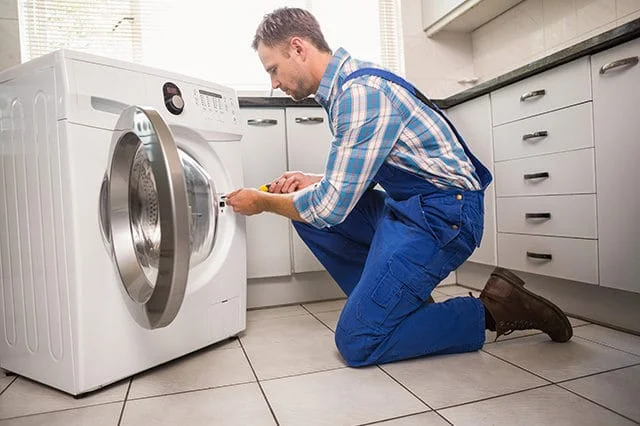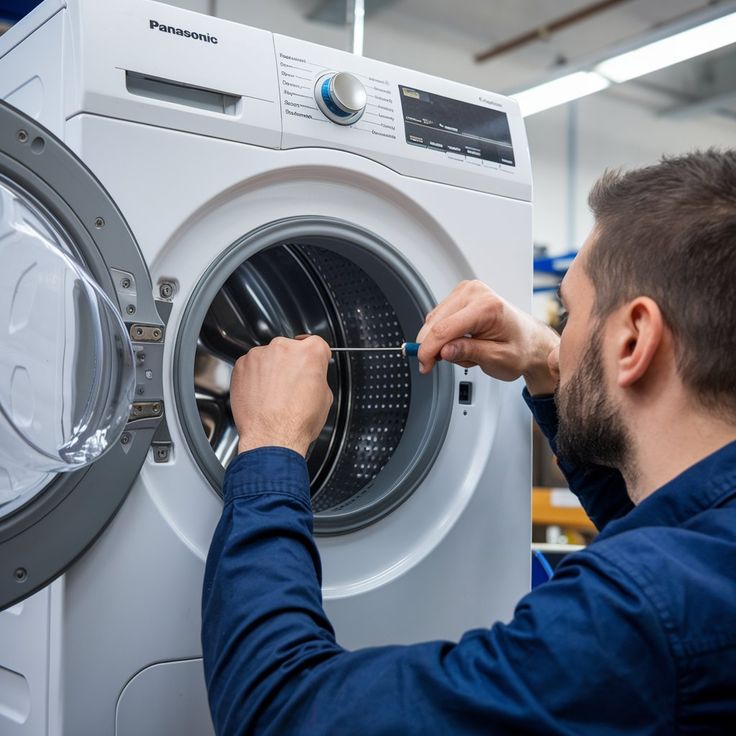
This is the one repair that genuinely decides whether a machine has a future. Here is how to test for it yourself, what the job actually involves, and the single design difference that makes it reasonable on one machine and uneconomic on another.
We are an independent repair company β not an authorized service center of any washing machine brand. Brand names on this page are used only to identify the machines we repair. All trademarks belong to their respective owners.

Drum bearings support the shaft that the inner drum spins on. At full spin that shaft is carrying a heavy, wet, off-balance load at over a thousand revolutions a minute, so the bearings are engineered to take real punishment. Left dry, they last a very long time.
The catch is what sits in front of them. A rotary seal keeps wash water out of the bearing housing, and that seal is a wearing part. As it hardens with age and heat, water begins to work past it. Bearings designed to run dry then start running wet, they corrode, and the smooth surfaces that make them quiet break down.
This matters for two practical reasons. First, it explains why a bearing job is not just "fit new bearings" β the seal that caused the failure has to be replaced at the same time, or you are simply setting a timer on the same repair. Second, it explains why acting early is worth real money: the longer a failed bearing runs, the more water reaches the shaft and the surrounding assembly.
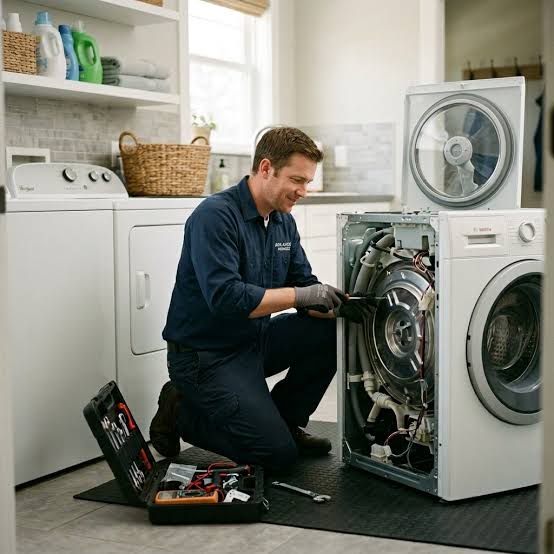
This is the same first check our technicians make, and you can do it before anyone visits.
If the drum rocks and the noise rises with spin speed, you can be fairly confident. Send us a ten-second video of the spin and we will confirm what we are hearing before quoting.

Bearing failure is gradual. Knowing where you are on this list tells you how urgent it is.
Only noticeable at the top of the spin cycle, easily mistaken for a normal noise. This is the cheapest moment to act.
A clear grinding or roaring that gets louder as the spin accelerates, and quieter as it slows. Now unmistakable.
The drum can be rocked by hand. The shaft is no longer running true, which accelerates the damage to the seal.
Black or rusty residue transferring onto clothes β corrosion products working forward from behind the drum.
The seal has failed enough to pass water. From here, damage extends beyond the bearings themselves.
Vibration from the loose drum triggers the unbalance detection, so the machine abandons the spin to protect itself.
The point at which the repair may no longer be viable, because the shaft and surrounding assembly are likely damaged.
The metal support behind the drum can corrode once water gets past the seal β a separate failure that often accompanies bearings.
A rattle rather than a rumble is usually a coin or underwire in the tub β far cheaper. See the noise guide.
This is the single most important variable, and it is worth understanding before you get a quote from anyone.
Serviceable outer tub. The tub is manufactured in two halves held together with clips or bolts. It can be split, the old bearings pressed out of the housing, and new bearings and a new seal pressed in. The parts themselves are not expensive β you are mainly paying for labour, and the repair is usually well worth doing.
Sealed outer tub. Some machines use a tub that is bonded shut and is not designed to be opened. On those, the manufacturer-approved route is to replace the entire tub-and-drum assembly as one part. That assembly is frequently a large share of what the machine is worth, and on a budget machine it routinely costs more than replacement.
This is why the same job can be entirely reasonable on one machine and a non-starter on another, regardless of brand prestige. Our technician establishes which design you have as part of the assessment, and tells you plainly before any work is agreed.

A bearing replacement is the most labour-intensive job on a washing machine, and it is worth knowing why the quote looks different from a pump or an element.
The machine is largely stripped. Panels come off, the detergent drawer housing and control assembly are moved aside, and the drum assembly is disconnected from the motor, the suspension, the heater, the hoses and the wiring. The outer tub then comes out of the machine entirely. On a serviceable design it is split into halves, the old bearings are pressed out of their housing, and new bearings plus a new rotary seal are pressed in. Then the whole machine goes back together and is tested under a full spin.
We always replace the seal alongside the bearings. Fitting new bearings behind the old seal is the most common way this repair gets done badly, because the seal is what caused the failure in the first place and it will do it again.
Drum play and noise under power are checked first, so a rattling coin is never quoted as a bearing job.
Serviceable or sealed. This decides the cost more than anything else, and you are told before agreeing.
If the machine is not worth the repair, we say so and you pay the callout only β not for work that makes no sense.
Both replaced as a set, because fitting bearings behind the old seal simply repeats the failure.
The machine is run to maximum spin speed and re-levelled, so you hear the result before we leave.
Bearing noise is often confused with cheaper faults β worth ruling those out first.
Showing a code rather than just a symptom? Start here. Decode Your Error Code →
The noise decoder β telling a rumble apart from a rattle, a knock or a hum. Start here if unsure.
Worn bearings can make a machine abandon the spin entirely through unbalance detection.
A failed tub seal leaks as well as destroying the bearings β the two arrive together.
Everything we repair on washing machines β all types and all brands.
On a well-built machine, bearings are usually worth replacing. These pages explain why.
Switch the machine off at the socket and open the door. Take hold of the drum at the top and the bottom β roughly the twelve and six o'clock positions β and try to rock it towards you and away from you. A healthy drum feels solid with almost no movement. If you can feel a distinct knock, or see the drum shifting relative to the door seal, the bearings are worn. Also spin the empty drum by hand and listen for a rumble or grinding as it slows.
Almost always because the seal in front of them has failed first. The bearings sit behind a rotary seal that keeps water out of them. Once that seal hardens or wears, water works past it, and bearings that were designed to run dry begin to corrode. So bearing failure is usually a water problem rather than a wear problem, which is why replacing the bearings without replacing that seal is a repair that fails again.
The machine is largely stripped. The top, front or rear panel comes off, the drum assembly is disconnected from the motor, suspension, heater and hoses, and the outer tub is removed from the machine. On a serviceable design that tub is then split into two halves, the old bearings are pressed out of the housing, and new bearings and a new rotary seal are pressed in before everything is reassembled and tested. It is the most labour-intensive repair on a washing machine.
Because not every outer tub can be opened. Serviceable designs split into two halves so the bearings can be pressed out and replaced. Other machines use a sealed outer tub that is bonded shut and not designed to be opened, and on those the only manufacturer-approved route is to replace the entire tub-and-drum assembly. That single part is often a large share of the machine's value, which is why the same job can be very reasonable on one machine and uneconomic on another.
It is not a good idea. Once bearings break down, the drum shaft no longer runs true, and that accelerates the destruction of the seal behind it. Water then reaches the bearing housing and the shaft, causing corrosion that can damage the drum spider and the tub itself. Catching it while it is a rumble usually keeps it a bearing job. Running it until something seizes can turn it into a whole-tub job.
Three things decide it: whether the tub is serviceable or sealed, the quality and age of the machine, and whether anything else is worn. On a well-built machine with a serviceable tub, bearing replacement is usually worth it because the rest of the machine has years left. On a budget machine with a sealed tub, it very often is not. Our technician confirms which situation you are in and gives you the fixed price before any work starts, so the decision is yours with real numbers.
Send us a ten-second video of the spin and tell us the make and age. We will tell you what we are hearing, whether your tub design is serviceable, and what the realistic options are.
Whether the drum rocks by hand, whether the noise rises with spin speed, and how old the machine is. Those three answers shape the whole recommendation.
+971 50 988 6591
Daily, 8:00 AM β 6:00 PM
+971 50 988 6591
A ten-second video during the spin is ideal