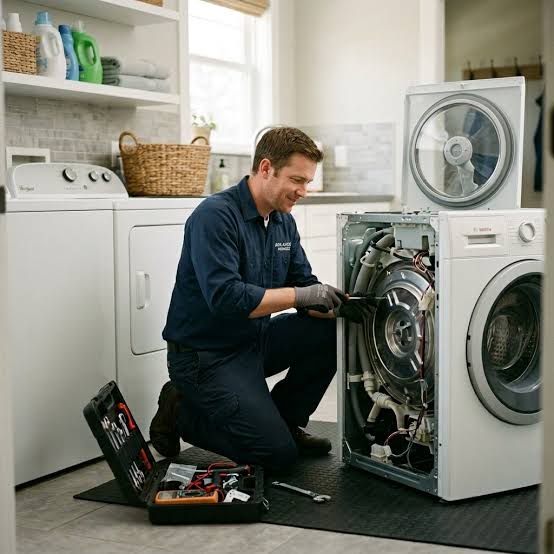
On a brushed motor, two small carbon blocks are the designed wearing part. When they get short the machine washes but will not spin — which looks exactly like motor failure and costs a fraction to fix. Ask which one you actually have.
We are an independent repair company — not an authorized service center of any washing machine brand. Brand names on this page are used only to identify the machines we repair. All trademarks belong to their respective owners.
If you have been quoted for a washing machine motor, this is the single most useful thing to understand before you agree.
A brushed motor drives the drum using two small carbon blocks — the brushes — that press against the spinning part of the motor to carry current into it. They are consumable by design. They wear down gradually over the machine's life, exactly as brake pads do on a car, and they are meant to be replaced.
Here is the part that costs people money: as the brushes get short, the motor can still turn the drum slowly enough to wash, but it can no longer reach spin speed. The machine washes normally and then leaves your clothes soaking. That symptom is indistinguishable from a failing motor — and brushes cost a small fraction of a complete motor.
So the question worth asking is simply: have the brushes been inspected, and how much length is left on them? A technician who has taken them out will be able to tell you. A motor should only be condemned once the brushes have been ruled out.

Washing machines use two broadly different motor architectures, and the diagnosis has almost nothing in common between them.
Brushed universal motors are found on older and many mid-range machines. The motor sits below or behind the drum and drives it through a belt and pulley. The wearing parts are the carbon brushes, the belt and the tacho coil that reports speed back to the board. These are all inexpensive components, which makes a no-spin fault on a belt-driven machine usually a cheap repair.
Brushless direct-drive motors are increasingly standard on newer machines. The motor rotor is bolted straight onto the drum shaft — no belt, no pulley, and critically no carbon brushes at all. That deletes the two most common mechanical drive failures in the industry. But it relocates the fault to the rotor position sensor, the wiring loom and the control board driving the motor.
If someone quotes you for carbon brushes on a direct-drive machine, they have not looked inside it. And if someone looks for a belt on a direct-drive machine and does not find one, that is where guessing tends to start. Establishing the motor type is the first thing that should happen.
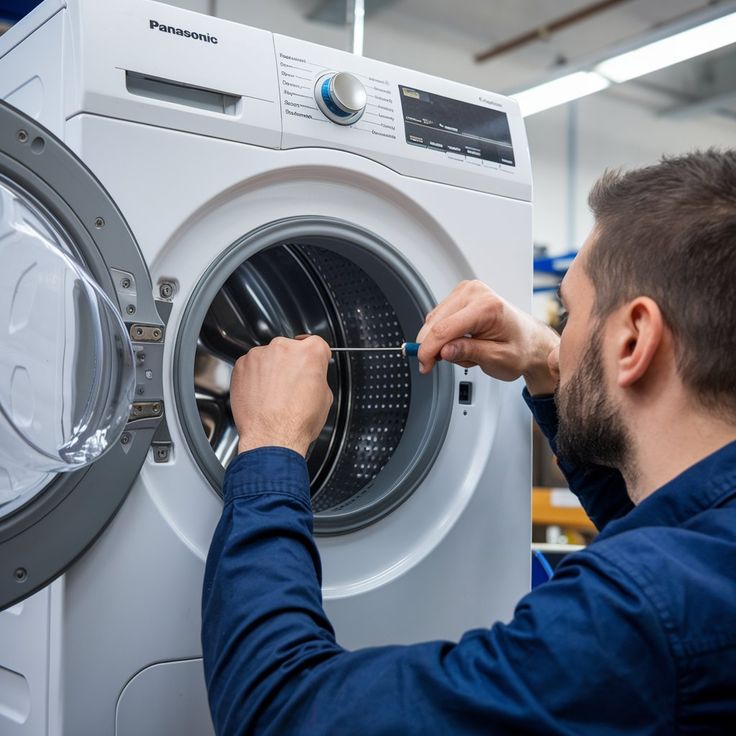
This is the sequence our technicians follow. Each step is cheap and each one can end the diagnosis.
A machine holding water will refuse to spin regardless of motor condition. Checking this first prevents an entire category of misdiagnosis.
Power off. The drum should rotate freely. Resistance or a hard stop means something is mechanically jammed rather than electrically failed.
On a brushed motor they come out and their remaining length is measured. Short brushes are the answer far more often than a dead motor.
An electrical continuity test across the motor shows whether the windings are intact. An open circuit confirms genuine motor failure.
The tacho coil on a brushed motor, or the hall and rotor position sensor on direct drive. A bad signal stops the spin with a healthy motor.
A healthy motor that never receives power is a board or wiring fault. Replacing the motor there fixes nothing at all.
The machine will not spin until the lock confirms the door is secure. A failing interlock blocks the spin entirely.
On belt-driven machines a slipping or snapped belt gives a motor that runs while the drum barely moves.
Collapsed suspension makes the machine abandon its own spin through unbalance detection.

Real motor failures do happen — burnt windings, a shorted armature, physical damage to the rotor. When the testing confirms it, here is the job.
The machine is drained and positioned so the motor can be reached, usually via the rear or base panel depending on the model. The wiring is disconnected and labelled, the belt released on belt-driven machines, and the motor unbolted from its mounts. The replacement goes in, the belt tension is set correctly if applicable, and the wiring is reconnected.
It is more involved than a pump but considerably less so than a bearing job. The variable is the part cost: a complete motor is a significant component. On a well-built machine with sound bearings and drum it is frequently justified, because you are buying years of further service on a machine that is otherwise good. On an older budget machine the motor can represent a large share of what the machine is worth, and replacement often wins instead.
We give you the fixed price and say which situation we think you are in, rather than presenting a quote and leaving you to work it out.
Most brands have a specific code for motor and speed-feedback faults.
LE — locked motor, usually the hall sensor or a loose rotor bolt on Direct Drive.
LG details →
3E / 3C — motor or hall sensor not reporting correctly.
Samsung details →
E52–E54 on Electrolux group; F02 on Indesit and Ariston.
Electrolux → · Indesit →
Drainage, door lock and load balance checked first, because all three block the spin with a healthy motor.
Brushed or direct drive. This decides the entire diagnostic route and what parts could even apply.
On a brushed machine the brushes are inspected and measured before the motor is considered at all.
Windings, speed feedback and board output measured. Exact price given before anything is replaced.
The machine is run to maximum spin speed to confirm the repair, and re-levelled before we leave.
This page covers the component. If you are still working out what is wrong, start with the diagnostic guide.
Showing a code rather than just a symptom? Start here. Decode Your Error Code →
The full diagnostic guide to a machine that will not spin, including the drainage question that comes first.
A motor that never receives power is a board problem. Why boards are over-diagnosed.
A humming motor that will not start turning sounds different from a bearing fault. Decode it here.
Sometimes a drum that will not turn freely is bearings rather than motor.
Everything we repair on washing machines — all types and all brands.
Yes, it is worth asking one question: are the carbon brushes worn, or is the motor itself faulty? On a brushed motor the carbon brushes are the designed wearing part — two small carbon blocks that gradually shorten over the machine's life. When they get short the motor turns the drum slowly for washing but cannot reach spin speed. That symptom is identical to a failing motor, and brushes cost a small fraction of one. A motor should only be replaced once the brushes have been inspected and ruled out.
As a rough guide, older and mid-range machines typically use a brushed universal motor driving the drum through a belt, while newer machines increasingly use a brushless direct-drive motor bolted straight onto the drum shaft with no belt at all. If a technician has told you the belt is fine, you have a belt-driven machine. If they tell you there is no belt, you have direct drive — and carbon brushes do not exist on it, so nobody should be quoting you for them.
The failures move to the electronics and the mechanical mounting. The most common are the rotor position or hall sensor that tells the board where the rotor is, the wiring between motor and board, and occasionally a rotor bolt that has worked loose. Stator winding failure happens but is less common. It is a genuinely different diagnostic route from a brushed machine, which is why the motor type matters before anything is quoted.
In sequence. First the drum is turned by hand to confirm it rotates freely and nothing is mechanically jammed. On a brushed motor the brushes are removed and their remaining length inspected. The motor windings are then tested electrically for continuity, and the tacho coil or hall sensor is checked for a correct reading. Finally we confirm the control board is actually delivering power to the motor — because a healthy motor that is never energised is a board or wiring problem, not a motor problem.
No, and it very often is not. A machine that has not drained will refuse to spin regardless of motor condition, so drainage is always checked first. A door interlock that does not confirm the door is locked will also block the spin. Worn shock absorbers can make the machine abandon the spin through its own unbalance detection. All of those present as a no-spin fault with a perfectly healthy motor.
It depends on the machine and on which part has actually failed. Brush replacement is inexpensive and almost always worth doing. A complete motor is a significant part, so on a well-built machine with sound bearings and drum it can be justified, while on an older budget machine it often is not. Our technician establishes which component has failed and gives you the fixed price and an honest recommendation before any work begins.
Tell us the make and whether the machine is belt-driven or direct drive. We inspect the brushes and test the windings before condemning anything.
Does it wash but not spin? Does the motor hum with no movement? Does the drum turn freely by hand? Those three answers narrow it to one or two components.
+971 50 988 6591
Daily, 8:00 AM – 6:00 PM
+971 50 988 6591
A short video of the spin attempt is genuinely useful