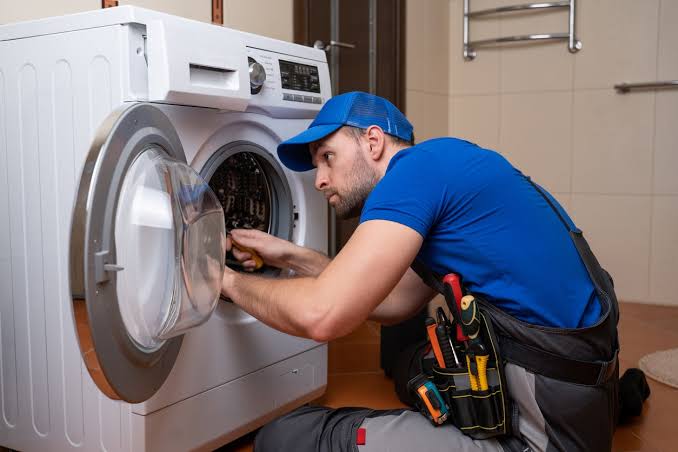
Before you book anyone: a large share of "not heating" complaints are eco programmes doing exactly what they were designed to do. Here is how to confirm it properly in thirty minutes — and what has actually failed if it really is a fault.
We are an independent repair company — not an authorized service center of any washing machine brand. Brand names on this page are used only to identify the machines we repair. All trademarks belong to their respective owners.
Eco and energy-saving programmes are designed to run below their labelled temperature. A cycle marked 40 degrees on an eco setting may only reach the low thirties, and it compensates by washing for much longer at that lower temperature. That is intended behaviour, not a failure — and it feels completely cold if you open the door and touch the laundry.
This is genuinely one of the most common reasons people call out a technician for a machine that is working perfectly. Modern machines default to eco programmes far more than older ones did, so owners who have recently replaced a machine notice it most.
Before booking anything, test on a standard hot cottons programme at 60 degrees — not an eco setting. The method is below. It costs you one cycle and it may save you a callout entirely.

You do not need any tools for this, and it gives a clear answer.
A note of caution: on a machine that is heating properly, that door glass gets genuinely hot. Touch it briefly with the back of your hand rather than gripping it, and keep children away from the machine during a hot cycle.
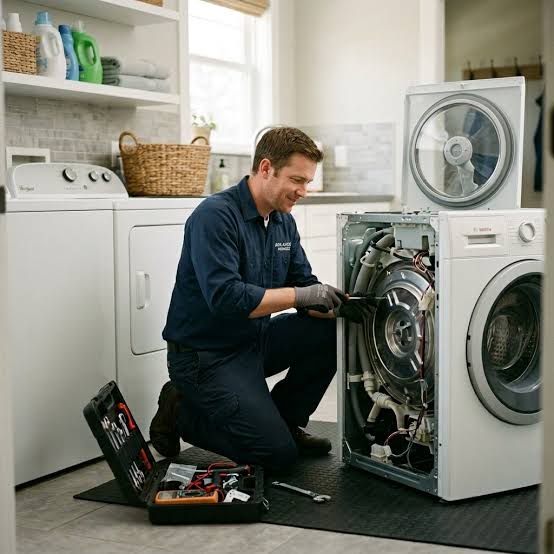
Assuming you have confirmed it on a proper hot programme, these are the causes in the order we encounter them.
The element has gone open circuit and no longer heats. The most common cause by a clear margin, and an inexpensive part that is accessible on most front loaders without a major strip-down.
The temperature sensor reports incorrectly, so the board either never starts heating or stops too early. Cheap to replace, and often mistaken for an element fault.
The relay that switches power to the element has failed. The element itself is fine — replacing it would solve nothing, which is why proper testing matters.
A loose or corroded spade connector at the element. Genuinely common on older machines and in humid utility spaces, and sometimes fixed without any new part.
A coated element struggles to transfer heat into the water and eventually fails. More a contributing factor than a standalone fault, but a real one.
The machine will not heat if it does not believe the water level is correct — a safety behaviour to stop the element firing while exposed. Fixing the pressure hose restores heating.
A safety device has opened after an overheat event and will not reset until the underlying cause is found and corrected.
The board is no longer driving the heating circuit at all. Real, but the least common cause, so it is confirmed only after everything else is ruled out.
Quick-wash and synthetics cycles run cooler than cottons by design. Worth ruling out before anything else.

It is tempting to live with a machine that washes cold, particularly in a warm climate where clothes do not feel especially dirty. In practice it costs you twice.
First, cleaning performance drops noticeably. Many detergents rely on temperature to activate their enzymes and any oxygen-based bleaching agents. Below that threshold they simply do not do what the packaging promises, and it shows up on collars, towels and kitchen cloths rather than on everything at once.
Second, and more expensively, permanent cold washing lets biofilm establish itself. Warm cycles periodically clear the residue of detergent, fats and skin cells that accumulates in the drum, the sump hose and the folds of the door seal. Take that away and the residue builds, which is the usual reason a machine develops a persistent bad smell that no amount of extra detergent fixes.
So a heating fault left alone tends to turn into a heating fault plus a hygiene problem, and the second one takes longer to resolve than the first.
Most brands report heating and temperature-sensor faults with their own specific codes.
HE / HC — heating fault.
tE / tC — temperature sensor.
Samsung details →
tE — thermistor / heating sensor fault.
LG details →
E60/E70 on Electrolux; F07/F08 on Ariston.
Electrolux → · Ariston →
We check you were testing on a proper hot cycle, so nobody pays for a repair to normal eco behaviour.
The element is tested electrically for continuity and to earth, rather than assumed from the symptom.
NTC sensor readings and the board's heating relay are checked — both mimic a failed element.
Exact price for parts and labour before anything is replaced. Nothing proceeds without approval.
A hot cycle is run and the temperature rise confirmed before we leave, not just the part swapped.
Heating faults sit close to smell problems and sensor faults.
Showing a code rather than just a symptom? Start here. Decode Your Error Code →
Everything we repair on washing machines — all types and all brands.
Combo units have a second heating circuit for drying that fails independently.
A machine that cannot manage water levels properly may also refuse to heat.
If the machine will not run at all, start here rather than with the heating circuit.
Run a hot wash — 60 degrees on a cottons programme, not an eco setting — and leave it for around 25 to 30 minutes. Then carefully touch the outside of the door glass with the back of your hand. On a working machine it will be clearly warm. If it is still completely cold well into a 60 degree cycle, the machine is genuinely not heating. Be careful: on a working machine that glass gets hot.
Usually not. Eco and energy-saving programmes are designed to run below their labelled temperature and to compensate by washing for much longer. A cycle labelled 40 degrees on an eco setting may only reach the low thirties, which feels cold to the touch. This is normal, intended behaviour and it is one of the most common reasons people book a callout for a machine that is working perfectly. Always confirm on a standard hot cottons programme instead.
In order of how often we find them: a failed heating element, a faulty NTC temperature sensor, a heating relay on the control board that is no longer switching, damaged wiring or a corroded connection at the element, and less commonly a pressure system fault that stops the machine heating because it does not believe the water level is correct. Scale build-up on the element contributes to element failure over time.
It is one of the more affordable washing machine repairs. The element itself is an inexpensive part and on most front loaders it is accessible from the rear or front panel without a major strip-down. Our technician confirms the element is genuinely the fault rather than the sensor or the board, then gives you the fixed price before any work starts.
It does. Many detergents rely on temperature to activate their enzymes and any bleaching agents, so a cold wash cleans noticeably less well. Persistent cold washing also encourages biofilm to build up in the drum, the sump and the door seal, which is the usual cause of a machine that develops a bad smell. So a heating fault tends to create a second problem if it is left.
Scale build-up on the heating element is a contributing factor to element failure. A coated element has to work harder to transfer heat into the water, which shortens its life. Running an occasional hot maintenance wash with a suitable machine cleaner helps, and it is worth doing anyway if your machine mostly runs cool cycles.
Then it is a genuine heating fault, and it is usually one of the cheaper repairs. Tell us the brand and any code showing and we can be with you the same day.
Which programme you tested on, whether the door glass warmed up at all, and any code showing. That tells us whether to bring an element, a sensor or both.
+971 50 988 6591
Daily, 8:00 AM – 6:00 PM
+971 50 988 6591
Send a photo of the display if a code is showing